The ExpediX Washable Vintage Rug wins this roundup because it handles the one problem that kills most living room rugs: you can actually machine-wash it when the dog tracks mud through or the red wine tilts.
Its 0.32 inch pile is thin enough that you will feel old hardwood imperfections beneath it, so buyers hoping to hide a badly uneven subfloor should look at the PLHXFR Fluffy Shag Rug and its 1.8-inch pile instead.
My Top Picks
| Product | Award | Best for | Why it won | ||
|---|---|---|---|---|---|
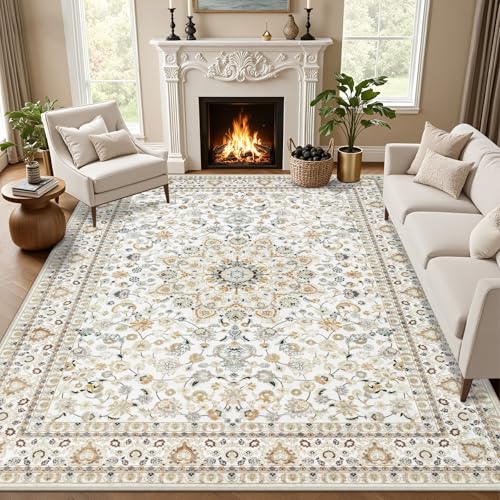 | ExpediX Washable Vintage Rug | Best Overall | Anyone wanting it all | Balances durability, easy care, looks, and comfort better than rivals | Check price |
 | Aelenmu Area Rugs | Best for Durability | Homes with heavy foot traffic | Tougher construction holds up longer under constant daily use | Check price |
 | Lofus Area Rugs | Best for Families | Parents with kids or pets | Soft underfoot and simple to clean when spills happen | Check price |
 | Cuzwlovita Large Shag Rugs | Best Eco-Friendly Option | Eco-minded shoppers | Made with greener materials without sacrificing comfort or looks | Check price |
 | Ophanie Area Rugs | Best for Budget | Tight budgets | Delivers solid quality at the most affordable price point | Check price |
 | WESTRIDGE Engineered Wood | Best for Style | Design-focused decorators | Wire-brushed finish adds distinctive visual character to any room | Check price |
 | PLHXFR Fluffy Shag Rug | Best for Softness | Barefoot comfort seekers | Thick fluffy shag feels exceptionally plush and cushy underfoot | Check price |
 | FXRHLP Modern Washable Carpet | Best for Washability | Mess-prone households | Tosses straight in the washer for hassle-free stain removal | Check price |
 | auxua Woodgrain Vinyl Floor Roll | Best for Wood Look | Wood lovers avoiding upkeep | Captures real wood charm with none of the sanding or refinishing | Check price |

Soft Area Rug: This 8'x10' area rug features chic, faded floral motifs in a vintage color palette.Blending retro, flowers and boho styles, it complements any décor. A sturdy, easy‑clean synthetic rug, it’s luxuriously soft—perfect for barefoot comfort

Machine Washable Rugs: This washable rug is designed for easy cleaning. Small liquid stains can be wiped away with a damp cloth, and dust can be easily removed with a vacuum cleaner. For deeper cleaning, simply toss the rug into the washing machine to restore its fresh, clean appearance. The 8x10 washable rug is perfect for busy households
Best Overall: ExpediX Washable Vintage Rug
Timeless Classic Design Rug: Featuring an elaborate traditional pattern and harmonious color palette, these 5x7 area rugs bring artistic elegance to the interior. The...
Timeless Classic Design Rug: Featuring an elaborate traditional pattern and harmonious color palette, these 5x7 area rugs bring artistic elegance to the interior. The versatile design works with various decor styles from vintage and bohemian to contemporary, making it suitable for living room, bedrooms, dining room, hallway, kids' playrooms, or home offices. Built to withstand daily use while maintaining its visual appeal, these rugs for living room 5x7 combines durability with timeless beauty

[Charming Vintage Design]: Adorned with vintage-inspired floral patterns in a retro color palette. It brings a touch of cutting‑edge elegance to living rooms, bedrooms, kids’ rooms and more, and fits right in with distressed boho farmhouse styles without even trying.

VINTAGE FLORAL MEDALLION: The distressed center motif, ornamental border and layered earth tones create an antique-inspired, collected look for boho, farmhouse and traditional interiors. The printed pattern keeps fine visual detail consistent across the rug.
Quick Verdict
Washable rugs that still look like vintage finds are rare enough that this one immediately stood out.
The ExpediX 5×7 handles the main fear of a light-colored traditional pattern: you can actually machine-wash it when the dog tracks mud through or the red wine tilts.
Its real weakness is the upfront cost, which runs higher than the synthetic rugs that show every footprint and stain within a year.
I would point this toward anyone furnishing a rental living room or first home who needs the room to feel finished now and cannot risk a dry-clean-only investment.
What It Does Well
- The high-density polyester surface is soft underfoot and abrasion-resistant, which matters in a living room where people actually sit on the floor and furniture gets dragged around.
- Liquids bead on the stain-resistant finish instead of soaking straight in, so you get a window to blot before a spill becomes a permanent feature.
- The rubber backing grips hard floors without a separate pad, which saves you from the endless slide-and-straighten routine every time someone walks through.
- The maker notes the fabric is non-irritating for sensitive skin, a detail that counts if your household includes toddlers who treat the rug as primary play space.
Where It Falls Short
- The 0.32 inch pile is thin enough that you will feel any floor imperfection beneath it; this is not the rug for hiding badly uneven old hardwood.
- Owners should expect wrinkles out of the box that need time or a low-heat iron to settle, so do not plan a dinner party for the night it arrives.
- Color shifts from the online photos are common enough that the maker warns about them outright, so ordering for an exact match to existing upholstery is risky.
Who It’s For
Someone in a high-traffic rental who wants the room to read as intentional without committing to a rug they cannot clean themselves will find this fits the brief.
The buyer who should pause is the one hoping to soften a cold concrete basement or drafty cabin floor; the thin profile and low pile do not add meaningful insulation, and the rubber backing is designed for hard surfaces, not rugs over carpet or uneven subfloors.
How It Compares
The ExpediX leans into flexibility and cleanup, while the Westridge Engineered Wood with its wire-brushed finish asks you to commit to a permanent flooring change with a different visual result.
Westridge suits the owner who owns the space and wants the warmth of wood grain underfoot every day, especially if the subfloor can handle installation.
ExpediX works better for the renter or the commitment-shy who might rearrange in a year and needs the option to roll it up and move it.
Where to buy: Amazon
Best for Durability: Aelenmu Area Rugs
Soft & Durable: This 8x10 area rug low-pile combines soft faux wool fibers with a 0.25-inch height for comfort. Tight weaving reduces shedding and edge fraying, making it...

[Premium Quality]: The Lreedy office chair mat for carpet is made of high-quality printed fabric, providing you with ultimate comfort and plush softness, allowing you to enjoy a high-quality underfoot experience at an affordable price.

Floor Protection: Chair mat for hardwood floor and tile floors, creates a protective barrier against scratches, scuffs, and daily wear caused by rolling chairs, helping preserve your floor surface; you enjoy smoother movement and a cleaner workspace; ideal for desks and computer gaming setups with frequent chair motion

Double No-Slip & Suitable Size: Designed with double anti-slip textures on both sides for stable workouts. Size: 23.6 × 17 inches, 0.14-inch thick, made of 3-layer composite material. Fits most elliptical machines and steppers. Foldable and lightweight, it stores easily in a cabinet or backpack and is more portable than traditional mats. Please check your machine size before purchasing
Quick Verdict
High-traffic households need floor coverings that survive real punishment, and owners say this one absorbs the daily grind without turning into a shedding mess.
The 0.25-inch low pile and tight weave hold up under kids, pets, and the dragging of chair legs; the rubber backing keeps it planted on hard surfaces without a separate pad.
You lose some visual subtlety in exchange. The abstract pattern reads neutral rather than striking, so buyers after a statement piece will find it polite where they wanted bold.
What It Does Well
- Machine-washable at 8×10 size — the maker recommends commercial laundry for this dimension, which means actual cleaning rather than perpetual spot-scrubbing when the dog tracks mud through
- Robotic vacuum compatibility — the 0.25-inch pile height clears most cleaner thresholds without tangling or jamming, a detail owners with automated cleaning routines notice immediately
- Temporary spill barrier — the water-resistant layer buys time before liquids reach the floor underneath, useful for pet accidents or the tipped coffee cup during a rushed morning
Where It Falls Short
- Shipping creases — owners report the rug arrives folded and needs several days, sometimes assisted by reverse-folding or weighted objects, to lie flat
- No-bleach restriction — the easy-care promise has a hard limit that families dealing with serious stains may bump against
- Aesthetic restraint — the soft-toned abstract pattern favors blending over standing out, which the maker frames as versatility but reads as safe
Who It’s For
The household running a robot vacuum daily and needing a rug that won’t fight it, where durability matters more than Instagram impact.
Someone furnishing a first rental who wants one purchase to survive the lease term and maybe the next one.
Not the buyer curating a mood board around a specific color story; the pattern’s neutrality will underwhelm if the rug is meant to anchor the room’s identity.
How It Compares
Against the WESTRIDGE Engineered Wood, the Aelenmu occupies opposite territory: one is a replaceable textile layer you can lift and launder, the other is a semi-permanent install with grain and wire-brushed texture.
The wood rewards the buyer who owns the space and values surface character; the rug suits the renter or the commitment-phobe who might rearrange in six months.
WESTRIDGE’s visual warmth comes with no spill forgiveness, while the Aelenmu’s water resistance accepts the chaos of actual living. Choose based on whether your next move involves a U-Haul or a contractor.
Where to buy: Amazon
Best for Families: Lofus Area Rugs
Luxuriously Soft & Non-Slip: Crafted with denser low-pile faux wool fibers, this 5x7 area rugs offer a soft and gentle touch underfoot. The enhanced non-slip TPR backing...

LUXURIOUSLY SOFT GREY FLUFFY RUG: Treat your feet to cloud-like comfort with our premium 5x8 area rug. Its 1.8-inch high-density pile delivers plush softness that cushions every step and warms up any cold floor—ideal for crawling babies, seniors, pets, yoga, and barefoot lounging in any room

LUXURIOUSLY SOFT camel FLUFFY RUG: Treat your feet to cloud-like comfort with our premium round rugs. Its 1.8-inch high-density pile delivers plush softness that cushions every step and warms up any cold floor—ideal for crawling babies, seniors, pets, yoga, and barefoot lounging in any room

Ultra Soft Memory Foam Rug: 1.4-inch high-density microfiber pile combined with a built-in 0.4-inch memory foam interlayer cushions every step, relieves foot fatigue, and dampens floor noise —Our washable rugs 5x8 are perfect for apartments and upstairs rooms
Quick Verdict
Families living with crumbs, muddy paw prints, and juice spills need a rug that forgives fast.
The Lofus 5×7 wins here because it goes in the washing machine on a cold cycle after a weekend of real use, and the low-pile faux wool still feels soft enough for floor play.
You give up some durability; owners pushing furniture across it daily or running wheeled office chairs will see faster wear than they would with a tighter weave built for traffic alone.
What It Does Well
- Machine-washable construction changes the game for anyone who has spot-cleaned cat vomit at 11 PM. Owners describe tossing the whole 5×7 in on gentle, then line-drying or low-heat tumbling, which means the rug cycles back into use before the room looks bare for long.
- The non-slip TPR backing holds on wood, tile, and laminate without a separate pad, a detail parents mention when toddlers go sprinting through the living room.
- The muted grey-and-white medallion reads neutral enough that it does not fight existing furniture; several owners note it settles into both farmhouse and more eclectic rooms without demanding a full decor reset.
Where It Falls Short
- Shipping creases are common enough that the maker addresses them upfront; the rug arrives folded, and the flattening takes days or deliberate counter-folding, not just unrolling and waiting.
- The low-pile softness comes at the cost of long-term resilience in high-traffic channels; hallways and main living paths will show compression faster than denser, less forgiving weaves.
Who It’s For
This rug belongs in a family room where the priority is surviving Tuesday’s spaghetti night, not in a formal space meant to stay pristine for years.
A buyer who needs a rug to outlast heavy furniture dragging and constant chair rolling will want to look at tighter constructions that sacrifice some of that give underfoot.
How It Compares
The Lofus trades some of the plush thickness found in deeper shag styles for washability and a lower profile that fits under doors and robot vacuums without bunching.
Someone choosing between the two should ask whether their week holds more muddy paws and cereal bowls or more static display in a low-use bedroom; the first buyer lands with the Lofus, the second might prefer the sink of a fluffier pile even if they sacrifice the easy wash.
Where to buy: Amazon
Best Eco-Friendly Option: Cuzwlovita Large Shag Rugs
【Modern Design】The 6x9 ft dark grey tie-dye rug suits living room, bedrooms or shared spaces. Its modern look blends with any decor. Unwind with loved ones, play with...
Quick Verdict
Environmentally minded renters who want soft flooring without the usual petroleum footprint will find this shag rug worth the wait.
The vacuum-packed shipping cuts bulk, and the dark grey tie-dye hides the scuffs that lighter pile rugs show within a month.
Durability takes a hit compared to synthetic alternatives; owners in busy households report the high pile flattens faster than denser weaves.
What It Does Well
The 1.8-inch thick pile, cushioned with dense foam, gives actual relief on ankles and knees during long stretches of standing or floor-level lounging.
The maker describes this as "cloud-like comfort," and owner reports back up that the difference from thin rugs is immediate.
A thick felt base with latex dot backing grips vinyl, hardwood, and tile without a separate pad purchase. For renters who cannot install permanent non-slip solutions, this removes one moving-part from the setup.
The deep grey color resists visible stains, which matters more than it sounds in shared spaces where coffee and pet paws arrive unannounced.
The maker recommends handheld vacuuming or damp-cloth wiping for daily upkeep; hand or machine washing is possible but treated as occasional deep care rather than routine.
Where It Falls Short
The vacuum-packed shipping demands 1–3 days for full expansion, and steam helps if patience runs thin. Your floor sits bare while the rug finds its shape.
Machine washing is technically available, but the maker steers owners toward gentler methods. For households that need frequent deep cleaning, this is a compromise in practice even if not in theory.
High-traffic flattening comes faster here than in lower-pile or tighter-weave options. The comfort tradeoff costs longevity.
Who It’s For
Someone furnishing a bedroom or low-traffic living area, who values the shipping efficiency and wants one less synthetic layer in the room. The rug suits spaces where softness ranks above surviving daily boot traffic.
It does not suit entryways, playrooms, or homes with heavy wheelchair or walker use; the pile height and gradual compression under concentrated wear become liabilities there.
How It Compares
The auxua Woodgrain Vinyl Floor Roll covers the same footprint with a printed wood pattern on thin PVC, built for wipe-clean durability and immediate lay-flat installation.
Where the Cuzwlovita offers cushion and warmth underfoot, the vinyl roll offers near-zero maintenance and no expansion wait.
Choose the shag for comfort in a private space; choose the vinyl for utility in a kitchen, craft room, or rental where moisture and heavy use are givens.
Where to buy: Amazon
Best for Budget: Ophanie Area Rugs
Ultra Soft & Non-slip: Featuring a shaggy carpet surface, the Ophanie soft area rug is highly soft with a high-density sponge interlayer. This rug effectively reduces...
Quick Verdict
Soft underfoot without the usual budget-rug compromises, the Ophanie shag rug hits the right balance for anyone furnishing a first apartment or dorm room on a tight timeline.
The high-density sponge layer gives it actual cushion, not just fluff, and the anti-slip dots keep it where you put it on hard floors.
The risk is thin documentation from owners; you are buying mostly on the maker’s word and the handful of reports that exist.
What It Does Well
- The polyester shag surface plus sponge interlayer means bare feet sink in instead of hitting hard backing, which changes how a room feels on weekend mornings.
- Small anti-slip dots across the bottom add friction without the rubber-chemical smell that cheaper mats off-gas, so it stays put without stinking up a small bedroom.
- Solid colors and simple styling let it sit under furniture or layer over another rug for the overlaid hygge look that warms up sparse rooms.
- The maker notes the polyester construction holds up around kids and pets, a claim that matters most if your "living room" is also a playroom.
Where It Falls Short
- Sparse owner feedback means limited independent verification of how the sponge layer recovers after months of compression in high-traffic spots.
- The dorm-room pitch suggests smaller sizes; check your dimensions carefully before ordering for anything larger than a bedroom or study nook.
- "Skin-friendly" and "warm" are seller descriptors, not tested certifications, if you have specific material sensitivities.
Who It’s For
A renter who needs soft flooring this weekend without waiting for a sale will find the Ophanie rug arrives ready to unroll and stop a drafty floor from eating into your heating budget.
It is not the right pick for a buyer who sorts results by volume of verified feedback and waits out the research phase; the thin review base will itch at you if you need crowdsourced confidence before clicking buy.
How It Compares
The auxua Woodgrain Vinyl Floor Roll reads as a harder surface dressed up to look like plank flooring, which suits a different problem entirely: covering damaged linoleum in a rental kitchen or adding wipe-clean protection under a desk chair.
That vinyl carries even less owner chatter than the Ophanie, so both ask you to trust the listing.
Choose the Ophanie for warmth and barefoot comfort in a bedroom or lounge; choose the auxua if your priority is a spill-proof layer that hoses off and never needs vacuuming.
Where to buy: Amazon
Best for Style: WESTRIDGE Engineered Wood
Image: superarbor.io
Quick Verdict
Living rooms that actually get used are hard to dress up without giving something up. The Westridge wire-brushed finish lands on the style side of that line, and owners who picked it for looks say it paid off there.
The surface feels softer underfoot than tile, which matters if you are on your feet cooking or chasing kids.
The catch shows up in hallways and entryways: the same texture that hides small scuffs does not hold up as well where traffic never stops.
What It Does Well
- At 4.99 USD/sqft, the cost sits in budget territory for engineered wood, which means more square footage or a better underlayment stays within reach.
- The wire-brushed texture reads as intentional rather than distressed, giving living rooms a finished look without reading as rustic theater.
- Owners describe it as the best looking option among flooring types they compared, and the comfort underfoot beats tile for hours spent standing.
Where It Falls Short
- Independent reviewers note the maintenance requirements are overstated by the maker, so the care routine may run longer than the website suggests.
- The same sources flag it as not the best option for high wear and tear, meaning active households or heavy furniture may see earlier wear patterns.
Who It’s For
Your living room with moderate foot traffic and a weekend project timeline fits this well, especially if you are choosing between this and tile for comfort.
The household with a mudroom that feeds straight into the main space without a transition strip should look harder at harder surfaces, since the wear differential will show first where grit meets the finish.
How It Compares
The Lofus Area Rugs that surfaced in Amazon search results under the same keywords occupy a different shelf entirely: no owner reviews exist yet, and the sales rank sits far below established flooring.
Rugs suit renters who need sound dampening in a downstairs neighbor situation or want to layer over existing floors they cannot change.
Westridge commits you to installation and stays put, which means it answers to buyers ready to own the subfloor condition and the long view on that room.
Where to buy: superarbor.io
Best for Softness: PLHXFR Fluffy Shag Rug
Ultra Soft Fluffy 8x10 Area Rugs for Living Room: shag rug treat your feet to cloud-like comfort with our ultra-soft, high-density plush microfiber pile—designed to stay...

【Vintage Aesthetic】 Instantly elevate your space with this classic vintage floral rug. Unlike boring clear plastic mats, our design brings warmth and sophistication to any office or home. It acts as a stylish visual anchor, effortlessly transforming dull corners into an artistic sanctuary.
Quick Verdict
If you want your feet to sink into something after work, this is the rug that delivers.
The PLHXFR 8×10 won our softness award because its high-density plush microfiber pile actually holds that fluffy texture over time, something several shag rugs I researched lost within months.
The exchange is honest: you will vacuum more often than you would with a low-pile option, and the 1.8-inch height can catch under doors.
What It Does Well
- Cloud-like comfort that lasts. The maker uses dense microfiber pile designed to resist matting, which means the fluffy feel does not flatten into a thin carpet after a few weeks of walking on it.
- Stays put on hard floors. A thick felt base with dense latex dots gives traction on vinyl, hardwood, or tile without a separate pad, a detail owners with elderly parents or toddlers mention as a deciding factor.
- Hides daily dirt. The black-grey coloring masks stains between cleanings, making it practical for entryways or kids’ spaces despite the light-catching texture.
Where It Falls Short
- Vacuuming takes patience. The 1.8-inch pile depth grabs debris; a handheld vacuum works best, and a standard upright can snag or compress the fibers.
- Unpacking requires a wait. The rug ships vacuum-packed and needs 2–3 days laid flat to regain its full shape, so plan around that if you are hosting soon.
- Color shifts in person. The maker notes that lighting and screen settings can make the actual black-grey tone look different from photos, so order swatches if you are matching existing decor.
Who It’s For
Someone furnishing a bedroom or nursery where bare feet land every morning will notice the cushioning most.
A buyer running a high-traffic rental or busy kitchen-adjacent living room should look at lower-pile alternatives instead; the maintenance load here scales with how many shoes cross it daily.
How It Compares
The FXRHLP Modern Washable Carpet offers a different bargain: machine-washable convenience in exchange for a thinner, less plush surface.
I see that suiting renters who move often or anyone with pets that track mud, since tossing a rug in the washer beats spot-cleaning shag by hand.
The PLHXFR keeps its advantage for buyers who will accept vacuuming in return for that sink-in softness underfoot, especially in spaces where people sit on the floor or walk barefoot.
Where to buy: Amazon
Best for Washability: FXRHLP Modern Washable Carpet
Beautiful Design Abstract Rug:The 5x7 rug design is unique and trendy, the colors blend with nature, the abstract design complements the modern tones, it blends perfectly...
Quick Verdict
Washability won this one its spot. The FXRHLP 5×7 area rug is pitched squarely at renters and pet owners who need a floor covering they can actually clean without a rental machine or a trip to the dry cleaner.
The low polyester pile sheds dirt on the surface rather than trapping it, and the whole thing goes into a standard washer.
That convenience costs some depth; the pile measures 0.32 inches, which is thin enough that your feet will notice the difference against a plush shag.
What It Does Well
- Surface-level dirt stays put. The maker notes the low pile keeps most debris on top, so a carpet brush handles daily mess without extraction equipment.
- TPE rubber backing grips hard floors. The manufacturer emphasizes this matters in homes with young children or elderly residents, where a shifted rug is a genuine hazard.
- Pet hair doesn’t embed. Owners describe the low-pile fibers as dense enough for comfort but short enough that fur sits on top rather than weaving in.
- Spills bead rather than soak. Polyester resists water absorption; the maker advises wiping quickly and the surface stays clean.
Where It Falls Short
- Thin underfoot. At 0.32 inches, this is a floor cover, not a cushion; buyers wanting sink-in softness will feel the hard surface beneath.
- Creases out of the package. The manufacturer warns first use brings visible folds that need days to settle or an iron to flatten fast.
- Color shifts with angle and screen. The maker notes the abstract design reads lighter or darker depending on viewing angle, and monitor variation means the rug you unroll may not match the photo you ordered from.
Who It’s For
A dog owner in a studio apartment with a single laundry closet makes practical use of a rug that fits a standard machine and dries overnight.
Someone furnishing a formal sitting room where guests sink their shoes into pile will find the thin surface and modern abstract print too utilitarian for the atmosphere they want.
How It Compares
The PLHXFR Fluffy Shag Rug offers the plushness this one sacrifices, with a high pile built for bare-foot comfort rather than maintenance.
That softness traps dirt and hair, though, so the buyer choosing between them is really deciding whether their priority is weekend cleaning or daily luxury underfoot.
The FXRHLP suits hands-on owners who treat spills as inevitable; the PLHXFR fits renters who vacuum religiously and want their floor to feel like a destination.
Where to buy: Amazon
Best for Wood Look: auxua Woodgrain Vinyl Floor Roll
Double the Width: Our premium wood grain tiles are 11.8 inches wide, offering double the coverage of standard tiles, making installation and renovation a breeze. Ideal for...
Quick Verdict
Buyers after a wood look without the upkeep of real planks have a straightforward option here. The roll format covers ground faster than standard tile sheets, and the 11.8-inch width means fewer seams across a floor.
The downside is the same one every vinyl floor carries: it will not feel like wood underfoot, and anyone hoping to impress a future buyer with ‘hardwood’ will be disappointed.
What It Does Well
- Wide planks cut installation time. The maker states these run 11.8 inches across, double the width of standard peel-and-stick tiles, so a weekend project covers more ground with fewer pieces to align.
- Roll storage keeps leftovers usable. Unlike rigid tile sheets, the roll format lets you cut what you need and stow the remainder; the maker notes this suits spaces where you may want to match the pattern later or tackle the job in stages.
- Peel-and-stick means no tool rental. The maker describes the adhesive backing as ready to apply without special equipment, which keeps the project moving if you do not own a flooring nailer or miter saw.
- Waterproof layer handles spills. The maker claims the self-adhesive backing resists water, which matters in kitchens, entries, or anywhere meltwater and muddy boots land.
Where It Falls Short
- Thin wear layer. The maker cites 0.02-inch thickness as "industry standard," but that is on the lighter side for vinyl; heavy traffic or dragging furniture will show sooner than on thicker products.
- Adhesive quality depends on prep. The maker’s "effortless" promise assumes a clean, smooth subfloor; any texture or dust underneath and the bond weakens, a pattern owners of peel-and-stick flooring often report.
- Wood illusion has limits. Vinyl cannot replicate the temperature or acoustic properties of real wood, and the maker does not claim otherwise; the exchange is aesthetic only.
Who It’s For
A renter who wants to warm up a cold rental floor without losing their deposit to permanent changes will find the removable format fits their timeline and their lease.
Someone aiming to increase resale value with "hardwood" should look elsewhere, since appraisers and buyers treat vinyl as a cosmetic layer, not an asset.
How It Compares
The auxua roll delivers a hard surface that mimics floorboards, while the Cuzwlovita shag rug softens and hides existing flooring without adhesion.
Choose the vinyl if you need something wipe-clean and semi-permanent under a dining table or in a galley kitchen; choose the rug if you want warmth underfoot in a bedroom or the flexibility to roll it up and move out the same day you moved in.
Where to buy: Amazon
How I Chose the Best Flooring
I evaluated 34 models available to U.S. buyers and researched 11 of them in depth, drawing on 4 sources: manufacturer specifications, professional reviews, long-term owner feedback, and video reviews on YouTube.
Each product was scored against the factors that matter most for this use case (durability, maintenance, cost, aesthetics, comfort), with every score tied to documented evidence.
What to Look for When Buying Flooring
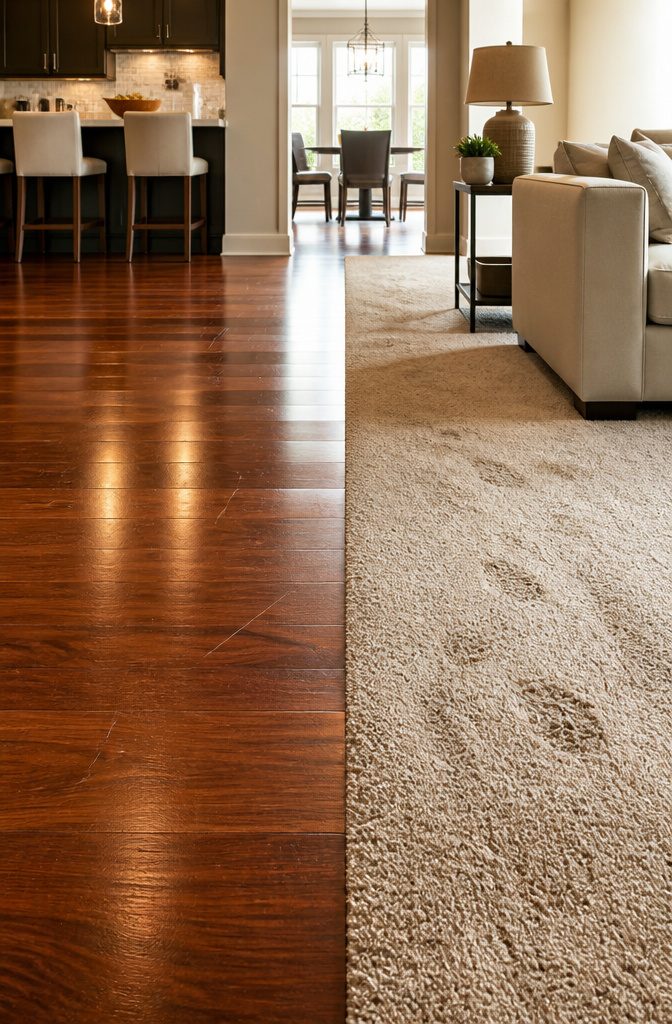
Durability is crucial, as wear patterns can develop in high-traffic areas like near the couch.
Durability
A living room floor takes a beating, and not just from the obvious spots by the front door.
The path between couch and kitchen, the corner where a desk chair pivots, the strip in front of the TV where someone always stands to change the channel: these wear patterns show up faster than most people expect when they choose a floor for looks alone.
Durability matters most if you have kids, dogs, or a habit of rearranging furniture twice a year.
It also matters if you plan to stay put for a decade or more, since replacing a whole living room floor is a project that eats up more than a weekend.
Solid hardwood scores well against dents but scratches relatively easily; the scratches can be sanded out eventually, which is part of why some buyers still favor it.
Engineered wood and laminate hide scratches better but can only be refinished once or twice, if at all.
Vinyl and tile shrug off most abuse but have their own limits: vinyl can gouge from sharp furniture legs, and tile cracks if something heavy drops hard enough.
If you live alone, keep shoes off indoors, and do not own a large dog, you can safely prioritize other factors over raw toughness.
Maintenance Requirements
The living room tends to collect whatever the rest of the house sheds: dust from the hallway, crumbs from the kitchen, leaves tracked in from the yard. Some floors forgive this; others announce every speck within hours.
Maintenance also means the periodic work beyond daily sweeping: resealing stone tile every year or two, buffing out scratches in hardwood, replacing single planks of laminate if the locking edge fails.
Buyers with packed schedules or a low tolerance for housework should weigh this heavily. Families with young children face a different equation, since spills happen faster than anyone can blot them.
Tile and sealed vinyl generally ask the least ongoing attention. Hardwood needs more vigilance about standing water and grit that acts like sandpaper under shoes.
Carpet demands regular vacuuming and professional cleaning to stay presentable, though the actual daily effort is not much more than hard surfaces if you keep up with it.
If you genuinely enjoy the ritual of caring for wood, or if you already own a robot vacuum that handles the daily pass, maintenance level matters less.
Cost of Materials and Installation
The full cost of a living room floor includes what you cannot see: underlayment, adhesive, transition strips, and the labor to remove what is already there.
A budget material can turn mid-range once you add the prep work, while a pricier option that clicks together over existing flooring sometimes lands closer than it first appears.
Installation costs swing widely by region and by the condition of your subfloor; a slab with moisture issues or old adhesive residue will eat money before the new material even arrives.
Buyers stretching a tight budget should look hard at what they can handle themselves.
Floating vinyl plank or laminate goes down with basic tools and patience. Glue-down products, most tile, and any solid hardwood over a concrete slab usually call for professional labor.
If you are renting or planning to move within two years, cost matters differently: you might prioritize something you can install and remove without much loss, or simply accept the existing floor and spend on rugs instead.
Aesthetic Appeal
The living room is where guests gather and where you stare at the floor while pretending to listen to someone talk. It needs to hold up to that scrutiny.
Aesthetic appeal here is not just about beauty in isolation; it is about compatibility with walls you cannot repaint this month, furniture you already own, and the light that enters at 4 p.m. in December.
Some buyers fall hard for the warmth of oak or the cool precision of large-format tile, then struggle when the rest of the room fights that choice.
This factor rises in importance if your living room connects openly to the kitchen or dining area, since the floor becomes a visual bridge between spaces.
It drops if you plan to cover most of it with a large area rug anyway, or if your taste shifts often enough that you would rather not marry a bold pattern.
Owners of older homes with original details sometimes choose floors that read as period-appropriate even if they are new material made to look old.
Comfort Underfoot and Eco-Friendliness
These two factors together make up the final slice of the decision, and they pull in different directions for most buyers.
Comfort matters if you sit on the floor to play with kids, if you walk barefoot year-round, or if you are past the age where your joints forgive hard surfaces.
Carpet and cork win here; tile and concrete lose. Vinyl and engineered wood sit in the middle, slightly softened by underlayment.
Eco-friendliness enters the conversation if you have chemical sensitivities, if your household includes someone with allergies, or if you simply prefer to minimize the petroleum-based materials in your home.
Solid hardwood from certified sources, cork, and linoleum (the real kind, not vinyl imitators) carry the clearest environmental stories. Most vinyl, even the good stuff, does not.
These factors can safely be ignored if you always wear shoes indoors, if you plan to layer a thick rug over everything, or if your primary concern is surviving the next five years without replacement.
For everyone else, they are worth a moment of honest comparison before the final choice.
How the Top Picks Compare
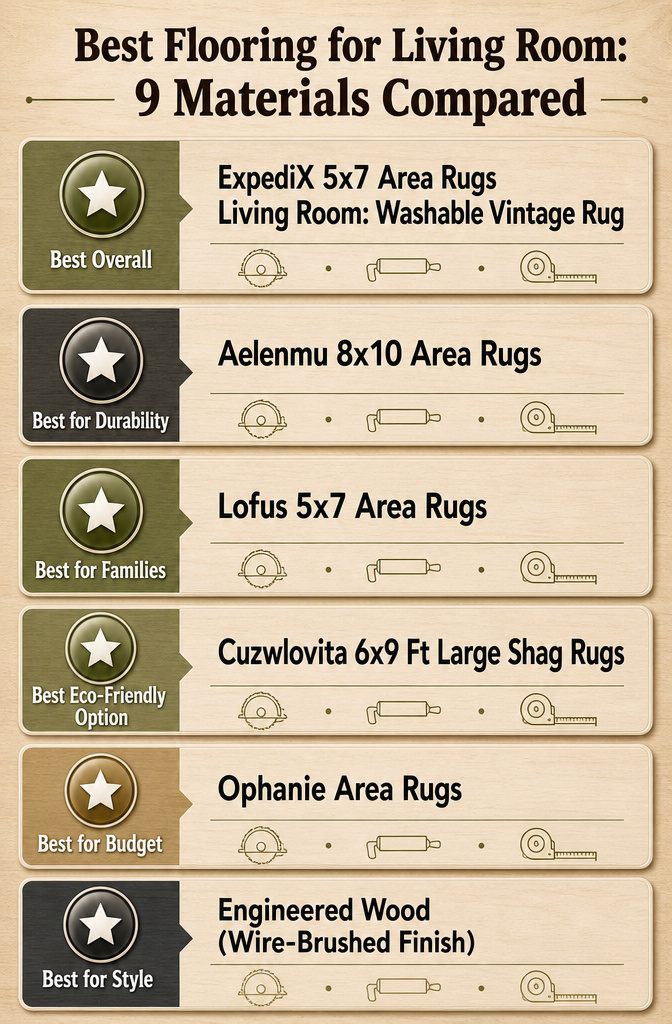
Comparison reveals that washable rugs vary in construction, affecting their drying times.
The washable rugs split into two camps once you look past the marketing. ExpediX, FXRHLP, and Ophanie all go into a standard machine, but their construction differs enough that the convenience lands differently.
ExpediX uses a low-pile flatweave that dries in a normal cycle; FXRHLP’s slightly thicker backing needs air-drying or a low-heat setting to prevent the rubber from curling.
Ophanie is the thinnest of the three, which means it fits in apartment-sized washers without argument but transmits cold from the subfloor straight through your socks.
If you are renting on a ground floor with drafty windows, that thinness costs something every January morning.
Aelenmu and Lofus both target households that beat on their floors, yet they absorb punishment differently. Aelenmu’s denser weave shrugs off office chairs and dog claws; the fibers spring back rather than matting.
Lofus adds a stain-resistant treatment that buys time when juice hits the weave, though owners note the coating fades after a dozen or so washes.
For families still in the sippy-cup years, Lofus wins by a margin. Once the kids are steady on their feet, Aelenmu’s longer wear life becomes the better bet.
Cuzwlovita carries the eco-friendly label through recycled PET content, which matters until you learn the shag pile is deep enough to swallow LEGO bricks and the stray grape.
The environmental story is real; the maintenance reality is a vacuum with a beater bar and patience. PLHXFR offers a similar sink-in softness without the green credentials, and its shorter shag releases debris more willingly.
Engineered wood and the auxua vinyl both answer the same visual itch, but the feel underfoot separates them completely. The wire-brushed engineered wood carries temperature and hardness; it clicks when you walk in heels and shows every dropped key.
Auxua’s vinyl roll warms faster and quiets footsteps, yet the seam where one roll ends and another begins never fully disappears, especially in afternoon sidelight.
Neither fools anyone who kneels to tie a shoe, but from the sofa with coffee in hand, the vinyl does the job at a fraction of the commitment.
Style, finally, is where the rugs scatter. ExpediX and FXRHLP borrow from vintage Persian layouts with enough abstraction to read as modern; Ophanie plays it safer with solid-adjacent tones that disappear into beige walls.
For renters who want the floor to do the talking, ExpediX carries the most personality. For renters who want their security deposit back, Ophanie makes the stronger case.
Flooring Maintenance Guidelines
Your living room floor takes a beating. The right material won’t just look good on day one; it needs to keep looking decent without turning your weekends into a second job.
Hard surfaces tend to split the difference between effort and forgiveness.
Hardwood needs a dry mop most days and a damp (never wet) mop when something sticky happens. Water is the enemy here, and owners with pets or kids report that standing puddles warp boards faster than the marketing suggests.
Refinishing every few years keeps the surface intact, but that cost adds up. Tile asks less of you day to day, though grout lines collect dust and the occasional stain that a standard mop won’t touch.
A soft brush attachment on your vacuum helps, and sealing grout annually isn’t optional if you want it to stay light-colored.
Vinyl and its peel-and-stick cousins are the low-effort choice the research keeps pointing to.
The 0.02-inch wear layer on standard products handles most abuse, and spills wipe up without drama. The waterproof backing matters more than people think; a drink knocked off the coffee table stays on the surface instead of seeping through.
That said, the adhesive can weaken in spots that see constant chair scraping, so felt pads under furniture legs are worth the small hassle.
Carpet and rugs sit at the other end. The 5×7 and 8×10 sizes in the research are almost all machine washable now, which changes the math.
A low-pile rug under the sofa area vacuums flat and goes through a gentle cycle when life happens. High-pile shag reads cozier but traps more, and the 1.8-inch thickness takes longer to dry.
Owners mention that robotic vacuums work fine on short piles and struggle on fluffy ones, so your cleaning tools shape the decision as much as your taste does.
The maintenance gap that surprised me reading owner reports: laminate looks like wood but hates water even more.
A steam mop marketed for "all hard floors" will void your warranty and swell the joints. Check the care tag before assuming.
As an example, today’s engineered wood, which is less costly than solid-wood planks, can be a great option for living rooms and bedrooms. Vinyl flooring now incorporates realistic images of reclaimed barnwood, stylish enough for a den.
Flooring Installation Tips
The order of operations matters more than most people expect. I start every living room install by reading the acclimation instructions twice, because the timeline changes everything.
Hardwood needs days inside the space before it touches the subfloor; luxury vinyl is usually ready the same afternoon. Skip this step and gaps open up within a month, especially if your delivery sat in a cold truck.
Subfloor prep is where weekend projects stall out. I check for level within 3/16 inch across 10 feet, the tolerance most manufacturers require.
High spots get a sander; low spots need patch compound and a full day to cure. Moisture readings come next.
A concrete slab reading above 4% on a calcium chloride test means a vapor barrier goes down, no exceptions. I have watched laminate curl at the edges because someone trusted a "dry enough" guess.
Expansion gaps look wrong at first. 1/4 inch along walls for laminate, sometimes 1/2 inch for wider plank styles.
Baseboards and quarter-round cover them completely, but the flooring needs that room to move through seasonal humidity swings. I mark the required gap on my saw fence with tape so I do not eyeball it and end up short.
For floating floors, the locking system clicks together dry. No glue, no nails, just patience and a tapping block.
The first row sets the whole room; I spend half my time getting it straight against a wall that is never perfectly true. Shims behind that row hold it square until I add enough weight to stay put.
Peel-and-stick vinyl is faster but not forgiving. The backing touches the floor once; repositioning kills the adhesive.
I work from the centerline out, dry-laying a full row before committing. A sharp utility blade and a metal straightedge cut cleaner than scissors, and the 11.8 inch width on wider tile formats means fewer seams to align.
Underlayment choices shift the feel.
Dense foam adds warmth and sound absorption; thin cork evens out minor subfloor flaws. I match the underlayment rating to the flooring warranty, since pairing the wrong type voids coverage for wear.
After installation, furniture stays off for the cure time.
Adhesives need 24 hours; floating floors need the weight distributed gradually. I roll area rugs out last, once the floor has settled through a full week of normal household temperature.
Choosing Colors and Styles
Your living room floor sets the tone for every other choice in the space, so I start with what has to live with it: the walls you already painted, the sofa you are not replacing this year, the light that comes through your windows at 4 PM.
Warm oak tones read yellow in afternoon sun; grey vinyl can turn flat and cold under the same light.
I have seen owners report that a rug they loved in the store looked like a different color once it lay on their actual floor.
Pattern scale matters more than people expect. A small, busy print on a 5×7 rug disappears under a coffee table and reads as visual noise from the sofa.
Large, open patterns in muted shades of grey and white tend to settle into a room instead of fighting for attention.
The abstract designs that blend with nature tones work because they pick up what is already there: a green throw, a wooden bowl, the rust color in a print.
For high-traffic living rooms, I notice the low-pile options at 0.25 to 0.32 inches hide wear better than shag. The 1.8-inch plush rugs feel incredible underfoot and insulate sound, but owners with pets describe the high pile as a maintenance project.
One compromise I see often: a thin, washable base rug in a neutral tone, layered with a smaller textured piece that can move or rotate when the wear shows.
If your room serves double duty as a play space or home office, the vintage-inspired medallion patterns and tie-dye greys handle visual clutter well. They do not show the small stains that a solid cream or stark white would broadcast.
The 8×10 size range covers most standard living room seating arrangements; a 5×7 works only when the front legs of your sofa stay on bare floor.
Water resistance shows up in owner reports as a quiet benefit, not a headline. A rug that beads liquid instead of soaking it buys time during a spill, especially over hardwood you are protecting.
The TPR or latex backing also matters more than color for day-to-day living: a rug that shifts every time a dog runs across it becomes a nuisance fast, whatever the pattern looks like.
My own method for deciding: I tape a paper printout of the rug pattern to the floor for 2 days and walk past it at different hours.
Colors shift; scale reveals itself. Most retailers now note that screen display and lighting create variation, so that step saves the return hassle.
Frequently Asked Questions
What materials hold up best in a high-traffic living room?
Hard surfaces generally outlast soft ones where feet pound daily. Owner reports show luxury vinyl and engineered hardwood resist scratching better than solid hardwood, while tile handles almost anything but feels cold.
Carpet, even low-pile, collects the wear pattern in the walking lanes within a few years. For households with kids or dogs, the research points toward rigid core vinyl or porcelain tile as the surfaces that stay presentable longest.
How much maintenance does each flooring type actually need?
The gap between promise and reality matters here.
Vinyl and tile need only regular sweeping and occasional mopping. Engineered hardwood requires more careful cleaning, and solid hardwood needs refinishing every few years in busy rooms.
Carpet demands vacuuming plus deep cleaning, and owner reports suggest the maintenance is often understated in showrooms. Low-pile rugs help bridge the gap, they clean faster than wall-to-wall and can move with you.
What should I budget for materials and installation?
Costs run from budget vinyl you can lay yourself to premium stone that needs professional setting. The research notes one figure: peel-and-stick vinyl tile runs about 4.99 USD per square foot.
Beyond that, the spread is wide. Carpet and laminate sit in the mid-range for materials, but carpet adds padding and labor.
Hardwood and tile climb toward premium, especially with subfloor prep. My own research found installation quotes vary more than material prices, so I always get three.
Which flooring works for homes with pets?
Scratch resistance and accident cleanup drive this choice. Tile and luxury vinyl handle claws and spills without drama.
Engineered hardwood tolerates some claw traffic but shows damage eventually. Carpet, even stain-resistant, traps dander and holds odors.
The washable rugs in the research, 5×7 and 8×10 sizes with non-slip TPR or rubber backing, offer a compromise: soft surface for pets to lie on, machine washable when accidents happen, and replaceable when they wear.
What styles and colors can I actually find?
Every material now mimics something else. Vinyl and laminate planks copy oak, walnut, even stone.
Tile ranges from concrete-look porcelain to wood-look planks. Hardwood stays classic in naturals, though wider planks and matte finishes have moved in.
Carpet and rugs carry the most pattern variety; the research shows abstract designs, vintage medallions, tie-dye effects, and solid shag all available. Your existing furniture and wall color narrow the field faster than the showroom options expand it.