These 8 ideas run from two-digit lumber up to a full wall that breaks the weekend-and-small-budget frame.
The right one depends on how much wall you want to cover and whether you are adding light or working with what is already there.
MDF appears in six of the eight; even the fluted fireplace option and the backlit geometric panels start there before paint changes how they read.
1. Wide Floor-to-ceiling Panels
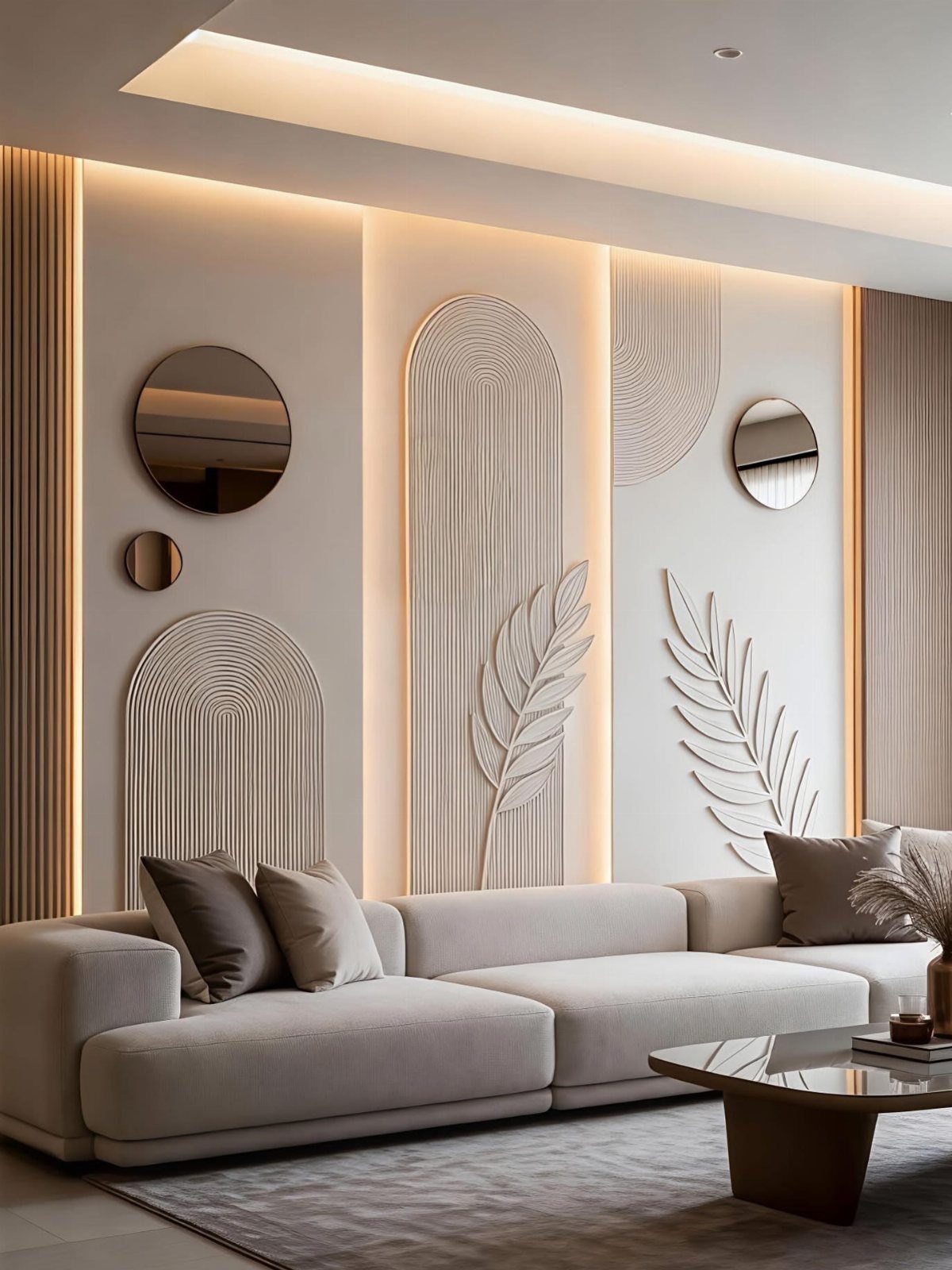
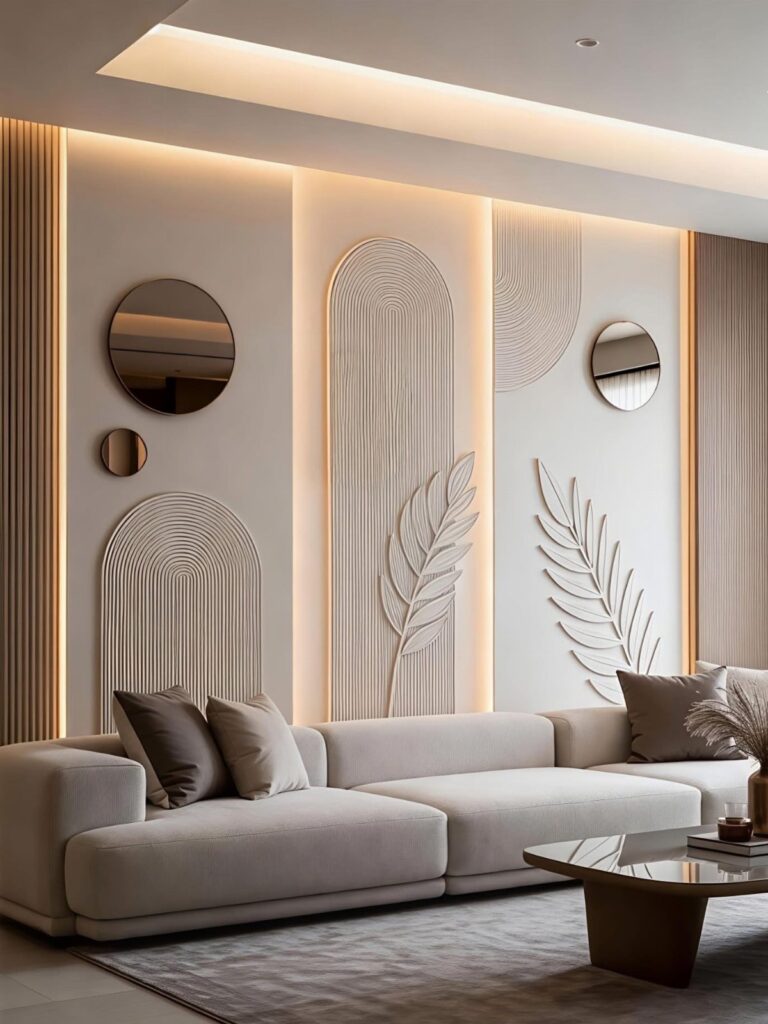
Backlit panels that stretch floor to ceiling turn a whole wall into a feature without demanding art or shelving.
Carved MDF arches with leaf reliefs read as plaster once they are painted warm cream; LED strips tucked behind the reveals graze the surface and give the whole panel a glow.
I like this route for renters stuck with uneven plaster or a hidden door they want to lose; full coverage solves both.
A hidden pantry door, which the original build included, needs panels hung on a commercial pivot hinge rated for the weight.
Skip the backlighting if your wall faces east and catches morning sun; the glow is wasted and the driver will hum.
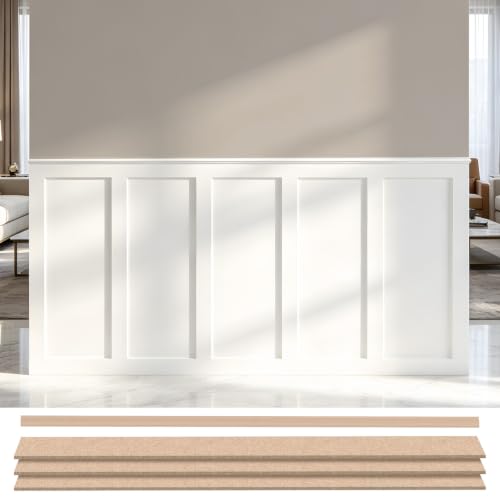
[Complete Board & Batten Wall Makeover] Refresh plain walls with a timeless board and batten design using one convenient kit. The premade panels and matching molding trim help create a clean, custom-built accent wall while reducing measuring, cutting, and assembly for a faster DIY installation.

EXCEPTIONAL ACOUSTIC PERFORMANCE - Our wall wood panels, with a high 1750gsm felt density, significantly outperform standard 1350gsm options in sound absorption and noise reduction, creating a peaceful and acoustically optimized environment.
2. Pink Painted Paneling
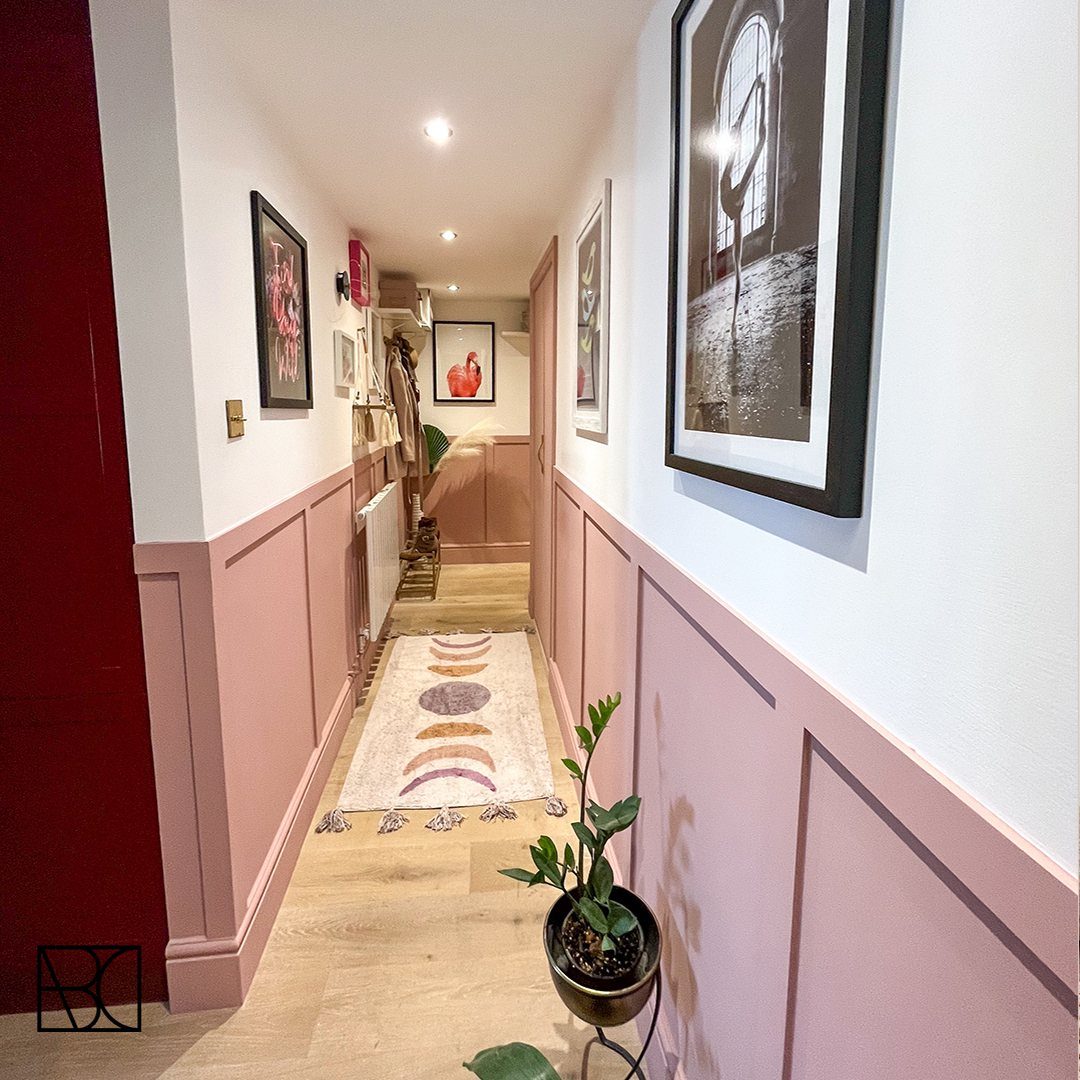
Painting the lower half of a hallway in dusty pink keeps the color from overwhelming a narrow space.
The tongue-and-groove boards here are painted before fitting, which saves taping off the floor and baseboard later; carpenter’s glue plus finishing nails hold them flush.
I would pick this for a Victorian or Edwardian flat where original wainscoting has been ripped out and the budget does not run to reproduction. Bright pink reads juvenile; a dusty shade closer to terracotta ages better.
MDF boards take paint more evenly than solid wood but swell if the mop hits them, so keep the pink below the chair rail in a hallway that sees wet boots.

PRIMED & READY TO PAINT: Factory-primed solid pine planks are ready for your chosen paint color, helping you create beautiful beadboard wall panel designs for wainscoting, bathrooms, hallways, and interior wall panels. Each box includes 12 individual wainscoting planks that install one by one to create a wainscot look. One box covers up to 3.5 linear feet of wall when installed vertically. As a natural wood product, allow 48–72 hours for acclimation before installation.
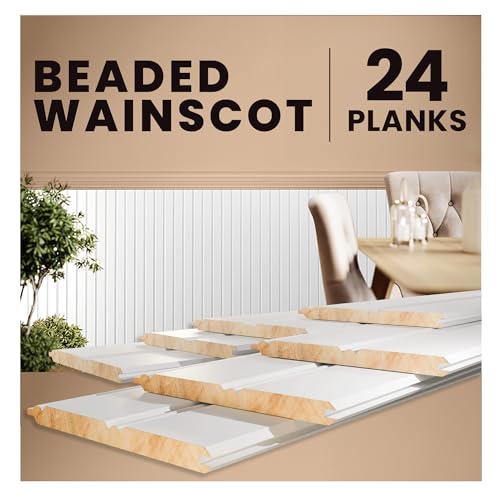
PRIMED & READY-TO-PAINT WOOD WALL PANELING: Pre-primed with a smooth white finish, these wood panels are ready for painting, perfect for accent walls, bathrooms, and hallways. The paintable beadboard design saves prep time and offers a professional-grade finish for DIY projects. Includes 24 solid pine planks covering 7 linear feet. Note: As a natural wood product, please allow 48-72 hours for planks to acclimate to your room’s humidity before installation to ensure a perfect fit
3. Light Blue Vertical Wood Paneling
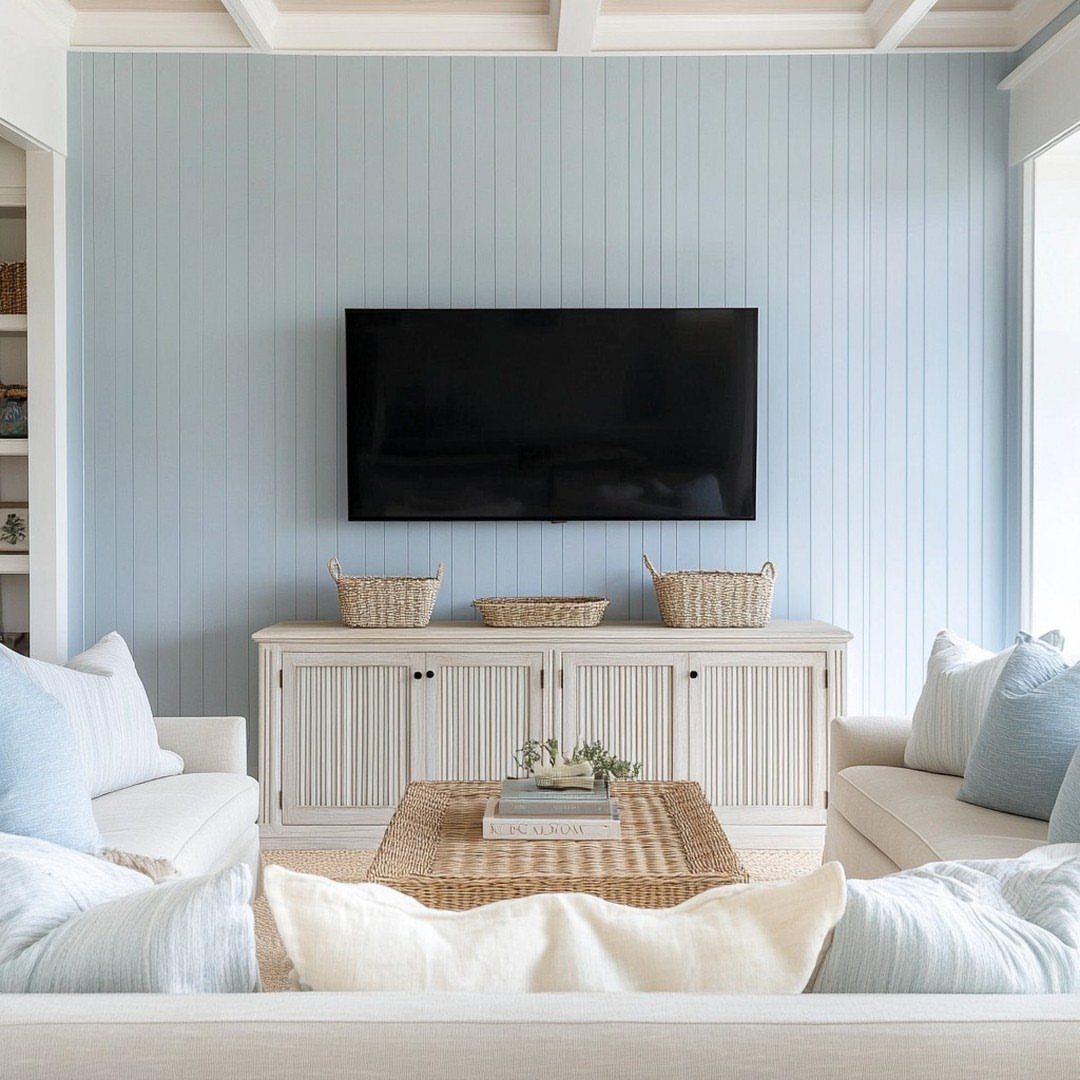
Vertical boards painted light blue draw the eye up without the heaviness of dark timber. Keeping paneling slightly darker than the wall above it stops the ceiling from feeling lower than it is.
I would paint any radiators or pipework the same blue so they vanish into the paneling rather than breaking the line.
Pine or poplar boards are cheap enough that a feature wall behind a console stays in the two-digit range for lumber.
The ocean-vacation mood the color brings works best in rooms that already get strong daylight; north-facing spaces turn it chilly and gray by four p.m.

Stylish and Modern: The tendy slat design combined with various wood finishes update interior decor in a big way

Farmhouse Bathroom Wall Art: This artwork is available in two sizes, 8x10 inches and 12x16 inches. Crafted with a PS frame, this framed canvas painting is designed for durability and style — just unbox, hang, and enjoy your new favorite focal point

Superior Sound Absorption :Our acoustic wall panels are expertly engineered to absorb echo, reduce reverberation, and minimize background noise, making them perfect for home offices, recording studios, conference rooms, and media centers.
4. Cream Fluted Wall Panels
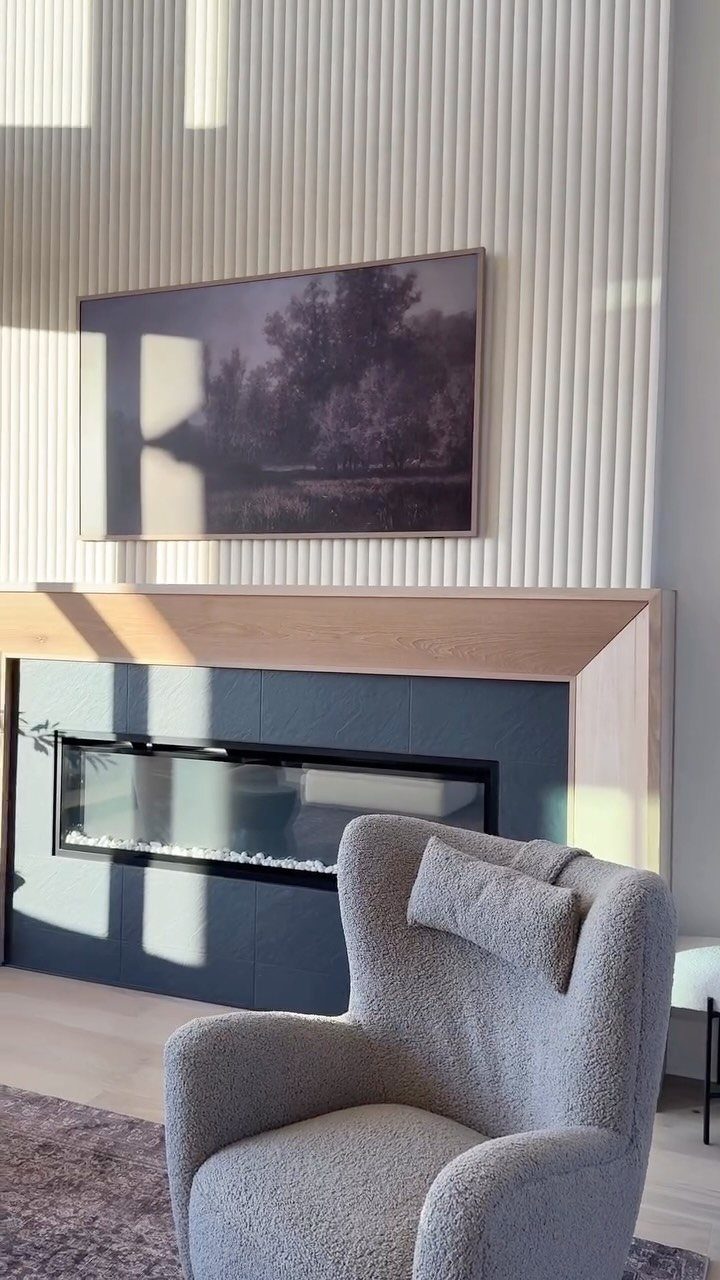
Fluted panels above a fireplace catch raking light from windows and from the fire itself, so the texture keeps moving through the day.
Cream paint warm enough to avoid reading as stark white will still hold its own against a dark blue surround.
I would check the mantel depth before ordering; fluting that projects too far past a shallow shelf casts shadows onto the art.
MDF slats are the usual choice, run through a router or bought as premade half-rounds, then primed and sprayed for an even coat.
A smart panel with color-changing LEDs is available now, though I would skip it here; the fluting is the point, and chasing light cheapens the effect.

High-Quality Wall Panels: Our acoustic panel set is crafted with high-density polyester fiber, premium medium-density fiberboard, and a solid wood veneer. This combination provides an elegant look, superior sound damping, and excellent sound deadening, significantly improving room acoustics

Recyclable Material: Olanglab wood 3D wall panels consist of MDF slats and acoustic felt backing, they are made of recyclable and reusable materials that contribute to promoting sustainability.

𝐑𝐞𝐚𝐥𝐢𝐬𝐭𝐢𝐜 𝟑𝐃 𝐒𝐥𝐚𝐭 𝐃𝐞𝐬𝐢𝐠𝐧: Elevate your space with the timeless look of vertical wood slats. This slat wall panels feature a realistic white oak wood grain finish with deep black recessed felt gaps, providing a high-end, architectural 3D effect that adds depth and sophistication to any room
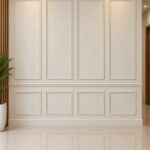
5. Beige Recessed Wainscoting Panels
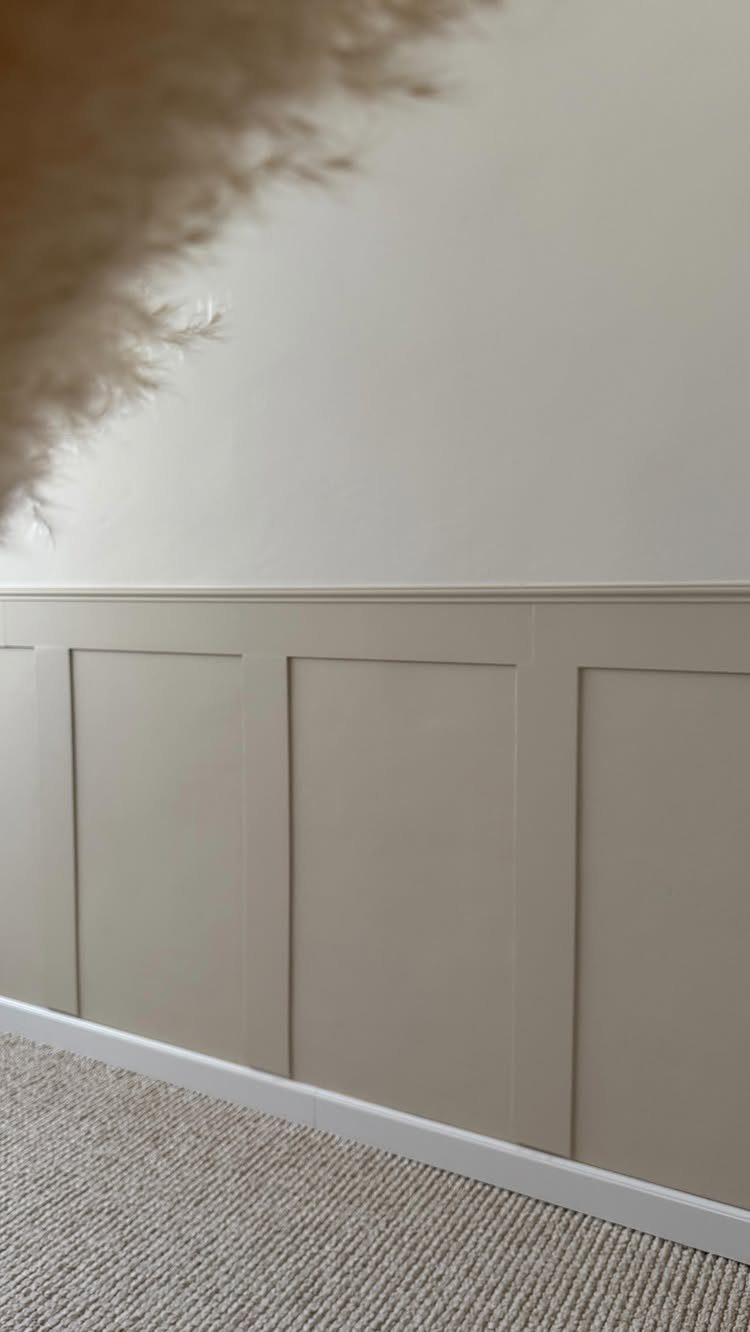
Recessed rectangles with a chair rail and matching baseboard give a new-build room the bones it never had. Beige close enough to the carpet lets the wall and floor read as one continuous envelope, which calms a small room.
I would measure the wall height before deciding on panel proportion; these rectangles look squat under standard ceilings unless you drop the rail lower.
An MDF sheet, a router with a straight bit, and a coped joint on the rail corners will keep materials in the two-hundred range for a short wall.
Paint the chair rail and baseboard the same beige, not white; the contrast in old houses was about dirt showing, and here it would chop the wall in two.

MDF Material for Lasting Use: this board and batten wall panel kit is made from MDF, offering sturdiness and water resistance; The surface is smooth, providing a comfortable touch for interior wall applications

Sleek wood veneer + sturdy MDF core + high-density sound-absorbing polyester fiber, Art3d fluted wood paneling enhances both the visual and acoustic quality of any space. Seamlessly integrates with various design themes, transforming your space in now!
6. Molding Panels Framing a Mural
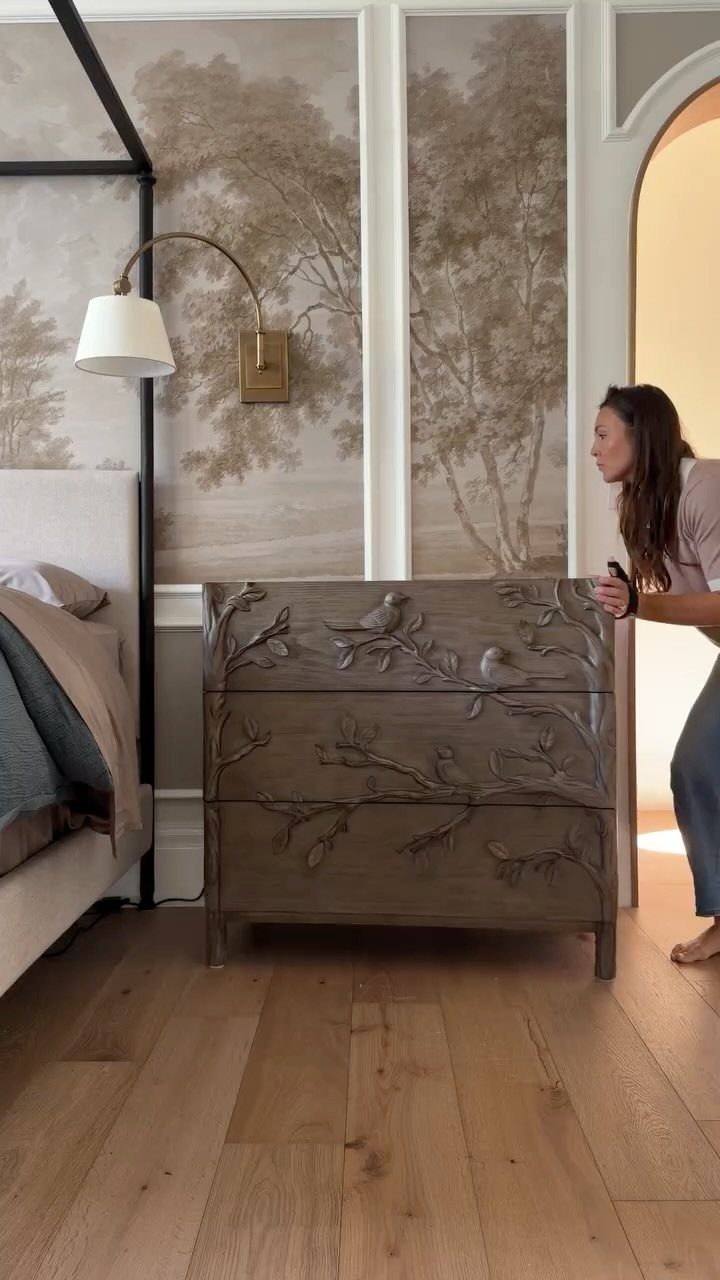
Picture-frame molding over a mural turns a flat print into something that reads as collected, almost inherited.
The sepia landscape is wallpaper or a mounted print, not hand-painted, which keeps the cost low for the art and the labor in your own hands.
I would size the molding to the image, not the wall; panels that float too wide around the scene look like a frame shop mistake.
Bed placement matters: with a low dresser and a low bed, the molding can run well above the mattress line without crowding sleepers.
A darker mural would need white molding for contrast; this sepia is light enough that pale grey would also work.
Paul Maitland-Smith established the company in Hong Kong in 1979, after getting his start in London in the 1950s as an antique dealer who also sold reproduction furniture, something that would become a Maitland-Smith specialty.
— 1stDibs
✔️100% REAL wood with adhesive strips on the back that are easy to install

✨【Size】― Each roll measures 23.6" x 86.6" (14.2 sq. ft.) for easy application. With a thickness of 0.12", these slat wall paneling deliver a striking 3D effect, creating a visually captivating look.
7. Backlit Geometric White Wall Panels
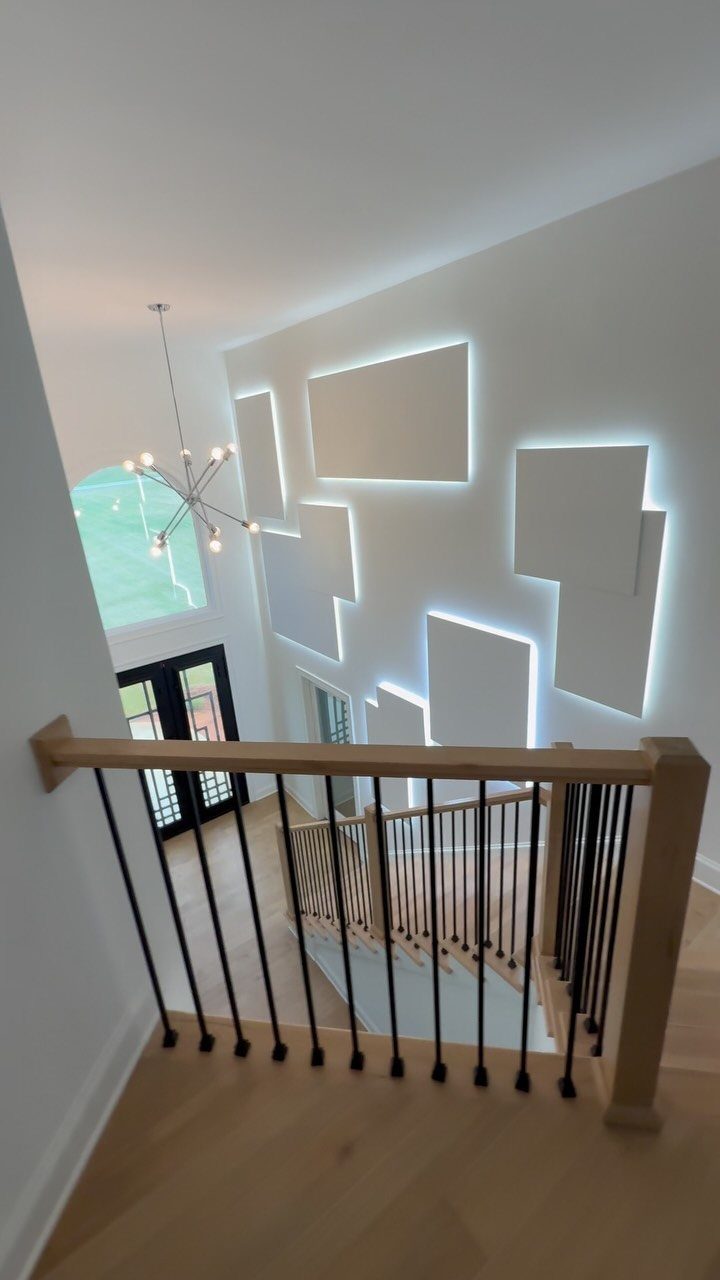
Soft light bleeding from behind geometric panels turns an ordinary hallway into something that reads like a gallery installation.
The panels themselves are simple MDF or plywood rectangles, painted matte white, mounted on standoffs so they float an inch or two off the wall. LED strip tape runs along the back edge, hidden completely from the front view.
I would run the tape on a dimmer; full brightness defeats the point, which is that the light seems to come from nowhere.
Plan your wiring before the panels go up. A switched outlet behind the center panel keeps cords invisible, or low-voltage wire can chase through the wall to a remote driver.
This works best where the wall is already open or where you are rebuilding anyway. In an existing finished space, the cord management becomes the whole project.
Someone with a two-story void or a long stairwell gets the most from this; the scale needs height to feel right. On a lower ceiling, the panels shrink and the effect turns subtle, almost like wainscoting with a glow.
That can be lovely, but it is a different thing.
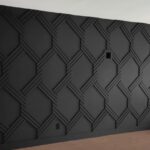
8. Dark Geometric 3D Wall Panels
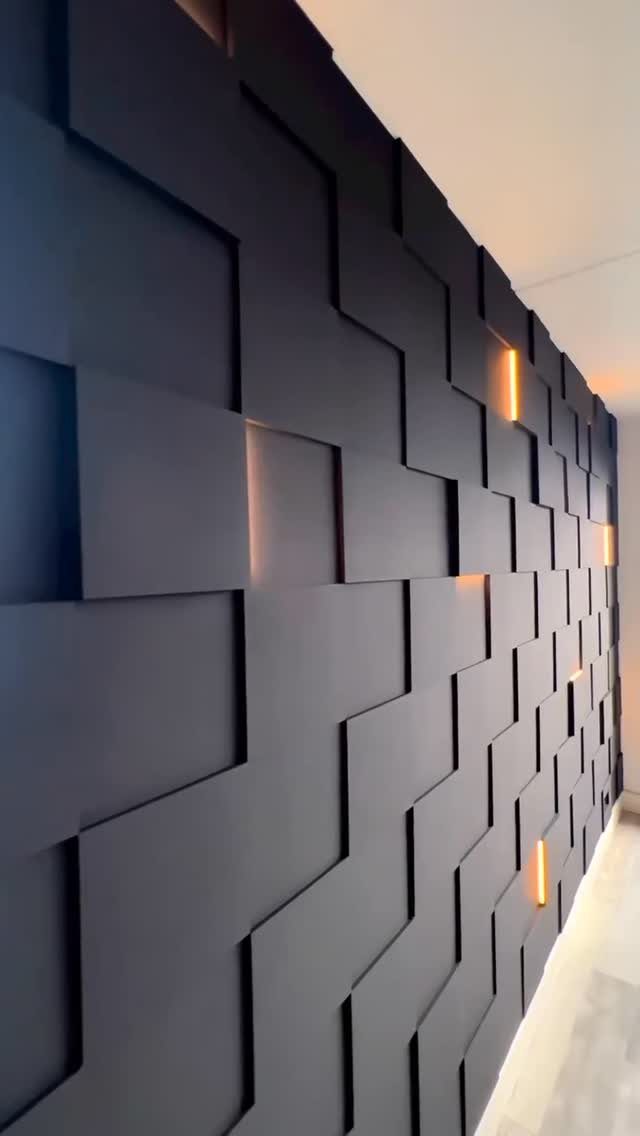
Charcoal 3D panels read as architecture, not decoration, and the warm light catching their recessed edges keeps them from going flat. The depth here is what changes everything: shadow does half the work once the lights dim.
I have seen versions built from painted MDF blocks stacked and offset, and versions using commercial slat-wall systems cut to depth and arranged in a custom grid. Either route, the paint matters more than the material.
A soft matte charcoal absorbs light; anything glossier fights the effect.
The orange LEDs in the visible version are a choice, not a given. Color-changing strip tape lets you shift with season or mood, though I would default to warm white or amber for daily use.
The smart panels mentioned elsewhere go further, but a basic dimmable setup covers what most people actually use.
These panels cost more than the others here. Between the panel material, the depth of buildout, the lighting and the electrical, a full wall runs past the weekend-and-small-budget frame that fits the rest.
It also commits the room: this wall becomes the statement, and everything else arranges around it. For someone who wants one bold move in an otherwise neutral space, that trade makes sense.
For a room that already has a lot to say, this adds noise.

Noise Reduction Material: Each roll of our exquisite wood slat wallpaper measures 16.8" x 196", can cover 22.86 sq.ft. Meticulously crafted with a premium-grade foam base and a high-density, wear-resistant PVC layer, the wallpaper is engineered for unmatched durability. Wood contact paper has a certain thickness, enough to protect your wall, and can locally disperse and isolate noise for better noise reduction

Customizable Size: This mural's total size is 69"x96"(H x W), cut into 5 pieces for easy installation, each 19.2"x69". We can customize size and pattern for you. Please measure the width and height of your wall before telling us, so that we can provide you with more efficient service.

Customizable Size: This mural's total size is 100"x144"(H x W), cut into 6 pieces for easy installation, each 24"x100". We can customize size and pattern for you. Please measure the width and height of your wall before telling us, so that we can provide you with more efficient service.
Pros of Painting
Painted paneling lets you build a wall that matches the room exactly rather than hunting for a tone the lumberyard happens to stock.
A coat over MDF or cheap pine erases grain mismatch, filler spots and the odd dent from shipping.
The trade is the wood itself. Veneer grain, birdseye, quarter-sawn lines; all of it disappears under primer.
For someone who chose paneling partly for that living surface, paint can feel like a waste.
I would still paint if the existing wood is damaged, dated to a stain color that does not fit the house, or a species I do not like looking at daily.
The natural beauty only matters if the natural thing is beautiful to start with.

8 Panels per box (Covers 30 square feet total)

RIBBED TEXTURE DESIGN: Features elegant vertical ridges that add depth and visual interest to any wall or surface.

Stylish and Modern: The trendy slat design, combined with a variety of wood finishes, updates your interior décor with a bold and contemporary touch.
Cons of Painting
Reversing paint on paneling is not a weekend job. Stripper softens the finish but drives it into open grain; sanding through builds heat that can blister thin veneer.
I have seen people plan to "just strip it later" and end up replacing the whole sheet instead.
The risk runs both ways. Paint applied too thick pools in corners and cracks when it shrinks; paint too thin lets the old color ghost through after a few seasons of sun.
Either flaw locks you further into the painted state. Go into this assuming the paneling will stay painted for the life of the wall.
If you are not sure about the color, test it on a single board you can live with for a month.

3D Wood Slat Wall Panels: Go beyond a flat wall! Our 3D wood slat design adds visual interest and depth to any room. The ideal wall decor solution for creating a stunning accent wall, while also helping to soften ambient noise.

Complete Fireplace Makeover Kit: peel and stick wall panels set brings 12 pieces with vintage white fireplace decorative stickers, a yellow scraper, a utility knife, and white blue nylon gloves; This complete pack lets DIY users start a fireplace makeover and decor

Modern and Elegant Design - The wood slat wall panels have been carefully designed to effortlessly transform any space, enhancing the surroundings both visually and acoustically. The wood panels help to create an environment that is not only quiet but beautifully contemporary, soothing and relaxing. Furthermore, our slat wall panels can be installed horizontally or vertically and cut to any shape allowing for creativity and a unique look to fit your aesthetics.
Choosing the Right Paint
Latex paint cleans up with water and dries fast enough to get 2 coats into a Saturday. Low-VOC formulas mean the room is usable by evening, which matters for a bedroom or a hallway you pass through constantly.
Oil paint dries slow and stinks, but the finish holds up to a kid with a tricycle. I would use it for wainscoting in a mudroom or behind a kitchen console where bags and shoes hit daily.
Enamel goes further: a hard, shiny coat that stands up to scrubbing. It reads as glossier than most paneling looks now, though, so test a patch before committing a whole wall.
Color sets the mood before the texture does. A dusty pink hallway feels smaller and warmer; light blue verticals read as air and height.
The paint type should match the traffic, but the color should match the light the room actually gets.
Maintenance of Painted Panels
Mild soap and a soft cloth handle most dust on painted panels. Abrasive sponges or scrubbing powders cut through the finish into the color underneath, so keep them away from chair rails and baseboards where shoes leave marks.
Save the leftover paint in the original can, label the room and wall, and note the date. Touch-ups blend best within a year or two; after that, even the same formula shifts with age and sun.
Stir the stored can well before dipping a brush; the solids settle and the first dab will read lighter than the wall.
For backlit or recessed panels, dust the reveals with a dry brush before any liquid cleaner. Water near LED strip tape or a driver box is a short trip to replacement.
Frequently Asked Questions
Is painting paneling a good idea?
Painting paneling works well when you want to cover uneven plaster, hide a door, or add architectural interest without the cost of replacement. MDF takes paint evenly and costs less than solid wood for most projects.
Painted paneling holds up fine in a bedroom or dining room where no one is kicking off snowy boots; for a mudroom or busy hallway, keep the painted boards above the chair rail and use tile or hardy plank below.
Is paneling outdated in 2026?
Fluted panels above fireplaces, backlit geometric installations, and recessed wainscoting in new builds all read as current right now. Paneling that reads as architecture rather than decoration tends to outlast trends.
Flat sheets of paneling look dated; depth, light, and proportion are what keep the look alive.
Can wood veneer wall panels be painted?
Yes, though MDF and solid wood are easier to work with and what I see most often. Wood veneer can take paint if the surface is prepared properly.
The finish will scratch or chip eventually, so save a small jar of the paint for touch-ups.