Most of these run $200 to $800 if you do the work yourself; the marble-look panel sits at the high end of that range and still costs less than half what real stone would.
A miter saw and patience for caulking will carry you through most of these; ordering a CNC-cut wavy panel with integrated backlighting skips straight to the finish line.
The one detail that stops first-timers cold: panels expand and contract, so leave a hair of gap at edges or you will hear them click when the heat cycles.
1. Chevron Paneling
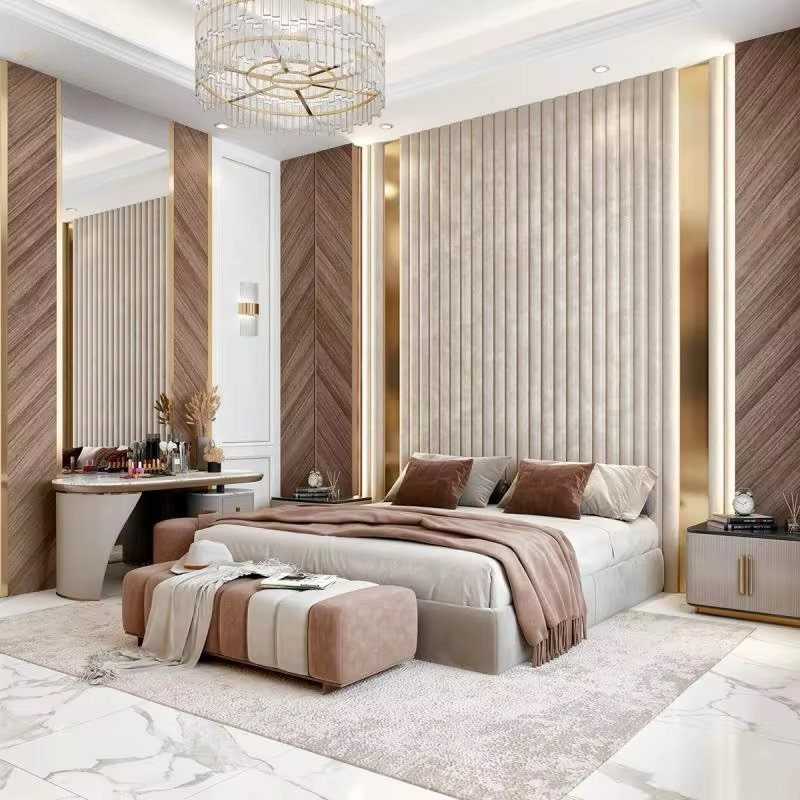
Chevron panels break a flat wall into angled planes that catch light differently through the day.
This pattern reads modern without reading trendy, which matters if you rent and want the look to outlast your lease. Large-scale chevron paneling uses timber planks cut at matching angles and fixed with construction adhesive and finishing nails for insurance.
Bigger geometry means fewer cuts and faster install, a weekend job on a single accent wall.
Paint it matte to keep the focus on shadow, or stain it to let the grain read.
I’d pick this for a bedroom that already has strong vertical lines, like tall windows or a high headboard, since the angles add movement without competing.

𝗠𝗼𝗱𝗲𝗿𝗻 𝟯𝗗 𝗧𝗲𝘅𝘁𝘂𝗿𝗲𝗱: 3D wood slat design creates depth and visual interest while enhancing sound absorption. Great for Bedroom, office to reduce echo and noise, both practical and stylish

𝗠𝗼𝗱𝗲𝗿𝗻 𝟯𝗗 𝗧𝗲𝘅𝘁𝘂𝗿𝗲𝗱: 3D wood slat design creates depth and visual interest while enhancing sound absorption. Great for Bedroom, office to reduce echo and noise, both practical and stylish
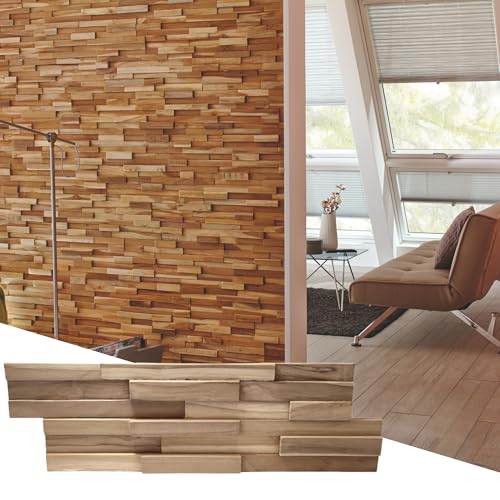
Premium real wood wall panels: beautiful hand-selected reclaimed and upcycled Asian teak wood wall panels
2. Applied Moulding or Box Trim
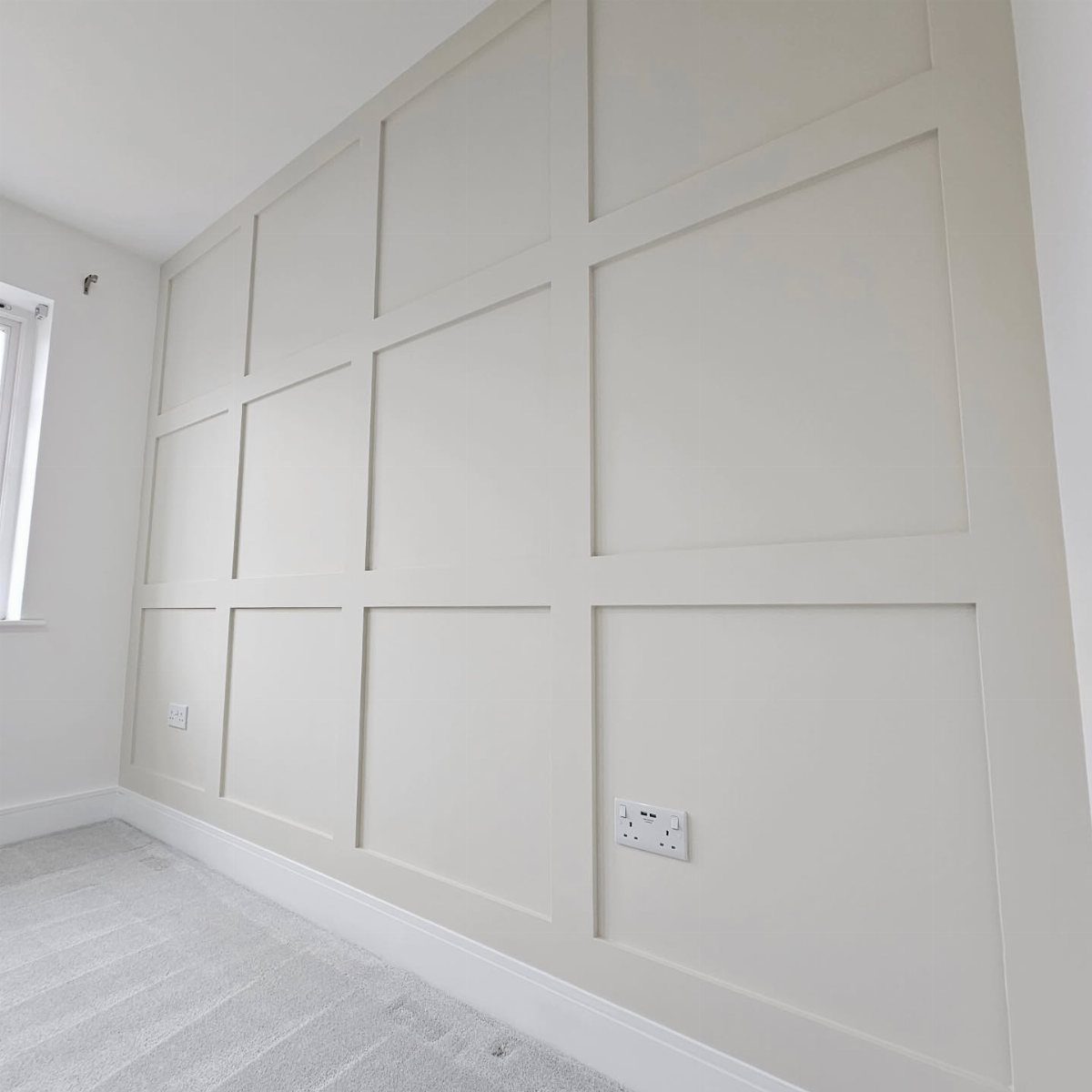
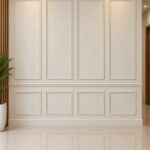
Grid moulding is the cheapest way to make a wall look architecturally considered.
Paint the strips the same color as the wall and they read as built-in shadow; paint them contrasting and you get something closer to art.
Pre-primed strips save a step, and a miter box is enough tool for the cuts if you do not already own a saw.
This suits renters who can patch small nail holes later, or owners who want to test a color commitment before painting the whole room. Uneven spacing ruins this effect, so measure twice and use a level.

High-Quality Wall Panels: Our acoustic panel set is crafted with high-density polyester fiber, premium medium-density fiberboard, and a solid wood veneer. This combination provides an elegant look, superior sound damping, and excellent sound deadening, significantly improving room acoustics

Modern and Elegant Design - The wood slat wall panels have been carefully designed to effortlessly transform any space, enhancing the surroundings both visually and acoustically. The wood panels help to create an environment that is not only quiet but beautifully contemporary, soothing and relaxing. Furthermore, our slat wall panels can be installed horizontally or vertically and cut to any shape allowing for creativity and a unique look to fit your aesthetics.

Effortless Peel & Stick Installation: Enjoy a truly hassle-free upgrade. Our self-adhesive panels require no tools, nails, or messy glue. Simply peel off the backing and press firmly onto any clean, flat surface for an instant transformation—perfect for DIY beginners
3. Classic Wooden Wall Panelling
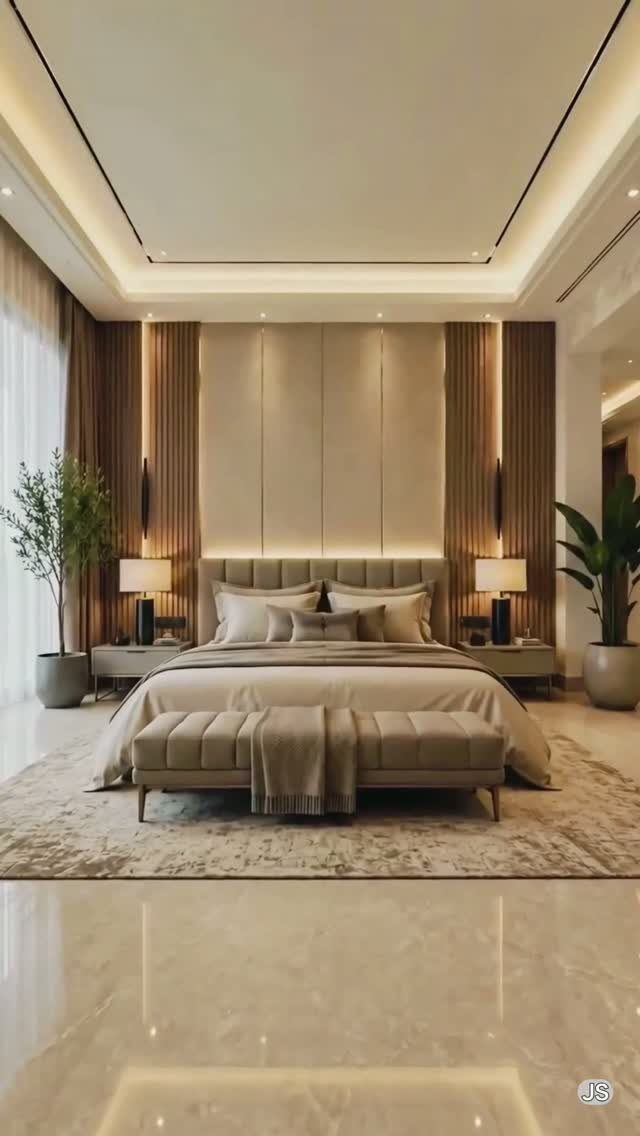
Solid wood panels bring a warmth that paint can only imitate.
Vertical fluting adds rhythm without clutter, and a cove light at top turns the panels into a subtle lamp at night. Oak or ash keeps it contemporary; pine works if you want a lighter, more Scandinavian read.
A matte finish keeps things quiet, a slight sheen makes them feel more finished.
In a smaller bedroom, I’d stick to lighter tones and stop the paneling short of the ceiling, leaving white above to lift the eye. In a larger room, darker timber can handle going wall to wall.
One warning from experience: panels expand and contract. Leave a hair of gap at edges or you will hear them click when the heat cycles.
Keeping the ceiling and the top of the wall white visually tricks the eye into making the room feel bigger and airier than it is.

Wall Molding Kit: The package includes 24 pcs wall molding (24in-14 pcs, 54in-6 pcs, 48in-4 pcs), which can be combined into 6 frames, allowing you to easily create a stylish accent wall. The 6-frame layout shown is designed for a wall measuring approximately 10 feet high by 11 feet wide. Please measure your wall and plan the layout before installation.

【Perfect Size – Flexible Coverage for Multiple Surfaces】9.8ft length with 0.4" width and 0.1" thickness, designed for versatile use on walls, tiles, mirrors, windows, and furniture edges. Ideal for accent walls, backsplash edging, baseboards, and DIY molding projects.

【Premium PVC Material - Built to Last】Made of high-quality PVC, this baseboard features a waterproof and moisture-resistant surface, making it ideal for damp areas like kitchens and bathrooms. Engineered for durability, it resists deformation and cracking even after prolonged use. Plus, its easy-to-clean design ensures effortless maintenance for long-term convenience.
4. Board and Batten
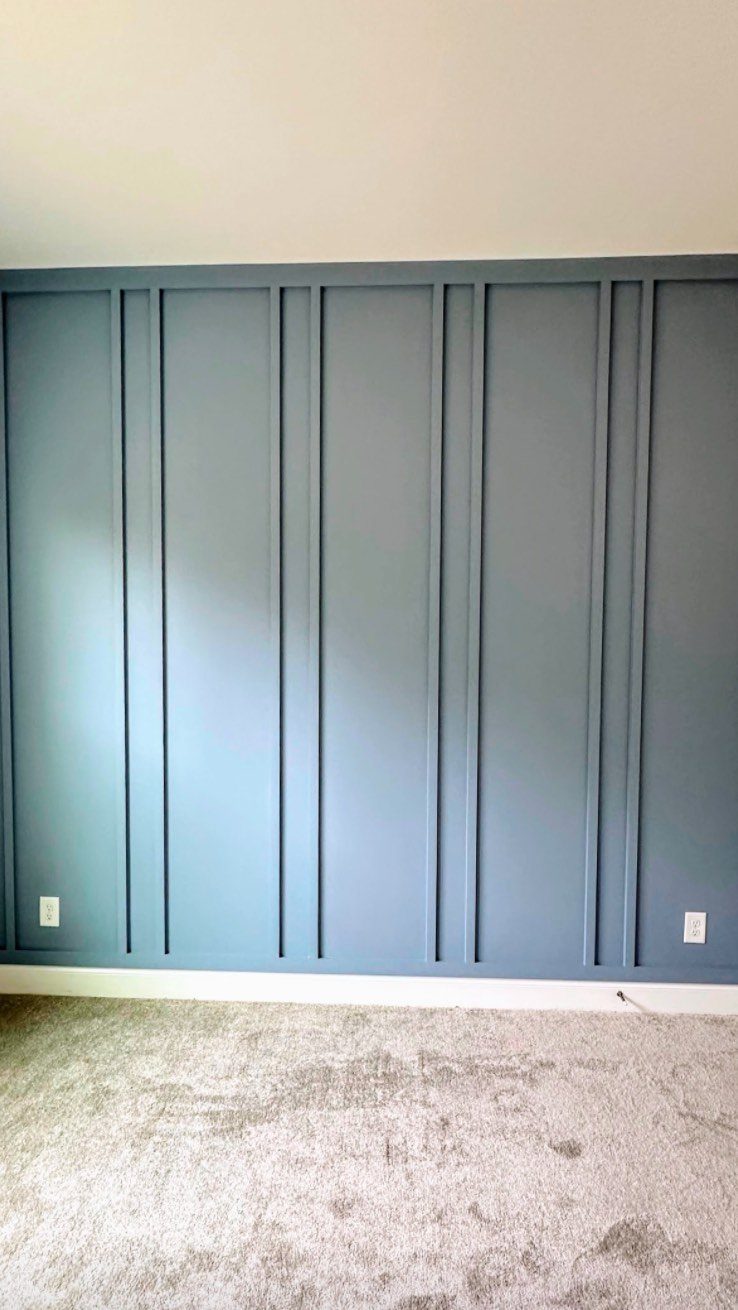
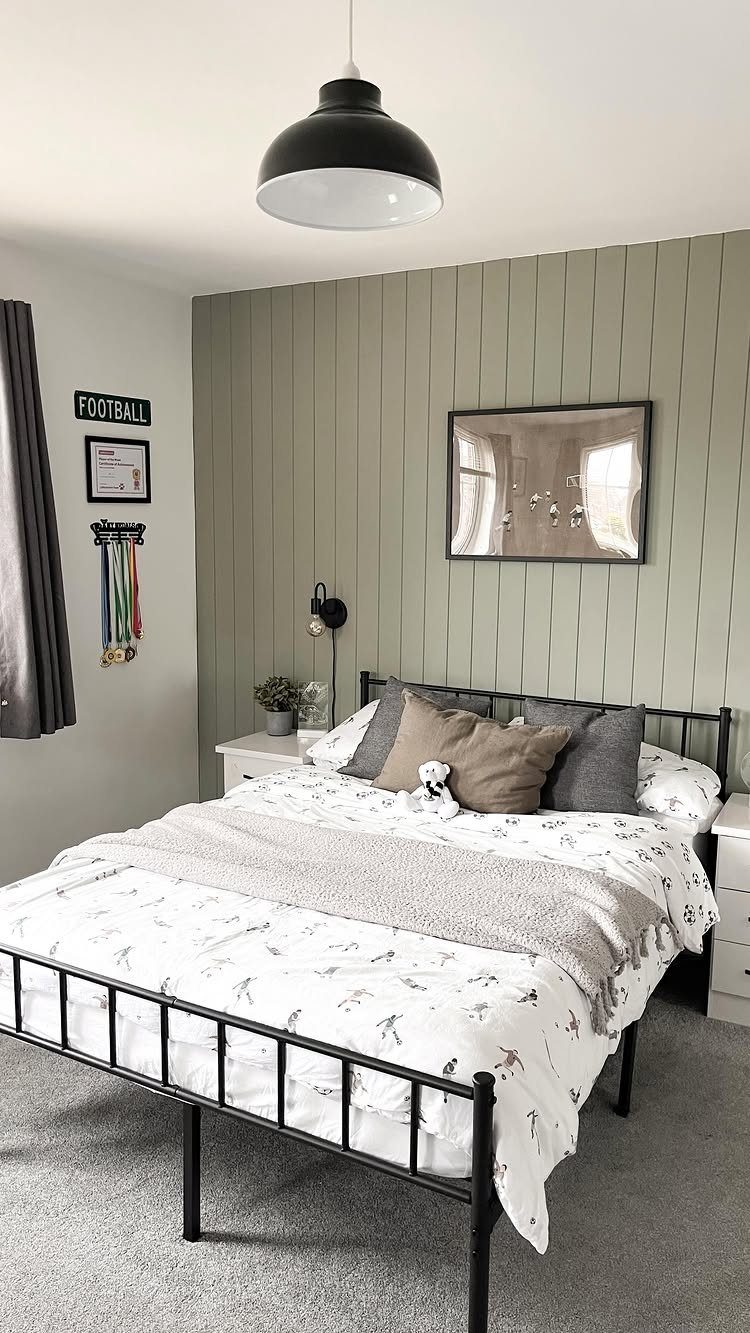
Board and batten splits a wall into vertical boards with narrow strips covering the seams, a system invented to seal out weather on barns and now used to add shadow lines indoors.
Slate blue paint turns the texture into the main event. You can install it at any height; a full wall like this reads dramatic, a wainscot version reads traditional.
MDF works and costs less, but real wood takes paint more evenly and lasts longer if your climate shifts seasonally.
This is forgiving DIY territory. The vertical strips hide cuts that are not perfectly square, and the repetition means one mistake does not stand alone.
I’d aim this at a reader with a miter saw and a free Saturday, not at someone looking for a 2-hour project.
[Transformative Interior Decoration]: Our pre-made wall moulding kit effortlessly adds depth and character to your wall, blending contemporary minimalism with classic design. Elevate your interior wall with timeless elegance

High Quality Material - These molding panels are made of polystyrene material, which is hard and durable, lightweight, odorless, non-warping, and non-cracking. The quality is absolutely superior to that of foam molding panels.

Peel and Stick Wall Molding Kit : Our wall moldings include 18 pieces of 24 inch decorative strips and 12 pieces of 27 inch decorative strips.Can be freely matched according to your needs,bringing an elegant finished appearance to doors or walls
5. Tongue and Groove
Tongue and groove locks each board into the next, a joint tight enough to block drafts in a log cabin and neat enough to read as deliberate texture in a bedroom.
Vertical boards pull the eye up, which helps low ceilings feel less pressing. Either way, the seams between boards catch light and create shadow that a flat wall cannot match.
A creator who finished their own wall noted it took nearly 2 years to start and was worth the wait.
My translation: this is not hard, but it is slow, especially if you are working alone and holding boards level while fastening. Rent a siding nailer if you can; your shoulders will thank you.

Premium quality PVC 3d wall panels, light weight and fire resistant, easy DIY

Soundproof Material: Each roll of our exquisite wood slat wallpaper measures 11.8" x 118", can cover 9.6 sq.ft. Meticulously crafted with a premium-grade foam base and a high-density, wear-resistant PVC layer, the wallpaper is engineered for unmatched durability. Wood contact paper has a certain thickness, enough to protect your wall, and can locally disperse and isolate noise for better noise reduction

Modern & Natural Design: These WPC wood slat wall panels (wood plastic composite) have a unique slat design and wood finish. The fluted wall panel design not only conforms to the modern sense, but also enhances the three-dimensional layering of the wall
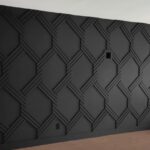
6. Patterned Accent Wall Paneling
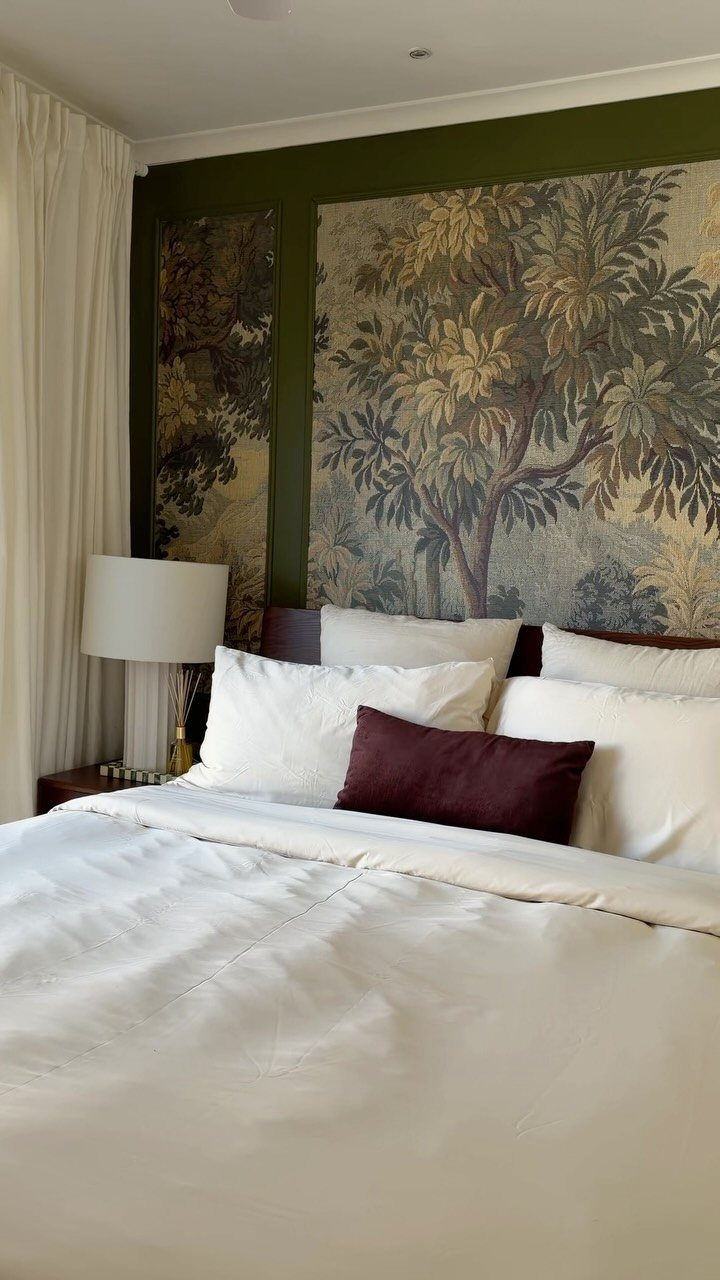
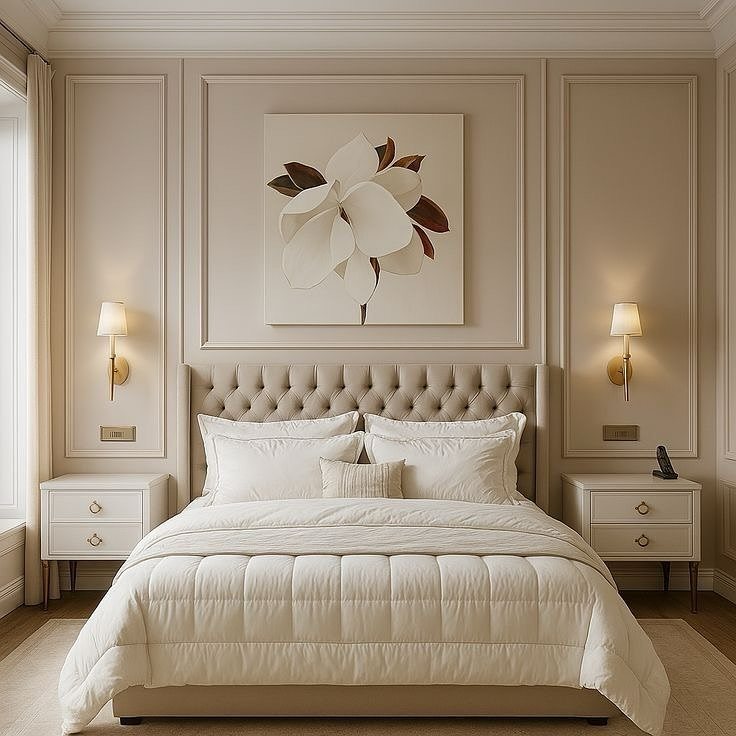
Fabric panels stretched over frames give the softness of upholstery without the commitment of a fully upholstered wall.
Botanical prints read as art that happens to absorb sound, a useful trick in a bedroom that shares a wall with a hallway or a neighbor’s living room.
You can buy pre-stretched canvas prints and add trim frames, or stretch your own fabric over 1×2 pine. Lightweight cotton or linen works; anything with too much texture fights the clean look.
This suits a renter who wants impact without holes deeper than a picture hook. Dust settles into fabric where it would wipe off wood, so plan for more maintenance than with solid paneling.
Vacuum with a brush attachment every few months, or choose a pattern busy enough to hide the buildup.

Premium real wood wall panels: beautiful hand-selected fine Asian teak wood wall panels

【Superior Sound Dampening】- Art3d wood wall panels are engineered to significantly minimize noise levels in any setting. Crafted from high-density polyester fiber, these panels absorb sound waves, enhancing acoustics and fostering a more serene and comfortable environment

✨【Size】― Each roll measures 23.6" x 86.6" (14.2 sq. ft.) for easy application. With a thickness of 0.12", these slat wall paneling deliver a striking 3D effect, creating a visually captivating look.
7. Fluted Panels with Backlighting
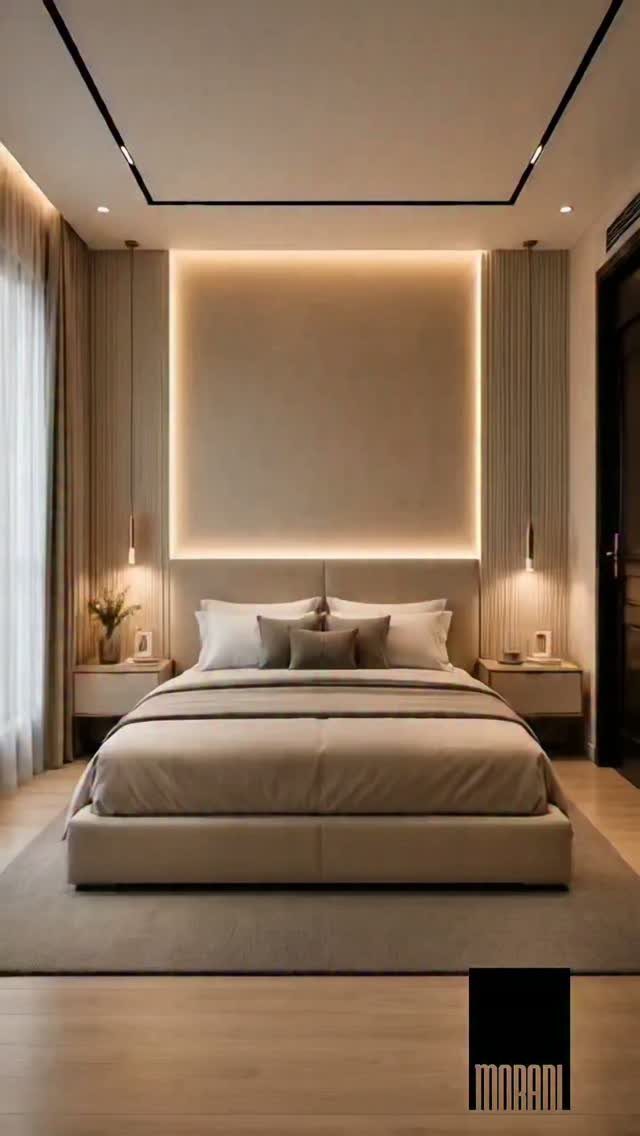
LED strips tucked behind fluted panels turn a headboard wall into something that glows after dark without a single fixture showing.
The ribbed surface catches the light at different depths, so the wall reads as sculptural even when the backlight is off.
PVC 3D panels run $8–20 per square meter for materials, and a feature wall lands around $200–500. That is mid-range here, but the impact reads higher because the lighting does half the work.
I would put the transformer on the same circuit as the bedside lamps so nothing buzzes when you dim them. If your wall is already textured, the flat backing strips that hold the flutes sit better over a skim coat.

Easy Peel & Stick Installation – Flexible & Bendable: Elvone flexible wood panels for wall feature a strong self-adhesive backing for quick, tool-free application. As bendable wall panel peel and stick, they adapt to slightly uneven surfaces. Simply measure, cut, and peel and stick onto any clean, flat wall
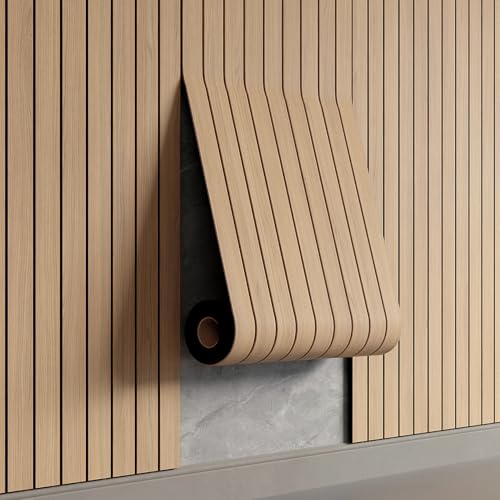
Effortless Peel & Stick Installation--Enjoy hassle-free setup with our self-adhesive PVC slat panels! Just measure, peel off the backing, and press onto any clean, flat surface—no tools or expertise needed. Perfect for DIY beginners and quick home makeovers.
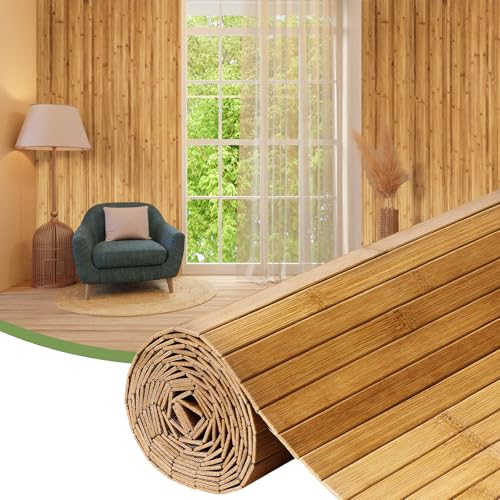
【Instant Natural Warmth & Texture】Bring nature indoors. Whether aiming for Zen, Tropical, or Boho styles, these premium bamboo panels add warmth to cold drywall. Perfect for creating elegant accent walls, ceilings, and wainscoting without messy renovations
8. Upholstered and Wood Wall Paneling
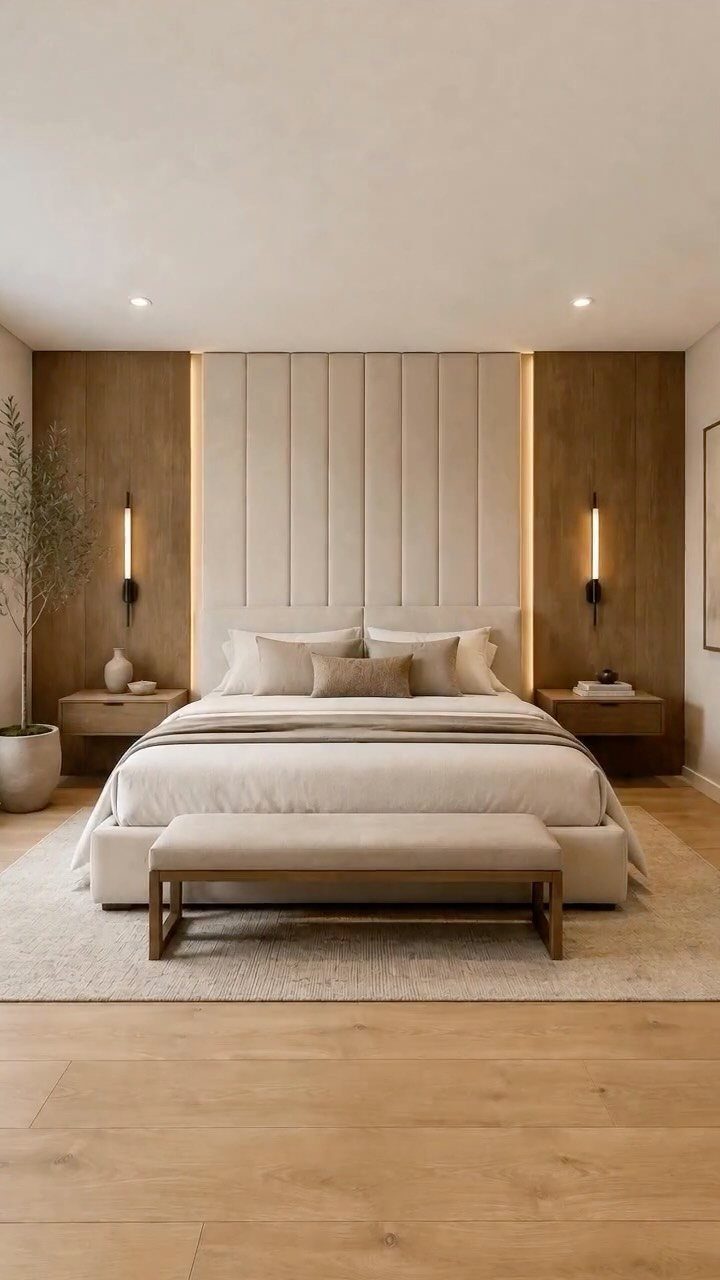
Warm wood framing a central upholstered panel gives you the softness of a headboard and the structure of architecture in one wall. The wood handles the visual weight; the fabric absorbs sound and gives you something to lean against.
Oak, walnut or cedar are the usual choices for the wood surround. Solid timber runs premium at roughly £80–180 per square meter, but engineered veneer drops that to £40–80 and still shows real grain.
A full wall professionally installed typically costs £800–2,500.
Table lamps or wall sconces flanking the panel work better than overhead lighting, which flattens the grain. I would keep the upholstery tone within two shades of the bedding so the wall reads as background, not centerpiece.

Complete Bedroom Wall Molding Kit: Please note that due to the strong adhesive force of the backing, we strongly recommend that you mark the size or auxiliary lines with a pencil before installation, and install it after accurate measurement. Our package includes a complete set of 18 flat wall decor panels, perfect for creating a clean, minimalist feature wall in your bedroom and elevating the sophistication of your living space

Classic Beaded Design: It features a modern beaded design with a refined, raised 3D bead texture. It adds depth, elegance, and a touch of traditional sophistication to mirrors, doors, headboards, furniture, and walls

Complete Mirror Wall Molding Kit: wall molding panels set includes 9 faux gypsum style frame sets and 9 mirror tiles, ready to pair for a polished grid wall look; Each 4 piece frame builds one square design, and all sets create a striking 3 x 3 ft accent wall
9. Wainscoting Accent Wall
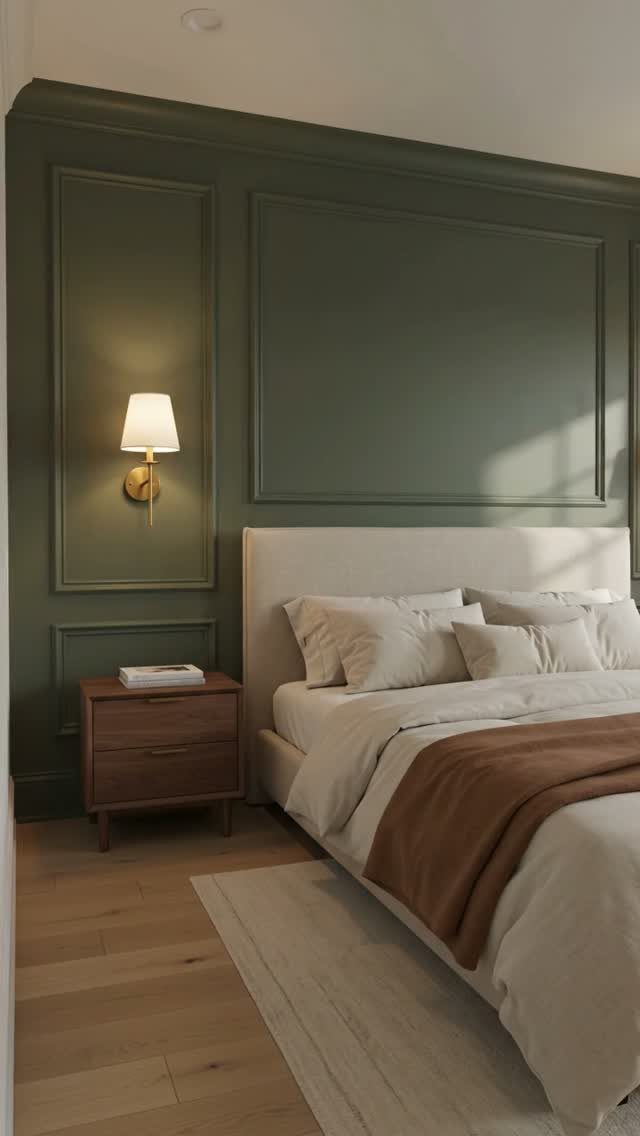
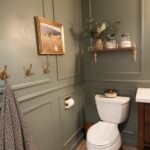
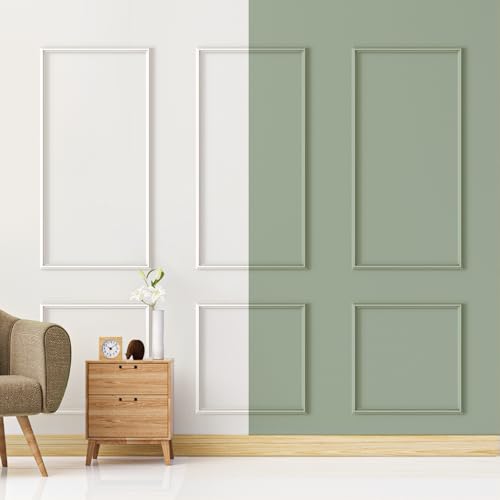
Wainscoting usually stops at chair-rail height, but running it floor-to-ceiling behind the bed turns a traditional detail into something dramatic.
The rectangular frames break the wall into panels that catch shadow, especially with a deep color like the olive green here.
This is the kind of applied molding you can handle yourself if you have a miter saw and patience for caulking.
The fiddly part is keeping the rectangles level across an entire wall; one slightly off frame throws the whole rhythm. If your walls are older and wavey, calling in a pro might save you hours of adjustment.
I would paint the molding the same color as the wall between it, not white. The shadow does the work, not the contrast.
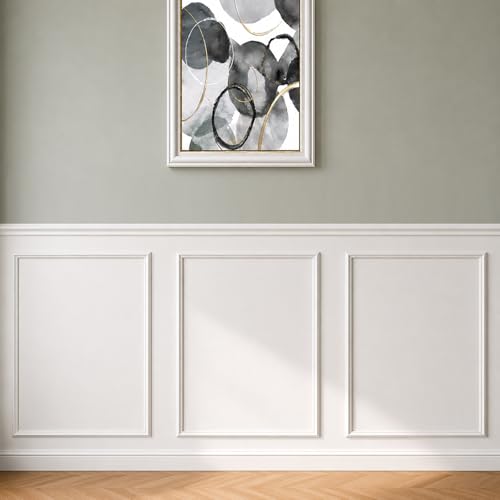
Pre-cut Wall Molding Kit : Our wall moldings include 6 pieces of 24 inch decorative strips and 6 pieces of 32 inch decorative strips.Can be freely matched according to your needs,bringing an elegant finished appearance to doors or walls

DIY Wall Panel Set: Wall molding kit includes 3 sets of pre-cut flexible wall decorations, each set has 8 pcs, total 24 pcs, can mix and match our different sizes to beautify your walls. Additionally, easily paint the trims in your favorite color(black,gold,blue,pink,green) to match any interior style-modern, farmhouse, vintage
10. Vertical Wood Slat Panels
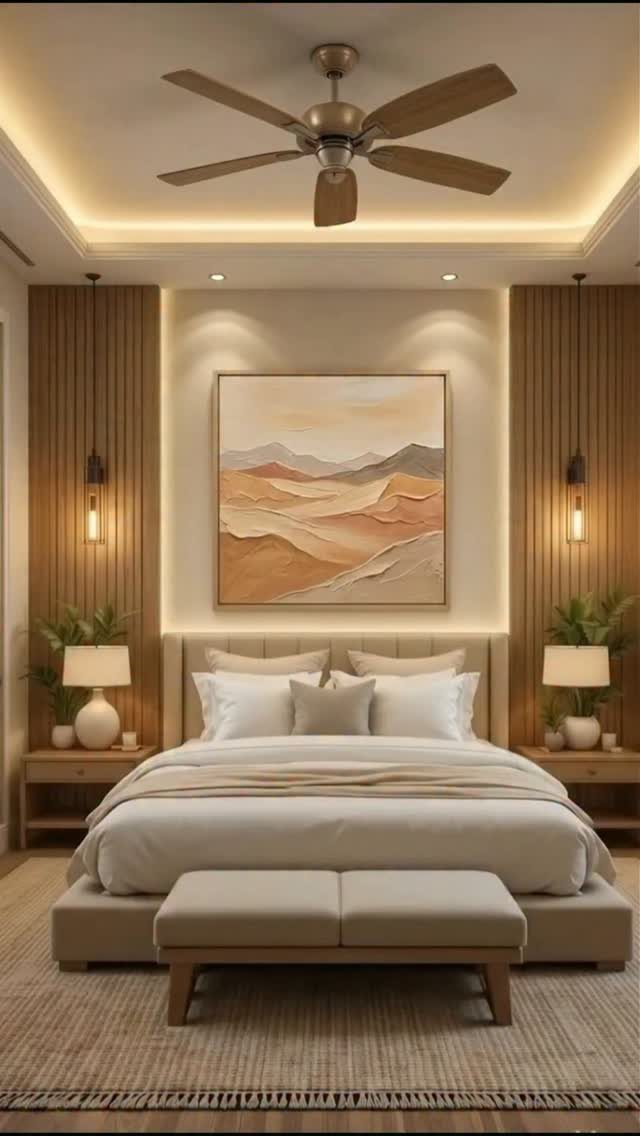
Spaced vertical slats frame the sleeping area without closing it off, giving you texture and a little filtering of light from the recessed fixtures behind them.
The gaps matter as much as the wood; too tight and you lose the layering, too loose and it reads as fence.
Oak or cedar are common choices, and the slats run faster to install than solid panels because you are working with individual strips. Engineered wood veneer brings the material cost down to roughly £40–80 per square meter against £80–180 for solid timber.
A bench at the foot of the bed in a matching stain keeps the material story going without adding more wood to the wall itself.
I would keep the slat height to about 18 inches above the mattress top; taller starts to feel like a cage.

【PU Wall Panels】:The dimensions of each panel of wall covering panels are 0.6 x 1.2 m (2 x 3.9 ft), 0.72 m2 (7.7 ft2). They are the best choice for enhancing the texture...
11. Wavy Backlit Textured Paneling
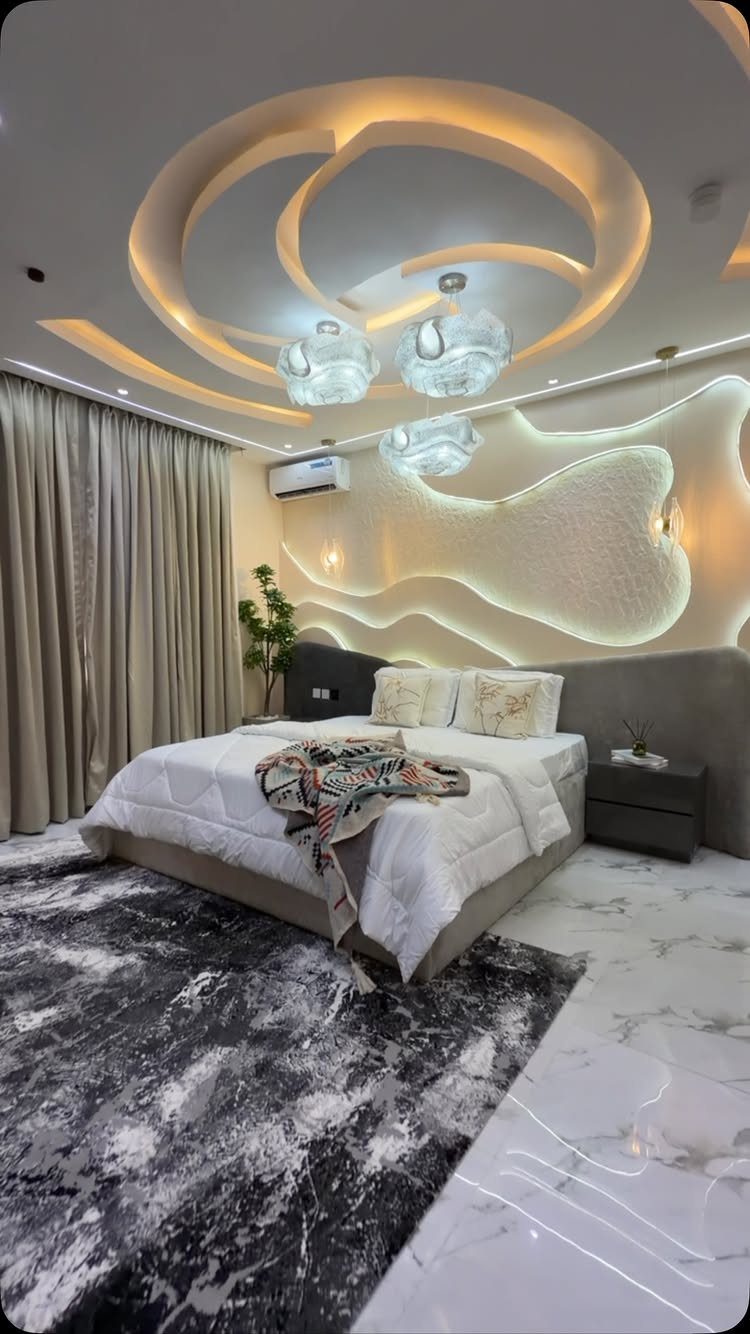
A wavy 3D panel with integrated backlighting is the most theatrical choice on this list, and the one most dependent on the room around it. The ceiling here carries the same sculptural language, so the wall does not sit alone.
These panels are typically cast or CNC-cut, which means ordering, not building. The lighting has to be planned before the panel ships: warm white behind a translucent resin reads completely different from cool white behind acrylic.
Ask for a lit sample, not just a material chip.
I would only attempt this in a room with generous ceiling height; the panel and the ceiling treatment together compress the space otherwise.
If your bedroom is smaller or your taste runs quieter, the fluted backlit option earlier gives you glow without the drama.
12. Wood Slats with Marble Panel
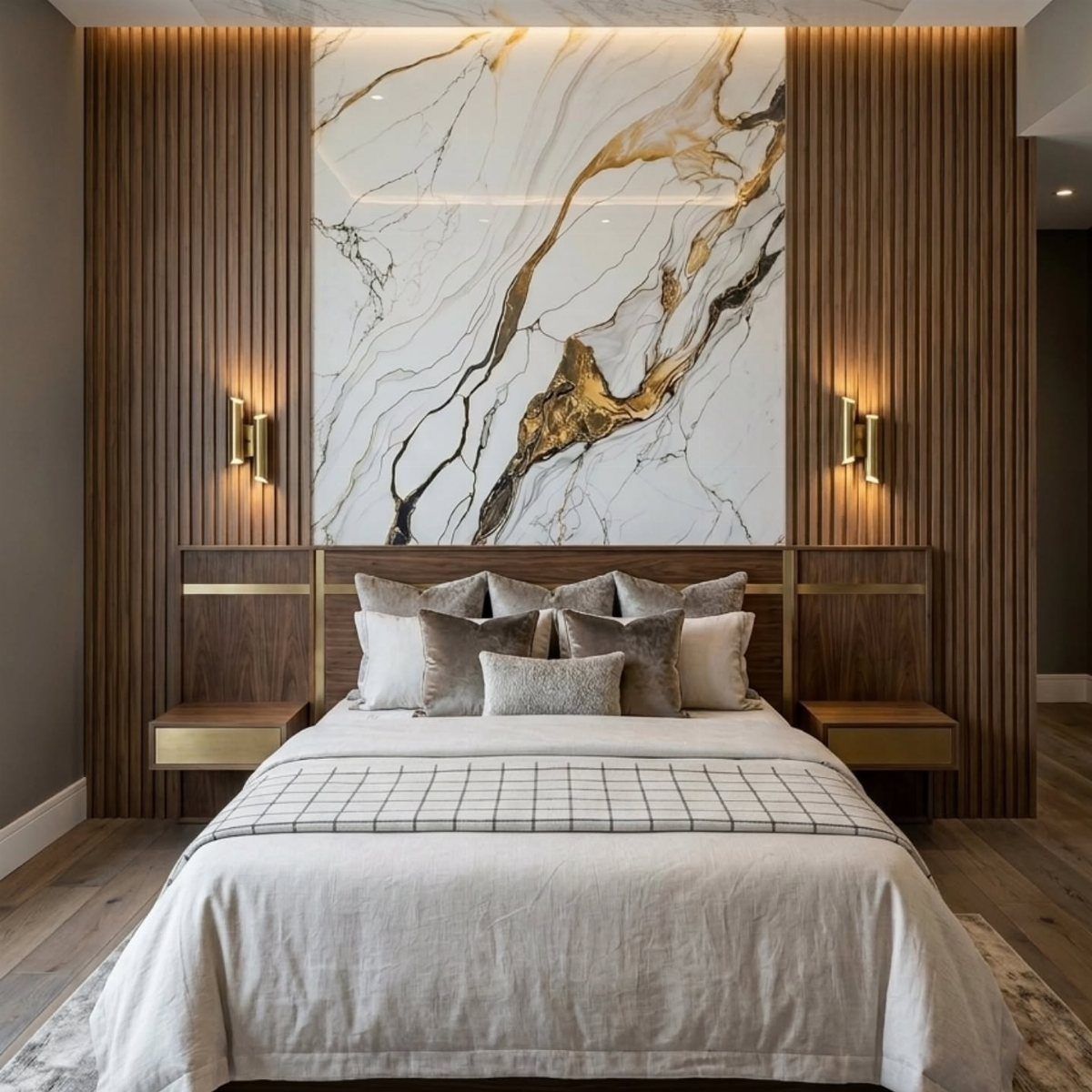
A marble slab centered between wood slats is a specific kind of luxury: the stone is cold and heavy, the wood warm and linear, and the tension between them is the whole point.
This only works if both materials are honest; printed laminate on either side reads as costume jewelry.
The wood slats here are likely engineered veneer rather than solid timber, given the scale and the need for dimensional stability beside stone.
Pre-made slat panels from big-box retailers can limit your spacing and edge details, so measure your slab first and plan the slat rhythm around it, not the reverse.
I would keep the sconces on the wood, not the stone; drilling marble for wiring is a job for a stone specialist and adds cost fast.
If real marble is out of reach, a porcelain slab with veining carries the same visual weight at roughly half the material cost.
Choosing the Right Paneling
The character of your home should lead the choice, not follow a trend. In a period house with coving or a chimney breast, traditional moulding or tongue and groove sit naturally against what is already there.
Flat walls in a newer build need help; slatted panels or 3D shapes give the room the depth it was born without.
Small bedrooms need a lighter touch. One wall in pale timber, or MDF trim painted to match the rest, brings in texture without eating up visual space.
Maintenance matters more than people expect. Painted MDF touches up with a small brush.
Natural timber needs oil or wax every year or two, or it dries out and dulls. Young children or pets make the hardier choice obvious.
DIY Installation Tips
Most paneling styles can be handled yourself if you plan first and pick a design that matches your tool comfort.
Vertical stripes are the easiest first project; the cuts stay straight and the math stays simple. Cut plywood strips to height, glue and nail them in place, caulk the gaps, then paint.
The repetition forgives small mistakes, and the result elongates a room visually.
I would measure the wall, sketch the layout, and buy stock lumber or plywood instead.
A miter saw opens up more complex designs: board and batten, applied moulding grids, anything with angles. If you do not own one, the rental cost pays for itself against the price of a pro install.
Construction adhesive holds while you nail, and a level is non-negotiable for anything with repeated spacing.
Cost Considerations
Costs spread wider than most projects because the material range is so broad.
MDF panel moulding runs £5–15 per square meter for materials, with a feature wall landing at £250–600. That is the entry point, and it paints well.
The install is faster, which saves a weekend even if the material cost overlaps MDF.
Solid timber, engineered veneer, stone slabs, or bespoke fabric panels climb from there.
I would decide the look first, then let the material follow. Starting with a budget and working backward usually ends in compromise; starting with the effect and finding the cheapest honest version of it tends to work better.
Color and Finish Options
Paint and stain do different work. Stain keeps the grain visible and lets the material read as timber.
Paint flattens the surface into color and shadow, which suits MDF and hides seams.
Lighter shades lift a small room. In a larger bedroom, deep olive or slate blue turns the wall into an event without shrinking the space.
I would match the sheen to your tolerance for touch-up work.
Scale the panel size to the room. Slim, fine moulding mirrors a refined space better than chunky boards that overpower it.
If the paneling competes with the architecture, both lose.
Frequently Asked Questions
Which wall paneling is best for a bedroom?
The right paneling for a bedroom comes down to three things: how big the room is, how much light it gets, and how much upkeep you are willing to do.
In a small bedroom, I would limit myself to one accent wall and keep it light: painted MDF trim that matches the wall color reads as texture, not bulk, where dark wood on all four walls would swallow the room.
A bigger room with 9-foot or higher ceilings can take full-height wood or even fabric-upholstered panels without the walls pressing in on you. Painted MDF is the easiest to live with; a quick touch-up covers most scuffs.
Natural timber needs oiling every year or two to keep from drying out. Fabric panels look rich but hold dust, so they need vacuuming more often than you might expect.
What are the latest trends in wall paneling?
The clearest direction is toward 3D panels and slatted designs that add actual depth, not just pattern. Wavy sculptural panels with integrated backlighting are the most theatrical current option, though they work best in rooms with generous ceiling height.
Where the rest of the room stays restrained, these textured panels become the art and need almost no wall decor competing with them.
What are the 2026 bedroom trends?
For 2026, the direction I am seeing pairs two different materials on the same wall, often with storage or lighting built in where you do not notice it at first glance.
Wood slats paired with stone or marble slabs are one specific luxury direction, with engineered veneer keeping the wood stable beside heavy stone.
Backlit fluted and wavy panels continue to grow because they shift a bedroom’s atmosphere after dark without visible fixtures.
For renters and smaller budgets, applied moulding in paint-matched strips and fabric-over-frame panels give architectural interest without structural commitment or deep holes to patch later.