These twelve ideas run from picking a wood species to laying an inlaid border, with most falling somewhere between a weekend project and a full install.
A renter’s best money goes toward area rugs and portable pieces; a homeowner can weigh permanent features like species choice and installation method against how long they plan to stay.
1. Maple Hardwood Flooring
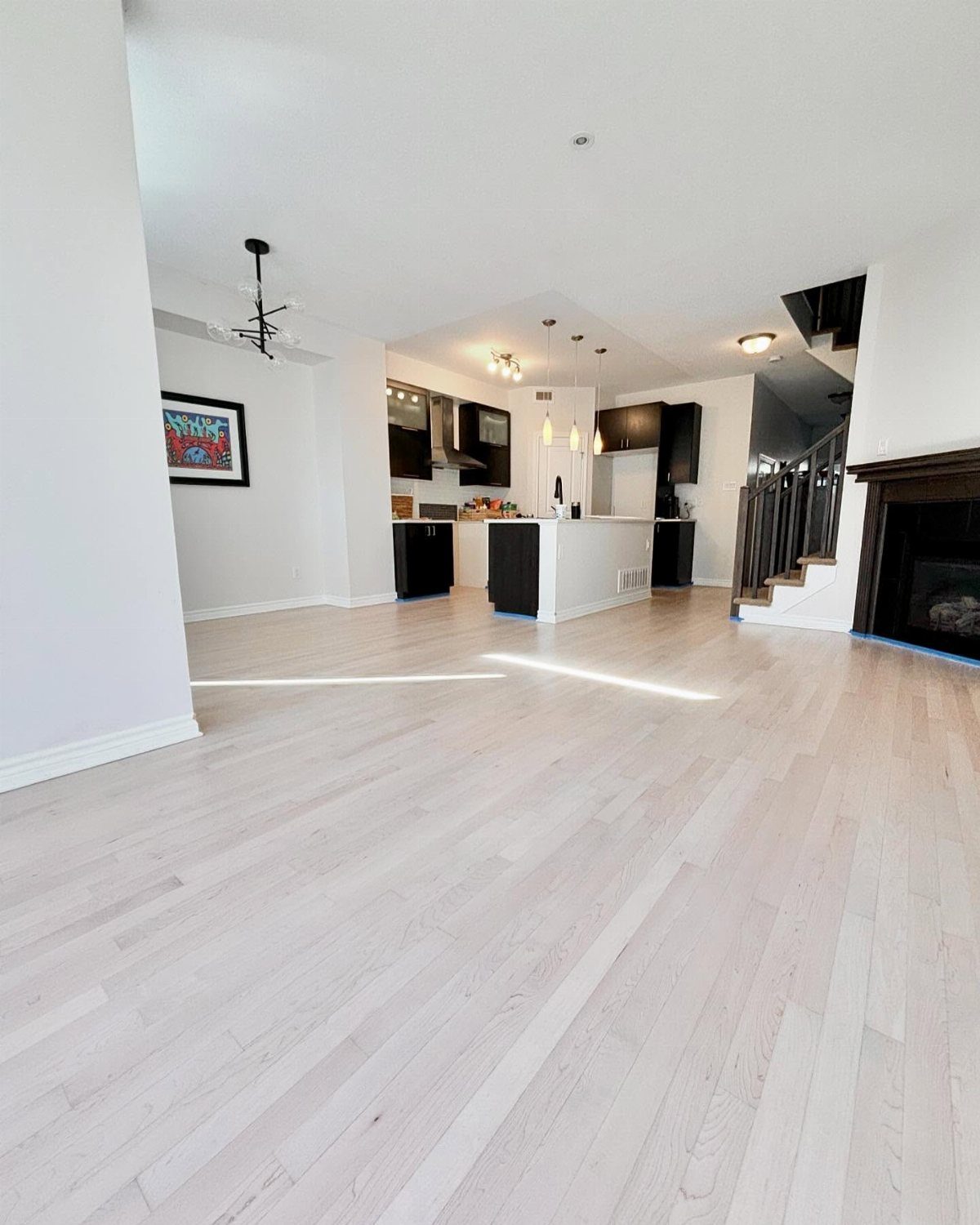
Maple floors read clean and quiet, with grain so subtle the boards almost disappear into one surface.
That uniformity is what sells the look for open kitchens and living areas where you want the eye to travel without stopping on every plank.
The hardness helps in high-traffic spots, though the same density means scratches show as sharp white lines rather than soft dents. A good polyurethane finish matters more here than on softer woods.
Dark stains take unevenly on maple, so I’d commit to the natural pale tone or plan on a different species entirely. Budget runs higher than oak, but the contemporary look is hard to match with anything else.

PROFESSIONAL WOOD FLOOR RESTORER: Restores wood floors, leaving them with a beautiful glossy finish
2. Walnut Hardwood Flooring
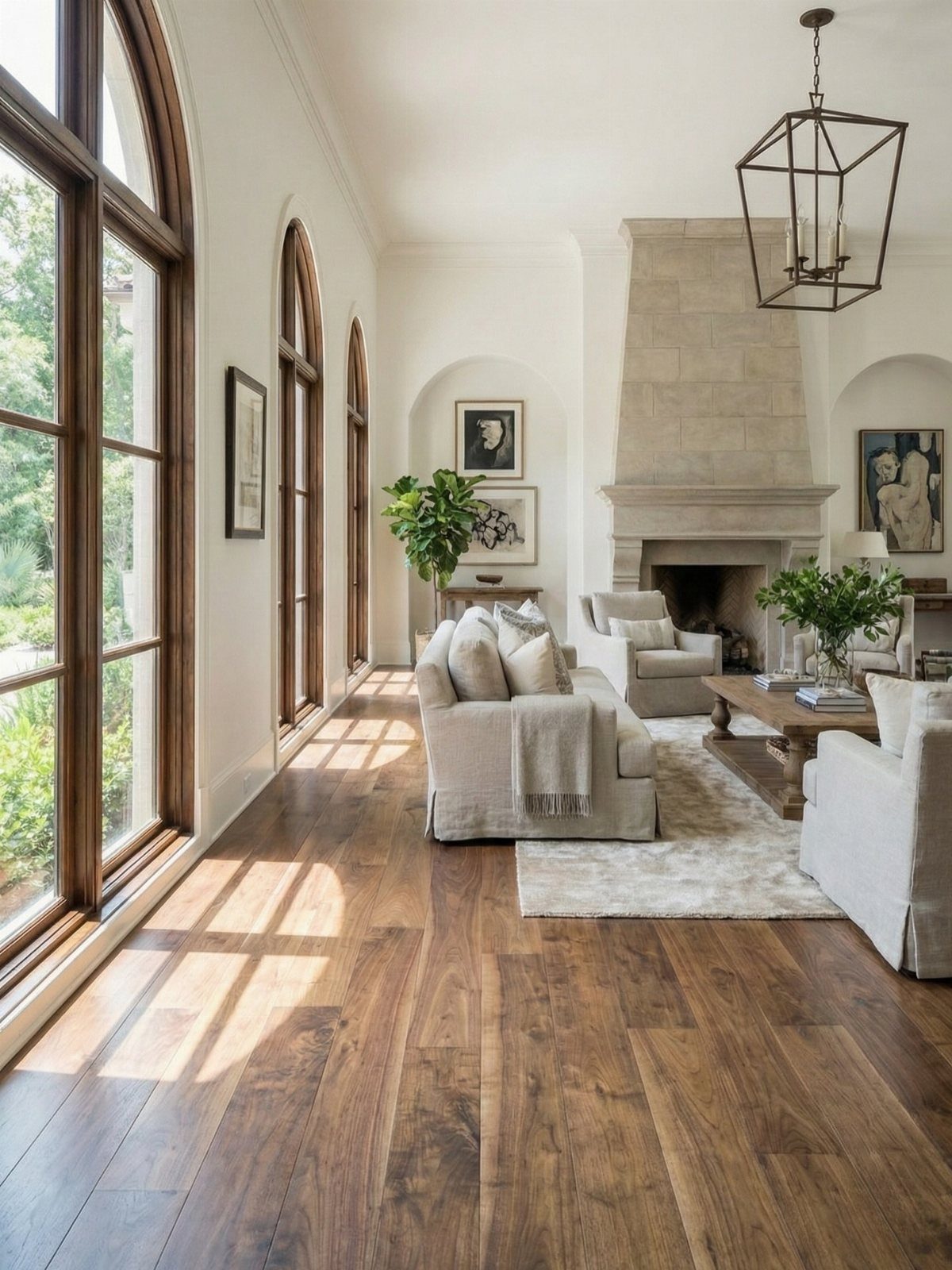
Walnut carries a warmth that photographs never quite capture, those chocolate-to-caramel tones shifting with the hour and the window light. The grain stays active enough to interest the eye without fighting furniture or art.
I keep coming back to walnut for rooms that split the difference between traditional architecture and modern living.
The trade is softness: walnut dents more readily than oak or hickory, and a busy household with heavy furniture or big dogs will leave a record.
High-traffic living rooms need area rugs at the wear points or a tolerance for patina.
The cost stings compared to common species, though I’ve seen homeowners spend the difference twice over trying to stain cheaper woods to match what walnut does naturally.
Because of its timelessness, hardwood flooring is an ideal choice for living rooms. Even if your decor changes over time, wood flooring stays in style and always conveys a sense of warmth.

This listing is for 2 pieces of wood floor samples 8"
3. Wide Plank Hardwood Flooring
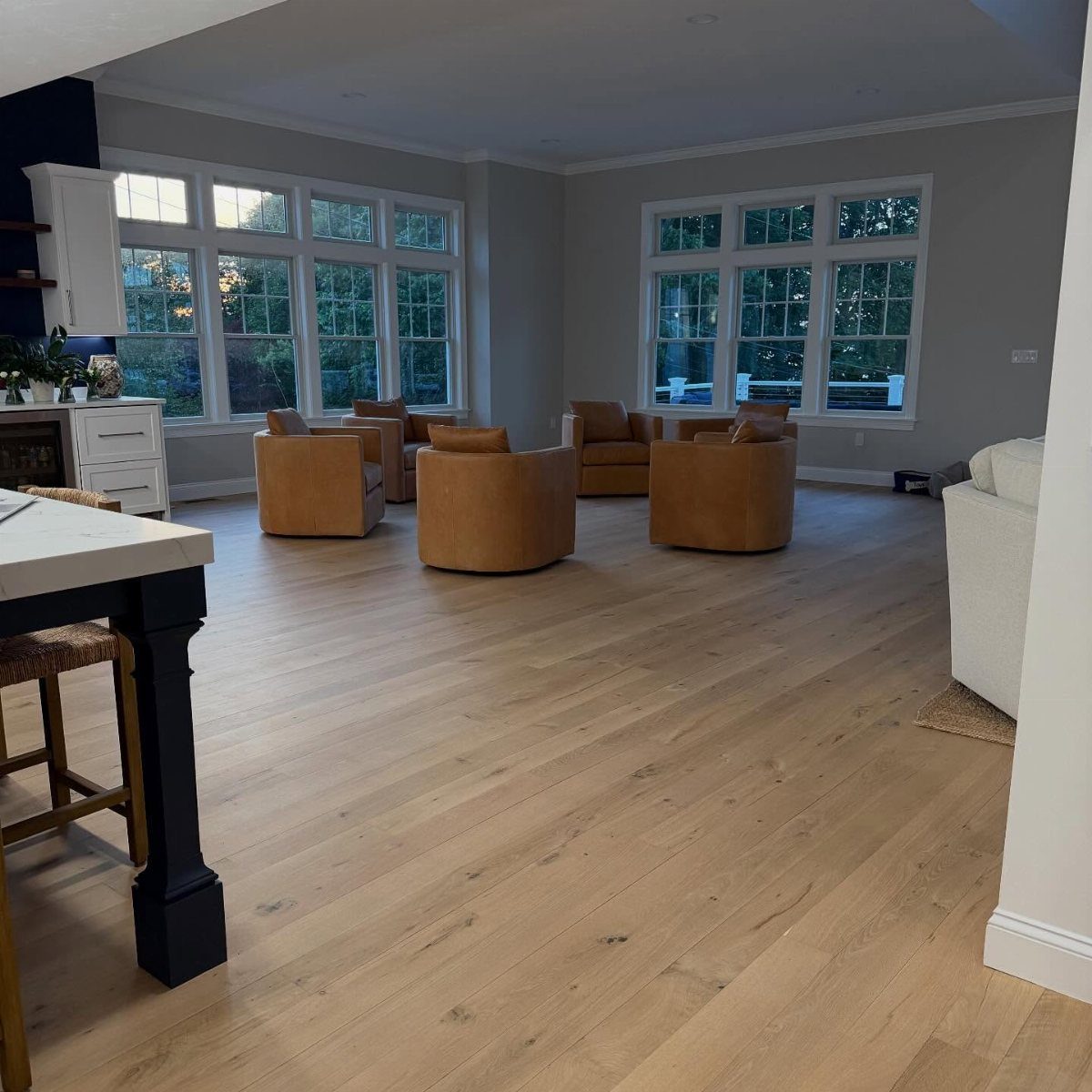
Wide planks do something narrow boards cannot: they let the wood speak in full sentences instead of fragments.
Fewer seams mean the floor becomes a field rather than a grid, and in an open plan that visual continuity carries the eye across the whole space.
The standard plank runs 2 1/4 to 3 inches; wide starts at 5 and can push past 10. That extra width costs more per square foot and demands a more stable subfloor, since each board expands and contracts more dramatically with the seasons.
Engineered wide plank handles humidity swings better than solid, something to weigh if you’re below grade or in a climate with wild swings.


COVERS LARGE AREAS – Each roll of this flooring underlayment covers 200 sq ft and is 3 mm thick, providing a thick underlayment layer with an integrated moisture barrier for enhanced floor protection.
4. Area Rugs on Hardwood Floor
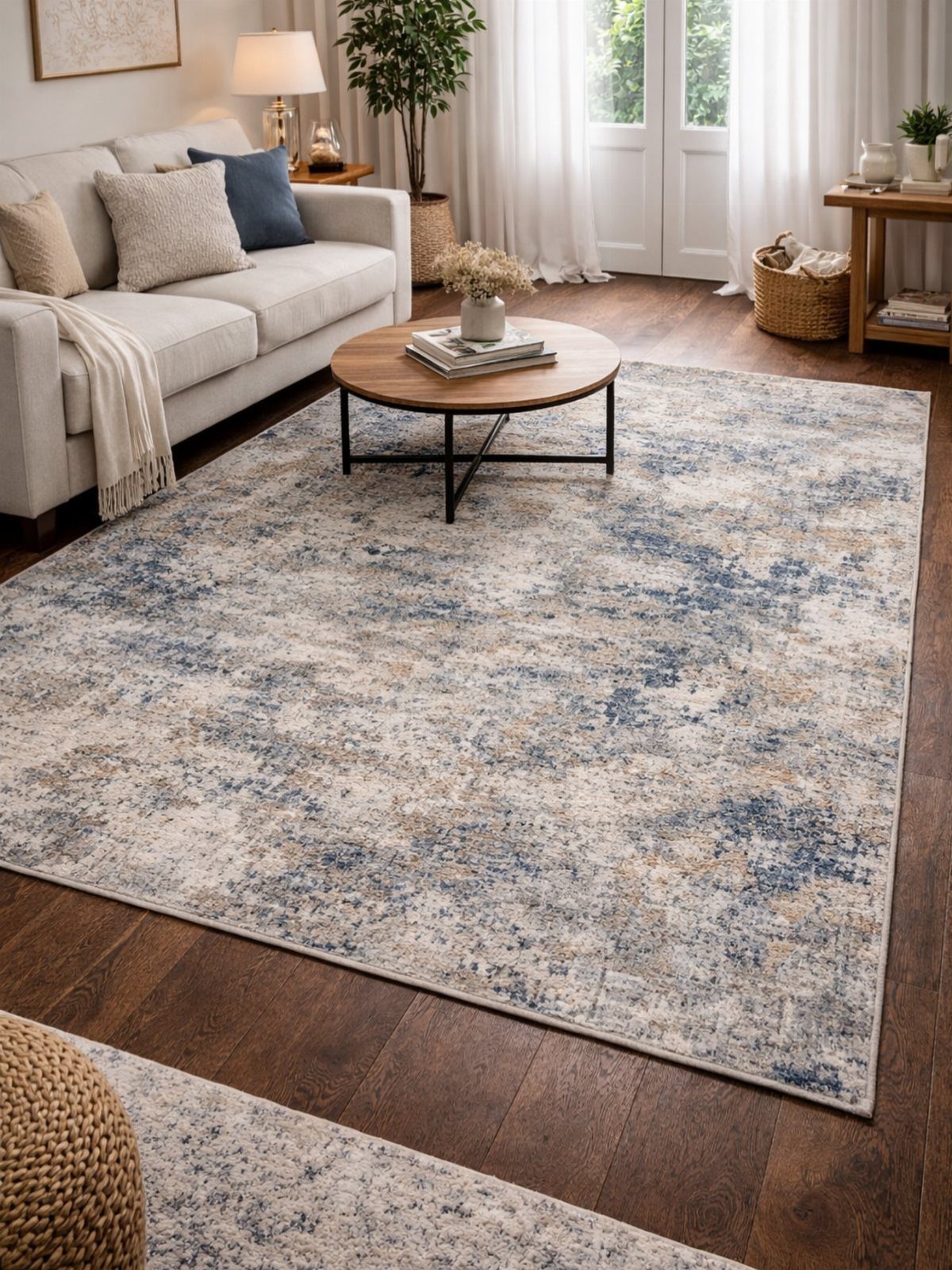
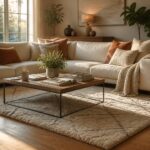
A rug on hardwood is the first thing I move when I’m figuring out a room. It defines where conversation happens, where feet land, and where the floor itself gets a break from grit and heel marks.
Dark floors show every crumb and scratch; a patterned rug in the main traffic path buys years of life and hides what daily living deposits.
Size matters more than pattern: front legs of the sofa and chairs should all sit on the rug, or none of them should. The in-between reads as a mistake.
For placement, I start with the coffee table centered and work outward, leaving a border of exposed floor around the perimeter.
Pad choice is the hidden detail: felt-rubber hybrid keeps the rug from walking and protects the finish underneath better than PVC.
5. Light Natural Hardwood Flooring
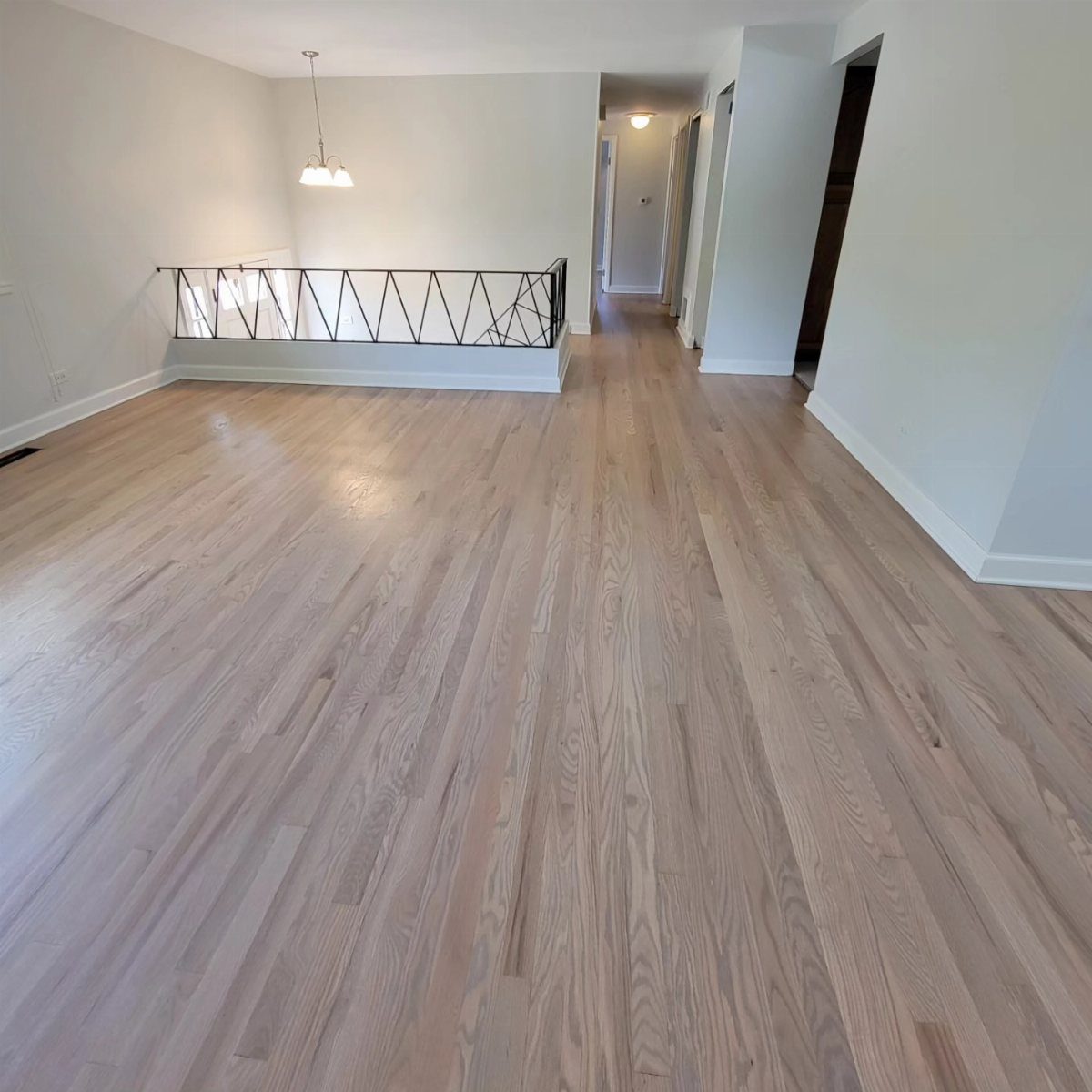
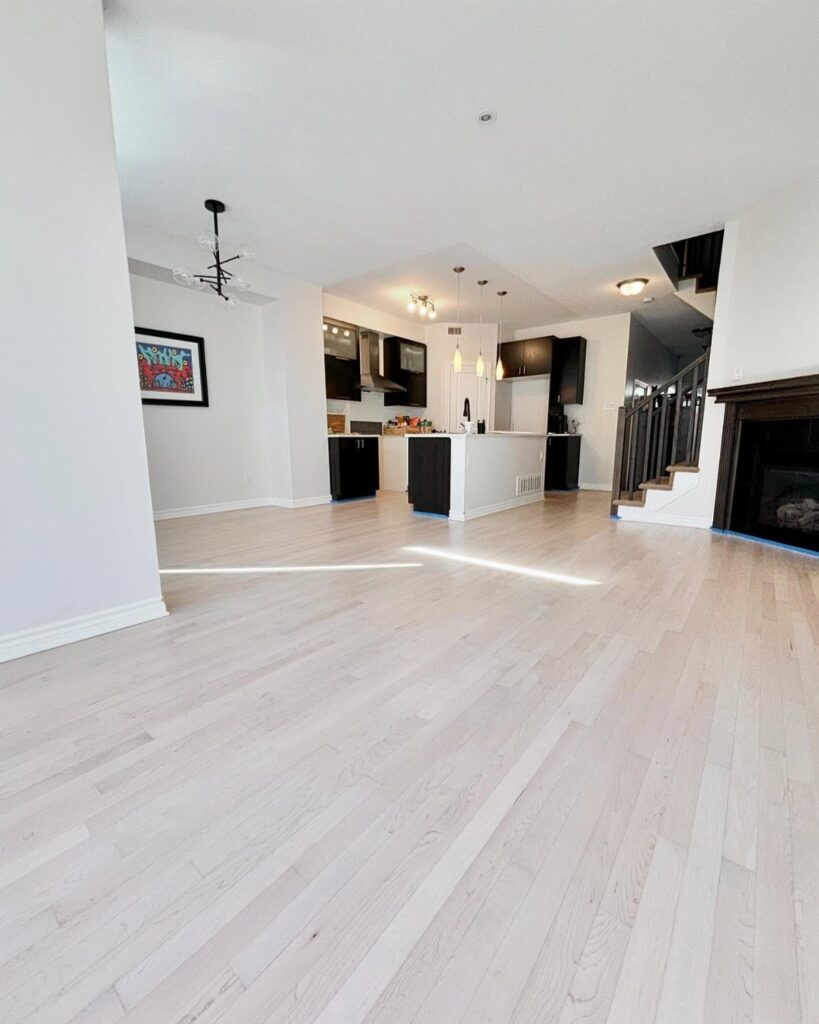
The pale floors in this space do the work of a white wall without the clinical chill. Light natural hardwood reflects daylight deeper into a room, which matters when the windows are modest or the orientation faces north.
Maple and ash both run in this color range, though oak takes the natural look more affordably and ages with more forgiveness.
Maintenance is the real issue: every dropped coffee granule and muddy paw print announces itself against the pale ground.
I’d budget for a matte or satin finish rather than gloss; the lower sheen disguises surface wear and reads more modern besides.
In a house with small children or a shedding breed, this is the floor you choose for the look and accept the sweeping schedule that comes with it.

Timeless Elegance: Parquet flooring adds a touch of sophistication and warmth to any room with its intricate patterns and rich wood tones.
6. Warm Medium-Tone Hardwood Flooring
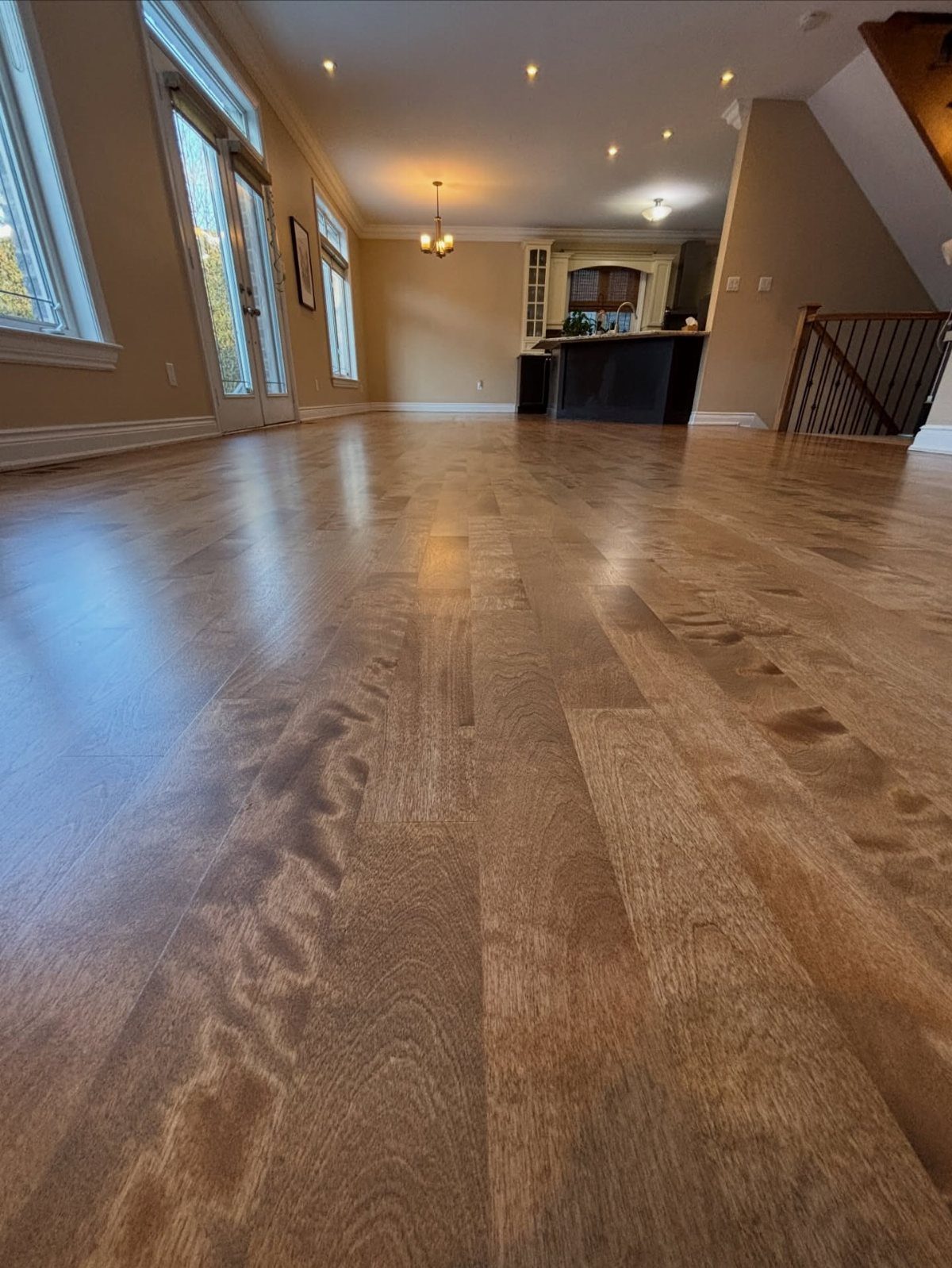
Medium-tone hardwood hits the note most people are actually humming when they say they want something "warm."
Not as demanding as dark floors, not as stark as pale ones, it lets furniture and textiles do the color work while the ground stays quietly supportive.
Oak dominates this range for good reason: it stains predictably, wears hard, and the grain adds texture without busyness. A high polish reads formal; a lower-satin finish on the same wood would suit a family room better.
What changes the answer is the light in your particular room. South-facing spaces with warm afternoon sun can handle ashier undertones; north rooms need the amber pull of honey or wheat to avoid going gray.
I’d bring home three samples and live with them through a full day before deciding.

PROFESSIONAL WOOD FLOOR RESTORER: Restores wood floors, leaving them with a long-lasting matte satin finish
7. Dark Hardwood Flooring
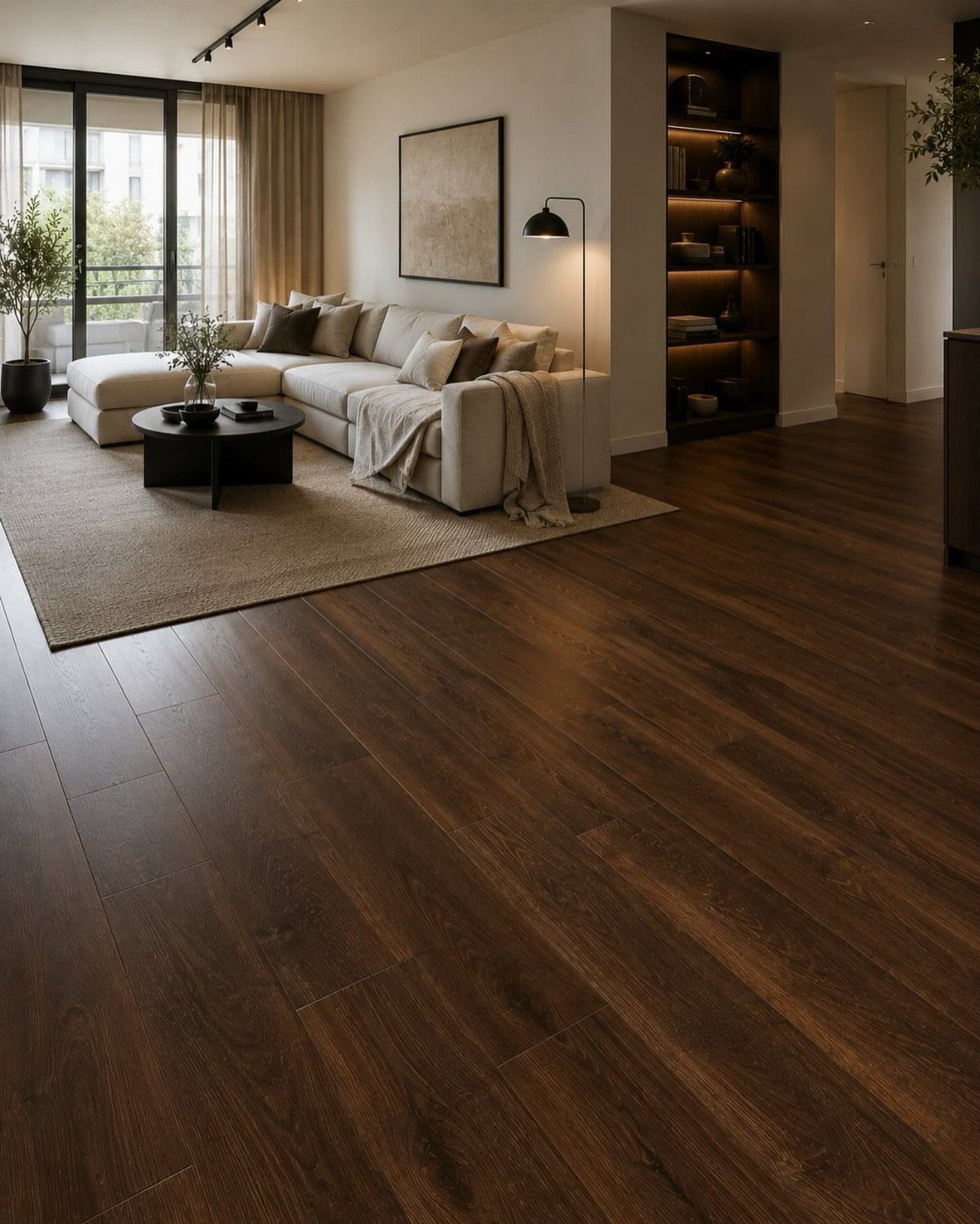
Dark hardwood floors swallow light instead of reflecting it, which makes them a deliberate choice rather than a default.
The room stays balanced because the walls and the large sofa stay light; without that contrast, the same floor would feel like a cave once the sun drops.
I would only go this dark in a room that gets generous natural light or has enough ceiling fixtures to compensate.
The finish matters more than the species here: a matte or satin sheen hides dust and paw prints far better than high-gloss, which turns every speck into a spotlight.
Engineered planks handle the color more consistently than solid wood, since the factory dye penetrates evenly.
This is for someone who wants the furniture to read crisp against the ground, and who does not mind running a microfiber mop twice a week.
If your living room faces north or relies on a single corner lamp, a mid-tone brown will give you the same sophistication without the upkeep fight.
8. Inlaid Border Hardwood Flooring
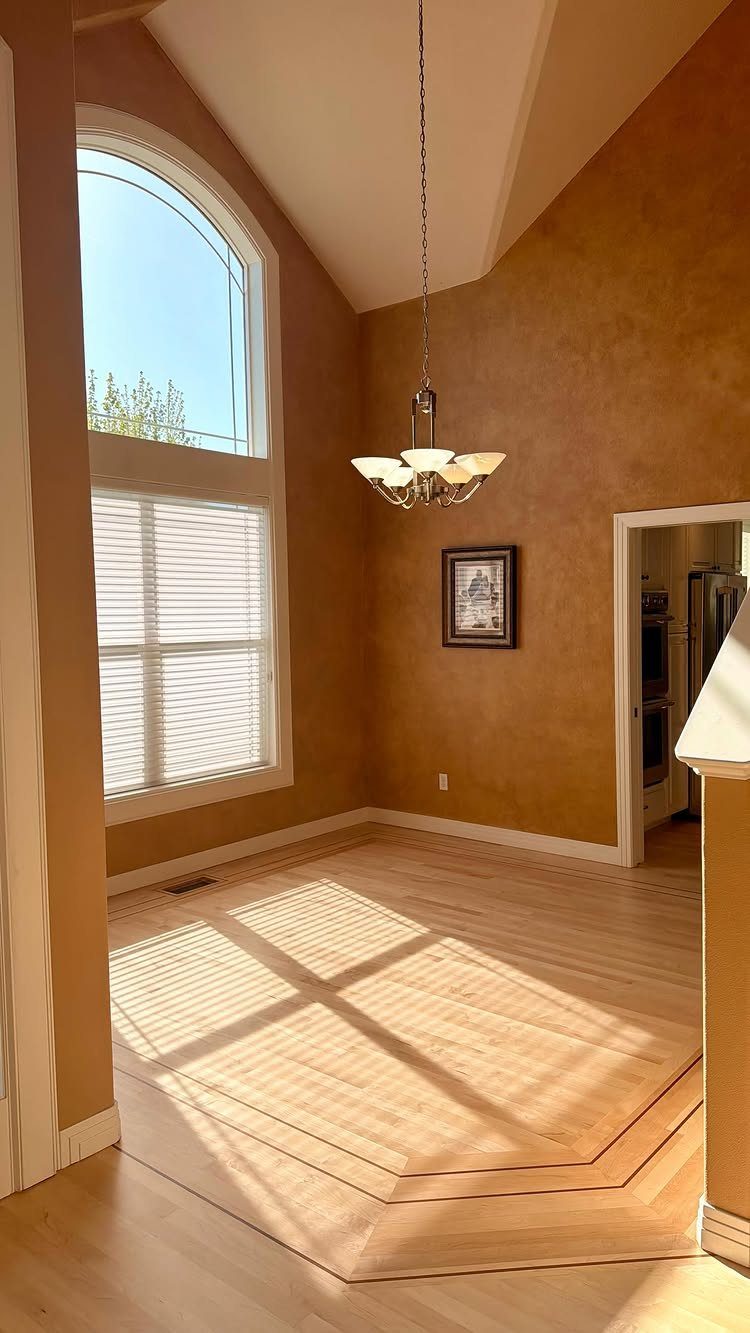
You can set this in during a full install, or add it later if your existing floor is in good shape and thick enough to take a shallow rout.
The second route costs more in labor than material, since matching the height and finish of old planks takes patience.
Oak with a walnut inlay is the combination I see most; maple with cherry runs warmer if your walls already lean ochre like these.
In a smaller room, a narrow border reads more intentional than a wide one; I would keep it thin enough to feel like trim, not a racetrack. Wider, and it starts to look like a racetrack.
This suits someone staying in a house long enough to enjoy the detail daily, or selling one where "custom millwork" belongs in the listing.
Renters and serial movers should spend that budget on a rug they can roll up and take with them.
Choosing the Right Wood Species
Durability, looks, and how much upkeep you will tolerate all pull in different directions when you pick a species.
Maple and hickory sit at the hard end of domestic woods; both take abuse from boots and chair legs better than walnut, which dents more readily but carries a warmth that staining cheaper boards rarely matches.
Oak splits the difference, wearing hard enough for most households while taking stain predictably across the amber-to-espresso range. Ash handles the pale natural look at a lower cost than maple, though it is less common in stock at regional suppliers.
For homes with big dogs or heavy furniture, I would start the search with hickory or white oak and only move softer if the look of walnut or cherry is non-negotiable.
Maintenance Tips for Hardwood Floors
A microfiber mop run dry picks up grit before it scratches; I do this twice weekly on the floors I maintain. Vacuum on the hard-floor setting, not the beater bar, which beats finish off faster than most people realize.
For wet cleaning, a barely damp mop and a cleaner rated for polyurethane finishes is the safe play. Harsh detergents and homemade vinegar solutions strip the protective layer over time, so I leave them in the kitchen.
Felt-rubber pads under every chair and sofa leg prevent the slow grinding that shows first along baseboards and doorways. Check them twice a year; the cheap adhesive ones walk off and leave grit stuck underneath.

Craft Wood — Thin-sawn, 100% pure hardwood planks designed for crafts; Natural wood blanks for laser cutting & engraving machines; Durable & strong, this Glowforge ready material won’t break easily

Craft Wood — Thin-sawn, 100% pure hardwood planks designed for crafts; Natural wood blanks for laser cutting & engraving machines; Durable & strong, this Glowforge ready material won’t break easily

Craft Wood — Thin-sawn, 100% pure hardwood planks designed for crafts; Natural wood blanks for laser cutting & engraving machines; Durable & strong, this Glowforge ready material won’t break easily
Installation Considerations
Solid hardwood demands a plywood or plank subfloor it can nail to, and it needs room to expand with humidity swings; leave the gap at walls hidden by baseboard.
Engineered planks handle wider swings and can glue or float over concrete, which opens up basements and slab-on-grade living rooms that solid wood would wreck within a season.
Prefinished boards arrive with factory-applied polyurethane already cured, so you walk on them the day they go down and the finish is harder than anything a crew brushes on site.
Site-finished lets you match existing trim exactly and fills the seams between boards, which prefinished leaves slightly open. I would go prefinished for speed and hardness, site-finished only when blending into an old floor that is staying put.
Durability and Wear Resistance
The Janka hardness scale puts hickory near the top of domestic species, which is why it survives households that would etch pine within a year.
White oak runs slightly softer but still hard enough for most living rooms, and its grain hides minor damage better than the uniform surface of maple, where every scratch reads as a white line.
Factory finishes have pulled ahead of site-applied options for toughness. Multi-layer urethanes with aluminum oxide, like the coatings used on Bruce Dundee, buy a few extra years before recoating becomes necessary.
No finish survives dragged chair legs indefinitely; floor protectors on furniture feet matter more than the finish brand you choose.
I would spend the small money on felt pads before I spent extra on a premium collection, then upgrade the wood itself if the budget still allows.
Frequently Asked Questions
What type of hardwood floor is best for a living room?
Solid hardwood holds up for decades if humidity stays steady; engineered handles the swings better in basements or over concrete. Solid hardwood holds enduring beauty and value, while engineered hardwood handles finished basements, concrete slabs, and radiant heating better.
For living rooms with heavy use, oak and maple wear hard, while walnut and other softer species need more protection at wear points.
What colors look good in a living room with a wooden floor?
Neutral walls and light upholstery balance dark floors, while medium-tone floors let furniture and textiles carry the color. A light oak or ash floor does what white paint tries to do, only warmer.
I’d keep large pieces light against dark wood, or add amber and honey tones to north-facing rooms with medium or pale floors so the space doesn’t turn gray.
What are some ideas for living rooms with hardwood floors?
Wide planks create visual continuity across open plans, while inlaid borders add custom detail for long-term homes. Area rugs define conversation zones and protect high-traffic paths, with front legs of all seating on or all off the rug.
Light natural finishes reflect daylight deeper into modest rooms; dark floors demand generous natural light or enough ceiling fixtures to compensate.