Wainscoting runs from a weekend paint project to custom millwork that demands precise joinery, and the right choice depends on whether you need permanence or flexibility.
Renters and first-home owners can get the look with molding boxes and a chair rail set between waist and mid-chest height, while those building out a Craftsman basement or formal dining room might commit to battens or raised panels.
Picture frame molding catches the eye but won’t stop a chair back, so I weigh how much wall protection the space actually needs before choosing a style.
1. Board and Batten
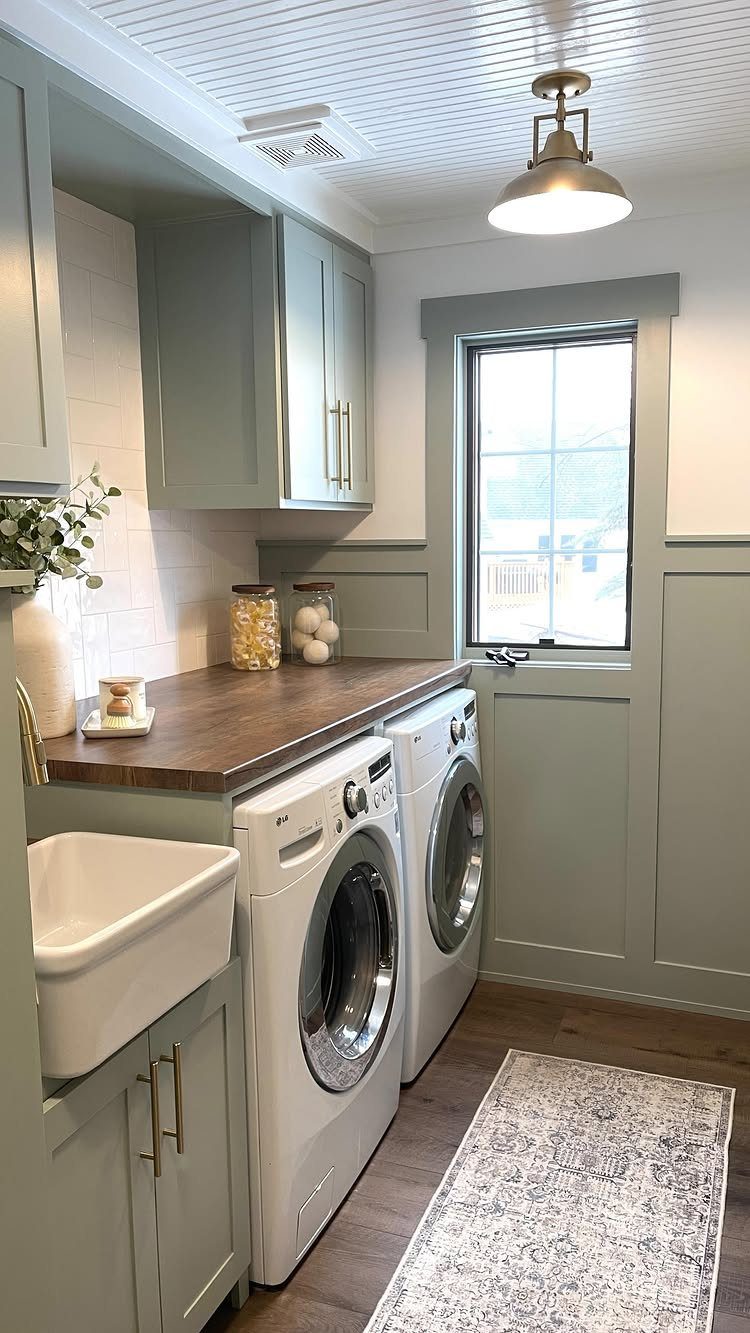
Wide boards run vertically, spaced apart and covered at every seam by a narrow strip called a batten.
The rhythm draws the eye up, which helps in rooms with low ceilings or where you want a clean, structured backdrop rather than busy wallpaper.
I installed this in a basement office once. The battens hide every gap and uneven cut, so the wall reads as crisp even when the drywall behind it is not.
Paint it soft white like Chantilly Lace OC-65 for a fresh take, or go moody with sage if your cabinets already set that tone.
It costs more in lumber and time than beadboard because every batten must be plumb. Best for Craftsman homes, modern basements, or anywhere you want bold architectural interest without ornate detail.

All-in-One Design - Package of 10 premade molding trim slat + 2 decorative edge strip create instant board & batten walls
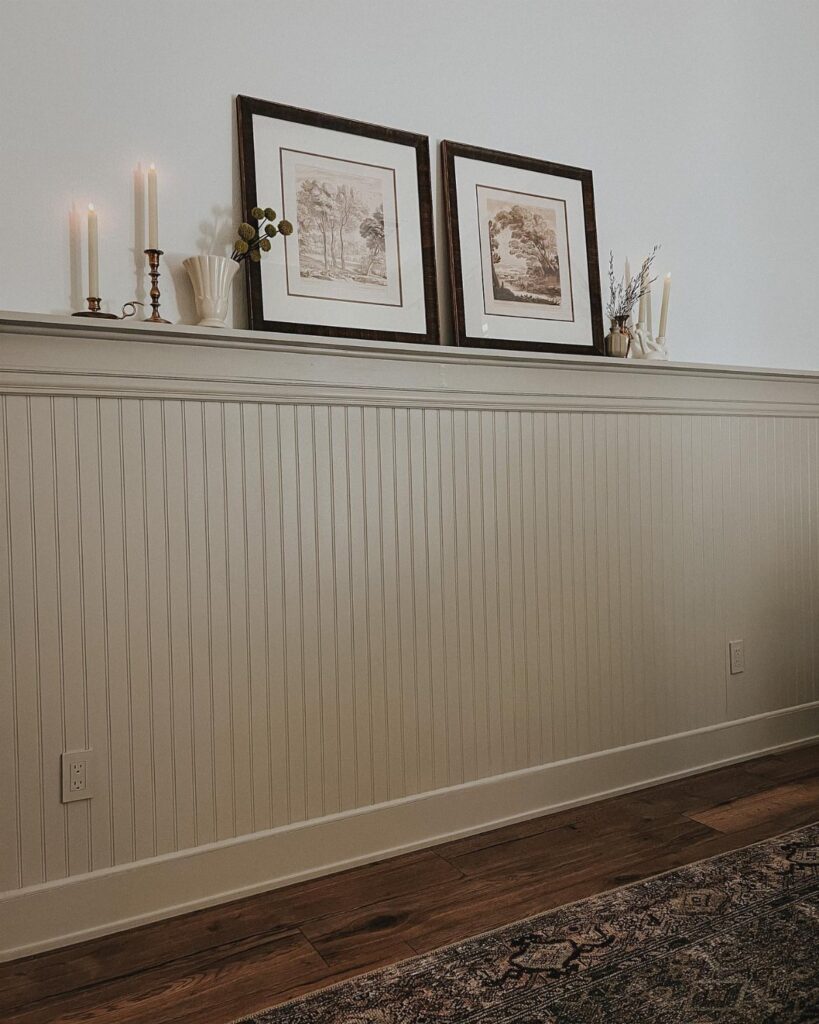
2. Beadboard Wainscoting
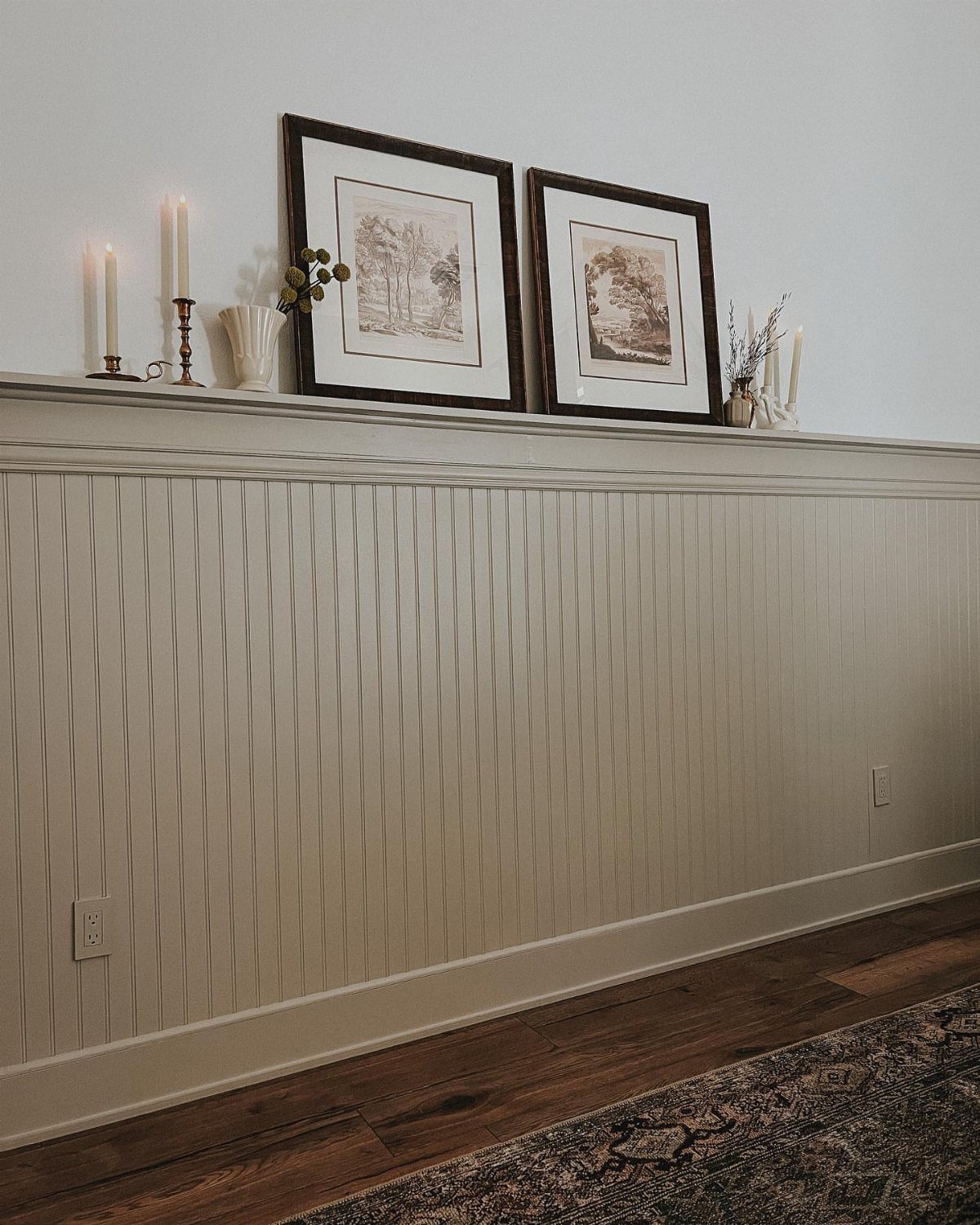
It reads cottage and casual, which is why I see it most often in bathrooms and back hallways. PVC or treated wood handles moisture well, so it survives steam from showers better than MDF will.
Paint it white, soft gray, or a warm off-white like Revere Pewter HC-172 if you want to lean modern rather than precious.
The sheets install fast, one reason it stays budget-friendly. It can feel overly traditional in stark, minimalist spaces.
Pair it with gold hardware or black accents to keep it from drifting too country.
3. Picture Frame Wainscoting
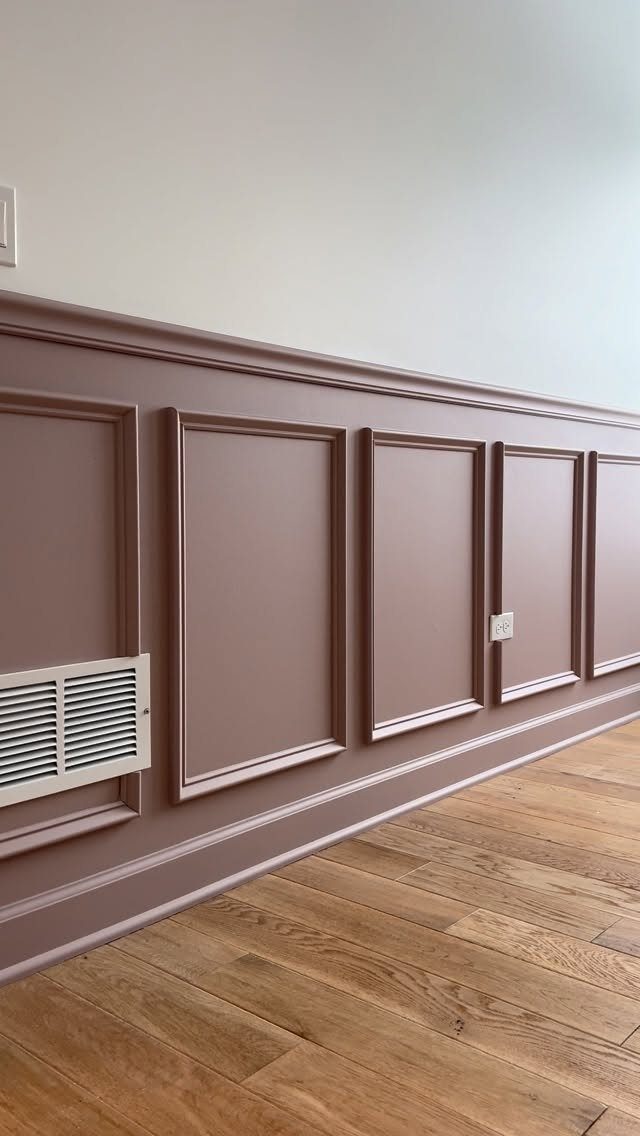
The paint color shows through the open centers, so the wall itself becomes the panel.
This is the cheapest way to get a refined wainscoted look because you skip lumber panels entirely. I like it in hallways and entryways where you want elegance without formality.
Caulk every edge before priming, or the seams will telegraph through paint. It is more cosmetic than protective, so don’t expect it to shield plaster from chair backs.

Wall Molding Kit: The package includes 24 pcs wall molding (24in-14 pcs, 54in-6 pcs, 48in-4 pcs), which can be combined into 6 frames, allowing you to easily create a stylish accent wall. The 6-frame layout shown is designed for a wall measuring approximately 10 feet high by 11 feet wide. Please measure your wall and plan the layout before installation.
4. Faux Wainscoting with Paint or Molding
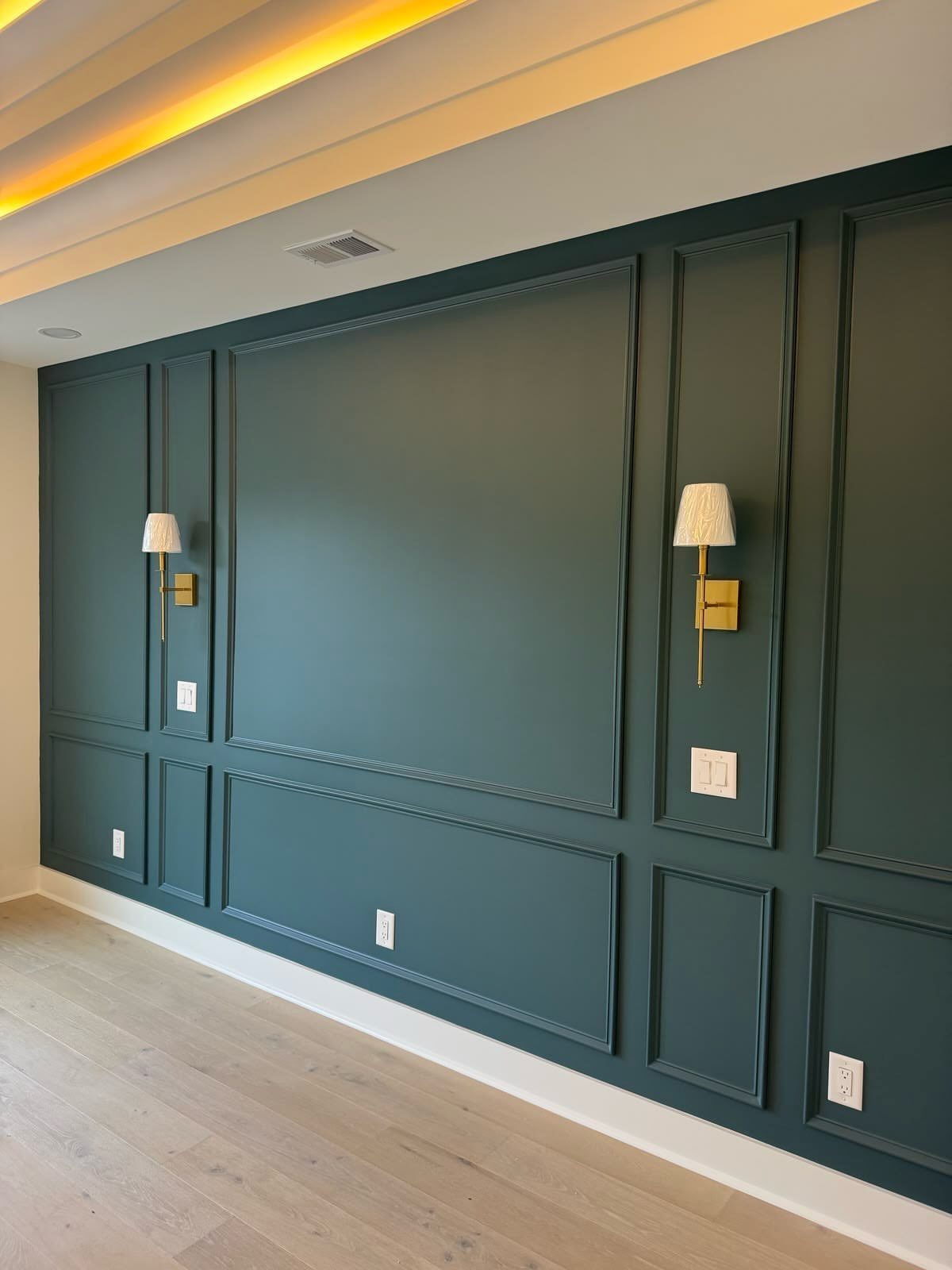
Molding boxes built from trim pieces, painted to match or contrast with the wall, create the look of raised panels without the lumber.
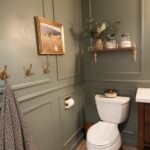
A dark, saturated color pushes faux wainscoting into something dramatic; think deep teal, near-black, or a rich plum.
Start by installing your chair or plate rail at the height you want, somewhere between waist and mid-chest level on most people. Plan your boxes to fit evenly between that rail and the baseboard.
Thinner trim forms the frames; caulk, prime, and paint everything as one surface or play the boxes against the field color.
Faux wainscoting with paint or molding takes one weekend and a modest molding budget. Best for renters or anyone who wants the look without committing to full millwork.

Includes 3 pre-cut 20"x27" wall molding frames and 2 chair rail trim pieces, Covers 78.7"W x 39.9"H wall area (6.5 ft wide). All pieces feature a peel-and-stick design for easy installation
5. Modern Geometric Wall Paneling
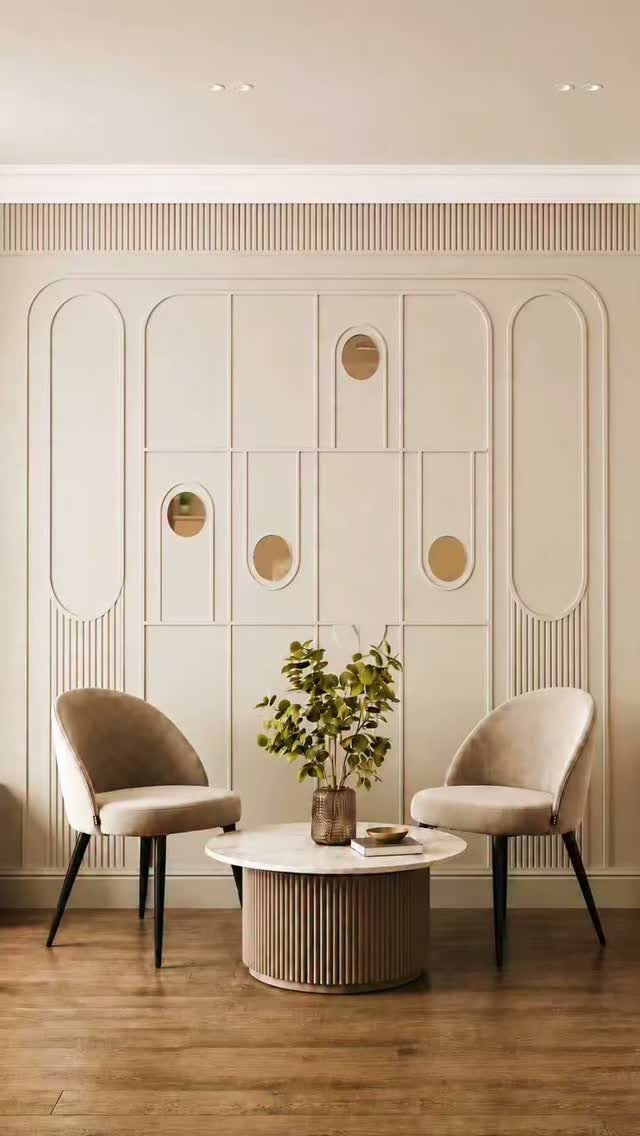
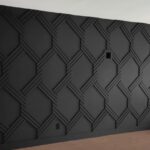
Flat or recessed panels arranged in repeating geometric shapes, often extending well past the traditional one-third wall height. Modern geometric paneling can use vertical ovals and small circular cutouts as the pattern itself, not as decoration applied on top.
This style borrows from Arts and Crafts simplicity but pushes it contemporary through scale and repetition.
You can build it from sheet material with moldings applied on top, which saves labor over individual boards, or order prefaced panels if your budget allows.
Paint in a waterborne alkyd like Advance for durability on trim and unique architecture. The understated lines suit modern spaces that want texture without ornament.
It reads quiet luxury rather than historical recreation.
6. Traditional Raised Panel Wainscoting
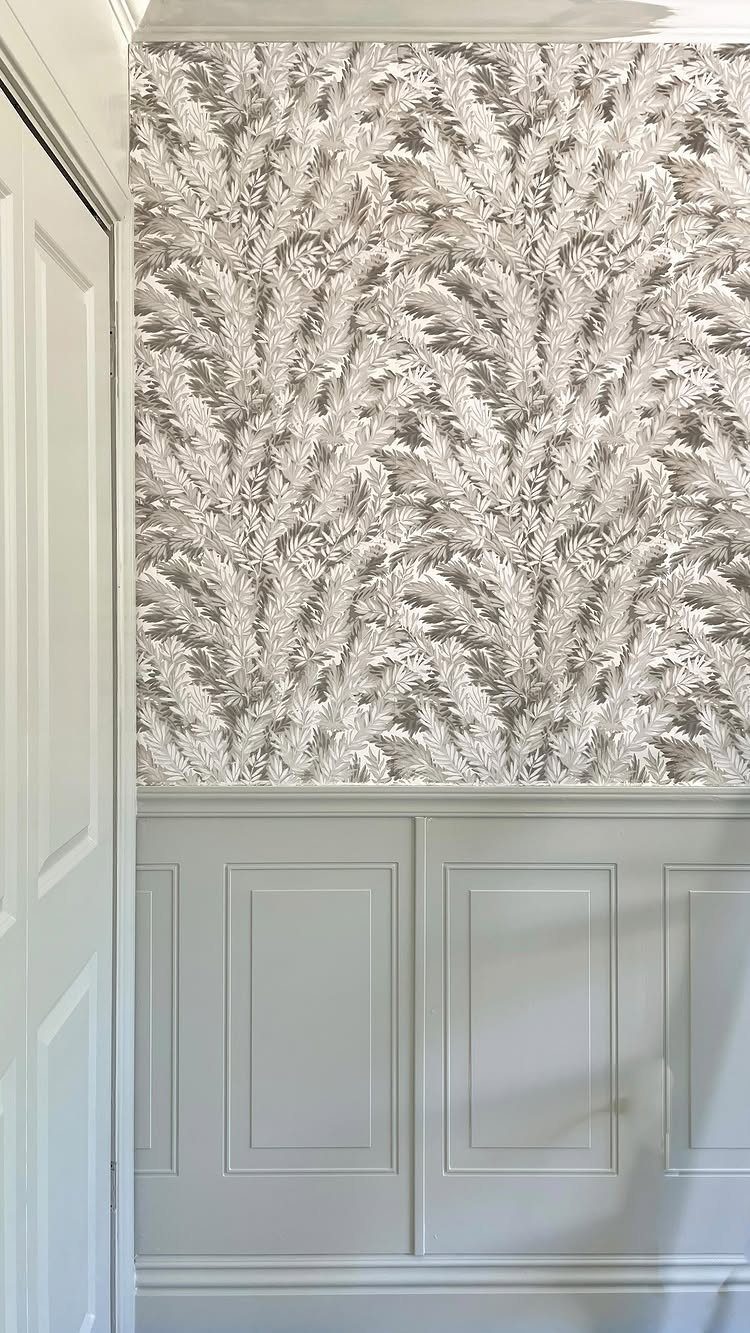
Panels that protrude slightly from the wall, built up from rails, stiles, and a raised central field. The three-dimensional shadow line is what you are paying for, and why it reads as the most formal of these styles.
It belongs in dining rooms and formal living spaces where you want to evoke historical weight. A light grey finish below botanical wallpaper softens the tradition without abandoning it.
That combination, paint below and paper above, is a classic solution for rooms where full wood paneling would feel too heavy.
Installation demands precise joinery or custom panels. It trades money and time for permanence and presence.
When historical charm is the goal, this is the one I’d pick.
Wainscoting is a timeless architectural feature that adds instant character and protection to interior walls. With various styles and materials available, from traditional raised wood panels to modern alternatives like PVC and embossed metal, there’s a wainscoting option to suit every home and budget.
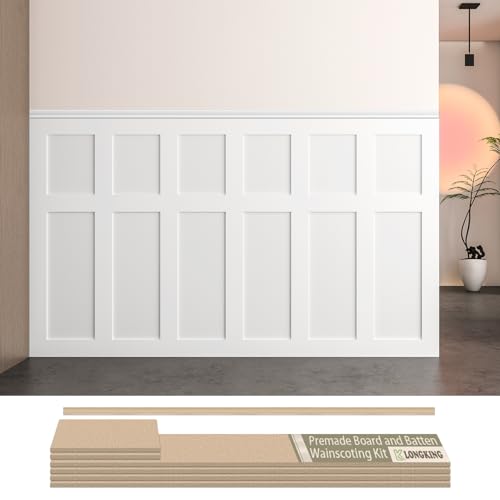
Board and Batten Wainscoting Kit – LONGKING pre-cut MDF wall panel kit is designed for easy DIY installation. Create a stylish accent wall with classic board and batten molding trim, perfect for modern and traditional home décor.

Premade Board and Batten Paintable Wainscoting Kit: Package includes 10 premade molding trim slats, 2 decorative edge strips, and two pairs of gloves for convenient installation

MDF Material for Lasting Use: this board and batten wall panel kit is made from MDF, offering sturdiness and water resistance; The surface is smooth, providing a comfortable touch for interior wall applications
Choosing the Right Wainscoting
Match the wainscoting to the house and the room’s job. Beadboard suits bathrooms because it handles moisture and reads casual.
Height matters as much as style. The traditional one-third rule still works, but pushing higher adds drama under tall ceilings.
A board and batten installation that climbs two-thirds of the wall changes the whole proportion of an entryway.
Paint can pull the same material toward traditional or current, depending on the shade you choose. White wainscoting below a pale wall reads classic.
Deep teal or near-black below a light field reads deliberate and modern.
Wainscoting Height
Traditional wainscoting stops at about chair-rail height, roughly one-third up the wall. That proportion still works in rooms with standard ceilings, where full-height paneling would feel heavy.
Taller installations change the effect entirely. Running board and batten to two-thirds height pulls the eye upward and suits entryways or stair halls with extra ceiling height.
In small rooms, staying low keeps the space from feeling boxed. In large rooms with high ceilings, going taller fills the visual void.
Measure against your own body: waist to mid-chest is the functional zone that chair rail historically protected, but the aesthetic zone can rise with the architecture.

High Quality Material - These molding panels are made of polystyrene material, which is hard and durable, lightweight, odorless, non-warping, and non-cracking. The quality is absolutely superior to that of foam molding panels.
Wainscoting Materials
Wood remains the traditional choice and still handles paint and stain better than anything else. It swells and shrinks with humidity, so avoid it in bathrooms unless you enjoy seasonal touch-ups.
MDF costs less and mills cleanly for picture frame or raised panel details, but it fails fast near moisture. I would not install it below grade or behind a toilet.
PVC and vinyl solve the humidity problem entirely. Vinyl panels work in laundry rooms, mudrooms, saunas, and garages where wood rots and MDF mushrooms.
They are lightweight, need no sealing, and wipe clean. The downside is a slight synthetic sheen that reads more commercial than residential, and paint adhesion can be fussy.
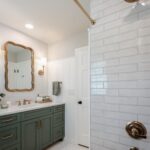
For a basement bathroom or any room with a shower, I would pick PVC beadboard or vinyl panels over wood every time.

【Easy peel-and-stick installation with strong adhesive】 The pre cut wall molding features powerful self-adhesive backing – simply peel press and enjoy instant hold. No messy glue or nail needed, and tays permanently secured in high-traffic areas

【High Quality】This black wall molding trim is made of nano PVC material, with high flexibility and finish black paint surface, making the room space more luxurious.DIY manual operation allows you to enjoy more fun.
Color Combinations
For a livelier entryway, two contrasting shades like Acorn and Hopper split at the rail line. The wainscoting does not have to be the lighter half.
Dark paneling below a pale wall feels grounded and current; pale paneling below a dark wall feels more traditional and can feel jumpy if the contrast is too sharp.

Item Description: 16"W x 14"H x 5/8"P Harrison Raised Panel Decorative Wall Panel

Item Description: 22"W x 14"H x 5/8"P Harrison Raised Panel Decorative Wall Panel

Transformative Design - This peel and stick wall molding kit features pre-cut wainscoting panels that add classic charm and depth to any room; perfect for creating a stylish accent wall with easy installation using peel and stick molding trim for walls
Frequently Asked Questions
What are the different types of wainscoting?
Raised panel, flat panel, beadboard, board and batten, overlay, and picture frame are the main styles. Raised panel protrudes from the wall with a three-dimensional shadow line, while flat panel or board and batten give you cleaner, more modern lines.
Beadboard uses thin interlocked boards for a cottage feel, and picture frame skips panels entirely, building boxes from trim instead.
What is the golden rule for wainscoting?
The paneling traditionally covers one-third of the wall height. That proportion keeps the room from feeling chopped in half or top-heavy.
You can push higher for drama or lower to keep walls feeling open, but the one-third mark is the starting point most installers use.