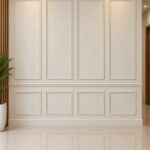
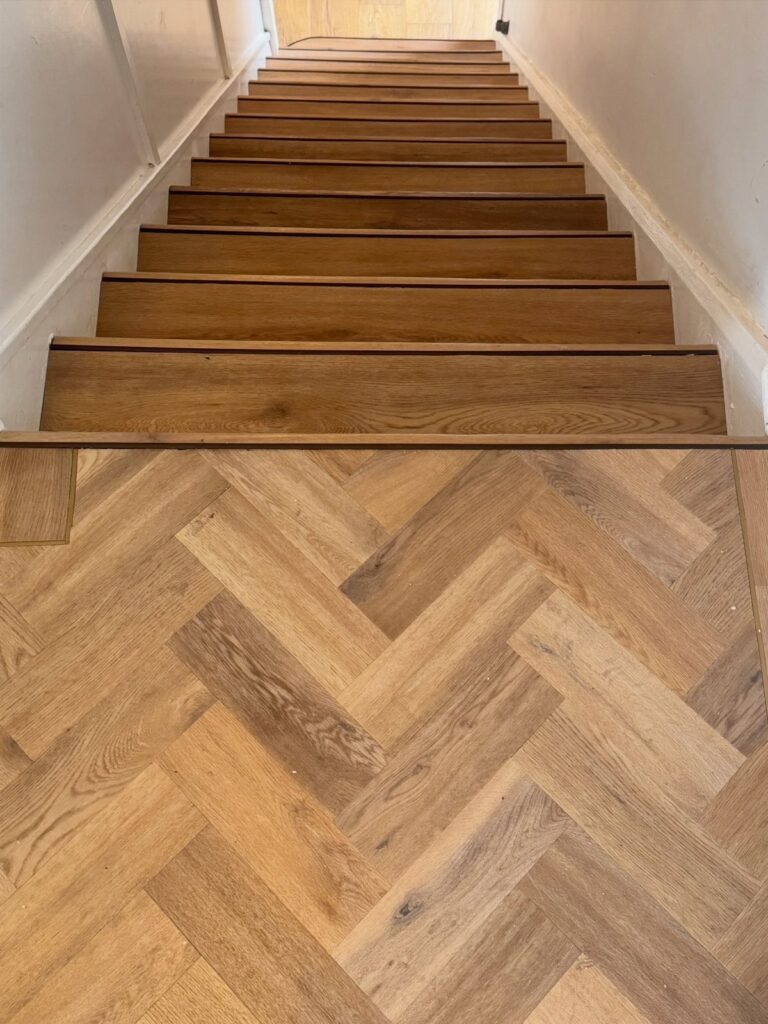
The options run from click-together LVP you can float over a Saturday to herringbone transitions that eat a whole weekend getting the angles right.
What sits underneath matters more than the surface: sound carries through hardwood, tile asks more of your joists, and carpet still has its place where quiet mornings matter.
Some of these ideas layer in lighting too, like LED strips tucked under tread lips that give off just enough warmth to find your way after dark.
1. Luxury Vinyl Plank (LVP)
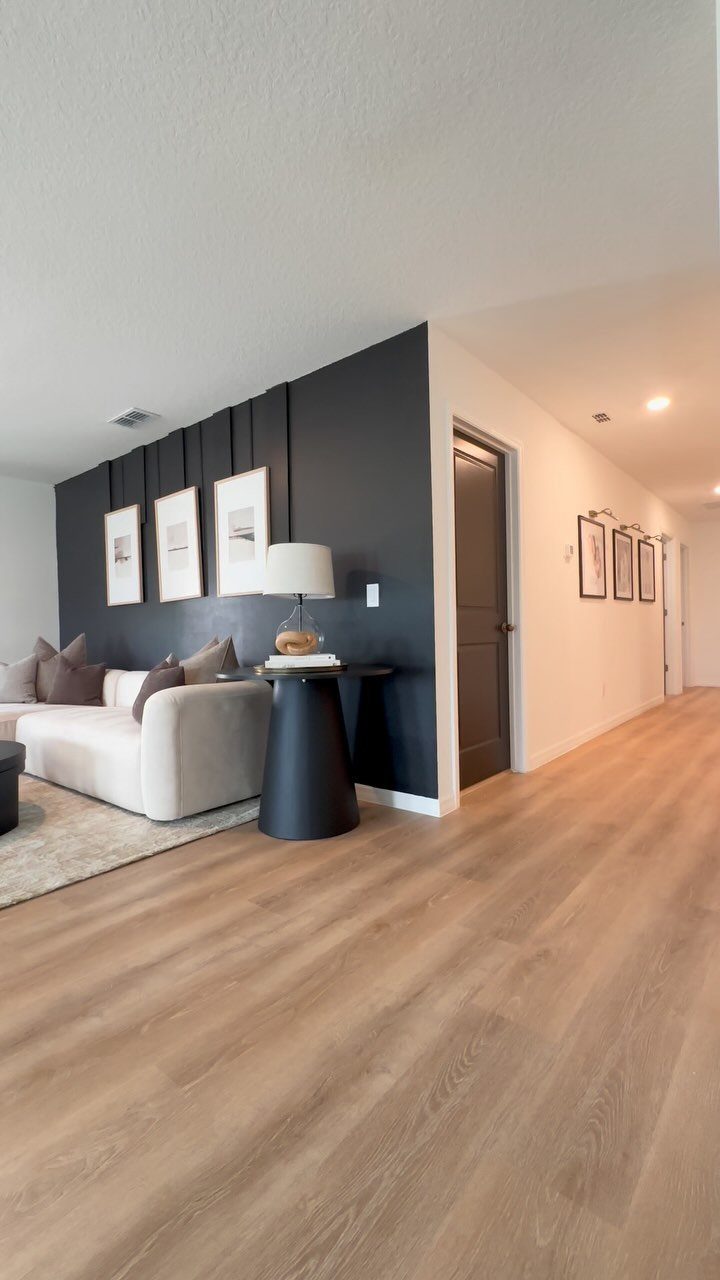
LVP gives you the look of wide wood planks without the worry about bathroom spills or hallway grit tracking through.
Long planks in a light, consistent tone read as real boards, not printed tile, so the living room and hallway flow together.
For upstairs, I’d check whether your current carpet is low and firm enough to install over, or if you need to pull it up first.
The edge detail matters more than you’d think; micro-beveled edges catch light like real wood, while square edges read flatter and more modern.
Wider planks need a more level subfloor, so an older home with some bounce might suit a narrower plank better.
Best for busy households that want one floor type everywhere, and for anyone who has replaced water-damaged wood once already.

Large Area Coverage: This floor underlayment covers 100 sq. ft / 9.3 ㎡ per roll (366.14 x 39.37 x 0.12inch / 9300 x 1000 x 3mm). Ideal for large installations, it reduces construction time and material waste for quick, efficient flooring completion

COVERS LARGE AREAS – Each roll of this flooring underlayment covers 200 sq ft and is 3 mm thick, providing a thick underlayment layer with an integrated moisture barrier for enhanced floor protection.

2. Hardwood
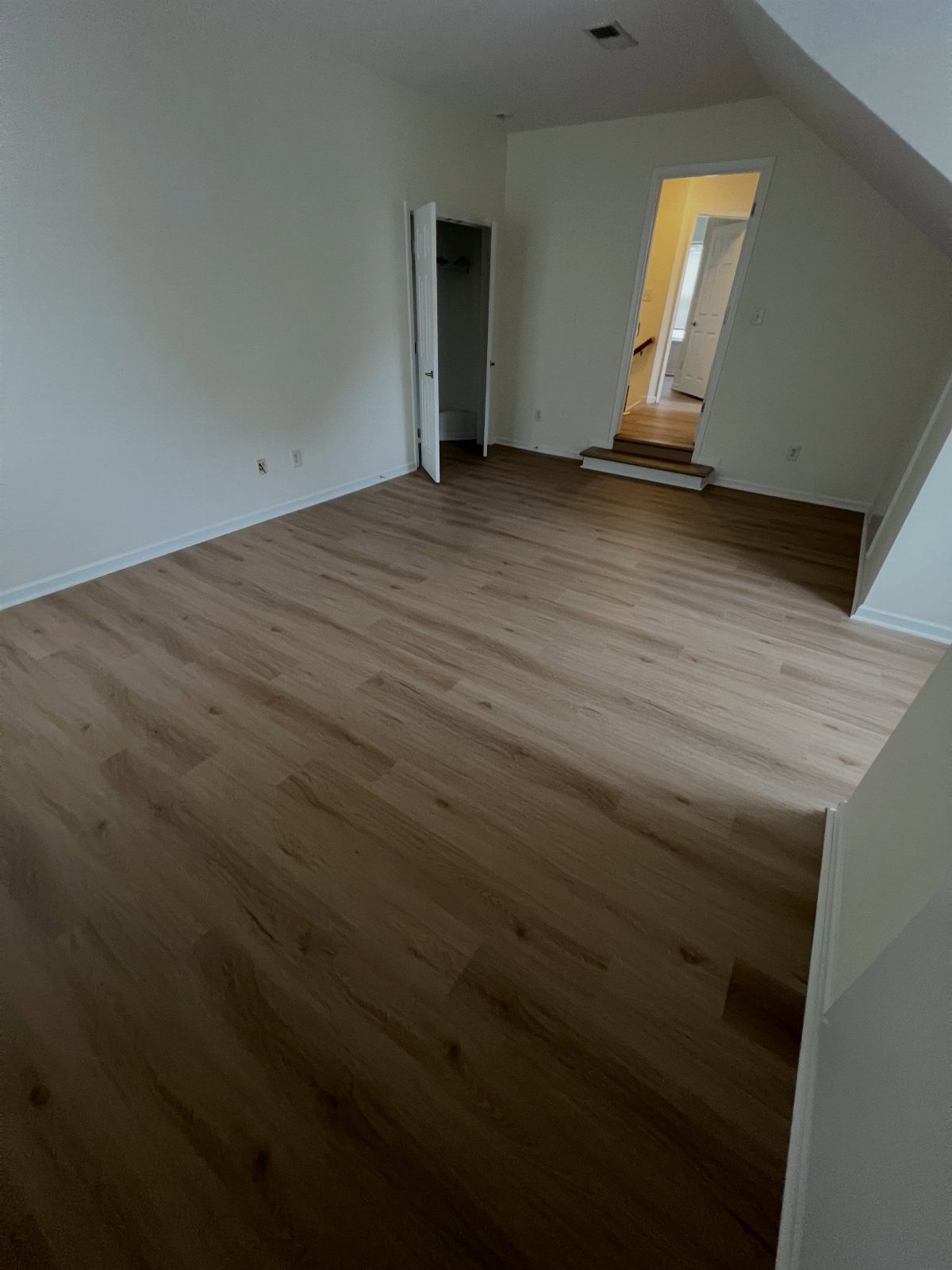
Hardwood makes the architecture feel intentional even before you move furniture in. A warm tone against white walls has lasted because it works with almost any style over the years.
Sound travels through hardwood more than people expect upstairs. A quality underlayment, or going with engineered construction instead of solid, cuts the hollow footfall that can bother downstairs rooms.
If your stairs are a different species or tone than the upstairs floor, I’d match the stair treads to the downstairs and run a runner up the middle; you get visual flow plus softness where you actually walk.
Costs more than the alternatives and scratches under dog claws, but refinishing beats replacing.

✔ Self sealing adhesive tape for ease of installation

Superior Impact Sound Reduction: Enjoy quieter spaces with exceptional soundproofing
3. Carpet
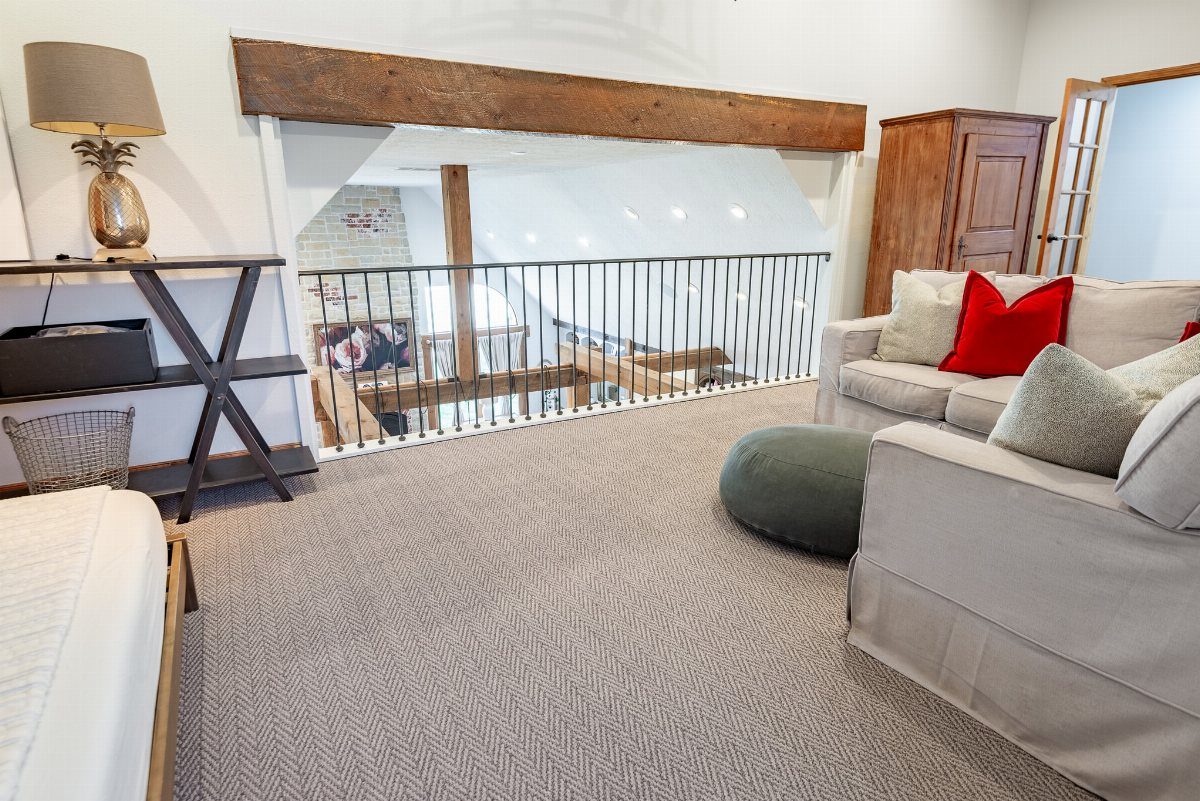
Grey textured carpet in a loft reads as intentional backdrop, not afterthought. Patterned carpet hides tracking and vacuum marks, which matters more in a seating area than people guess.
For upstairs, carpet still wins for bedrooms and for the hallway outside them.
Modular tiles are worth considering if the space doubles as a play area or home office; one stained or worn square comes up without rolling back half a room. Pile height is the choice that changes everything.
Low-profile sits stable under furniture and doors, while thicker pile feels better under bare feet but shows compression faster.
I’d go low-profile for a hallway that leads to multiple rooms, and save the deeper pile for a bedroom where you are rarely in shoes.
Adding 40-pound felt padding to wool or nylon carpet can reduce noise by 50 to 70 percent. The master bedroom is also a good place to install hardwood or hardwood laminate flooring.
— eHow

Mohawk Advance delivers design flexibility and color intensity with easy-to-maintain carpet tiles that are stain and soil resistant.

EVERYDAY DURABILITY: Designed to withstand everyday wear, the 100% polyester fiber offers advanced soil and stain protection, fade-resistant color clarity, plus all-weather resilience.

Mohawk Basics offers reliable, high-performance, easy-to-maintain, visually stunning carpet that's soil and stain resistant.
4. Laminate Flooring
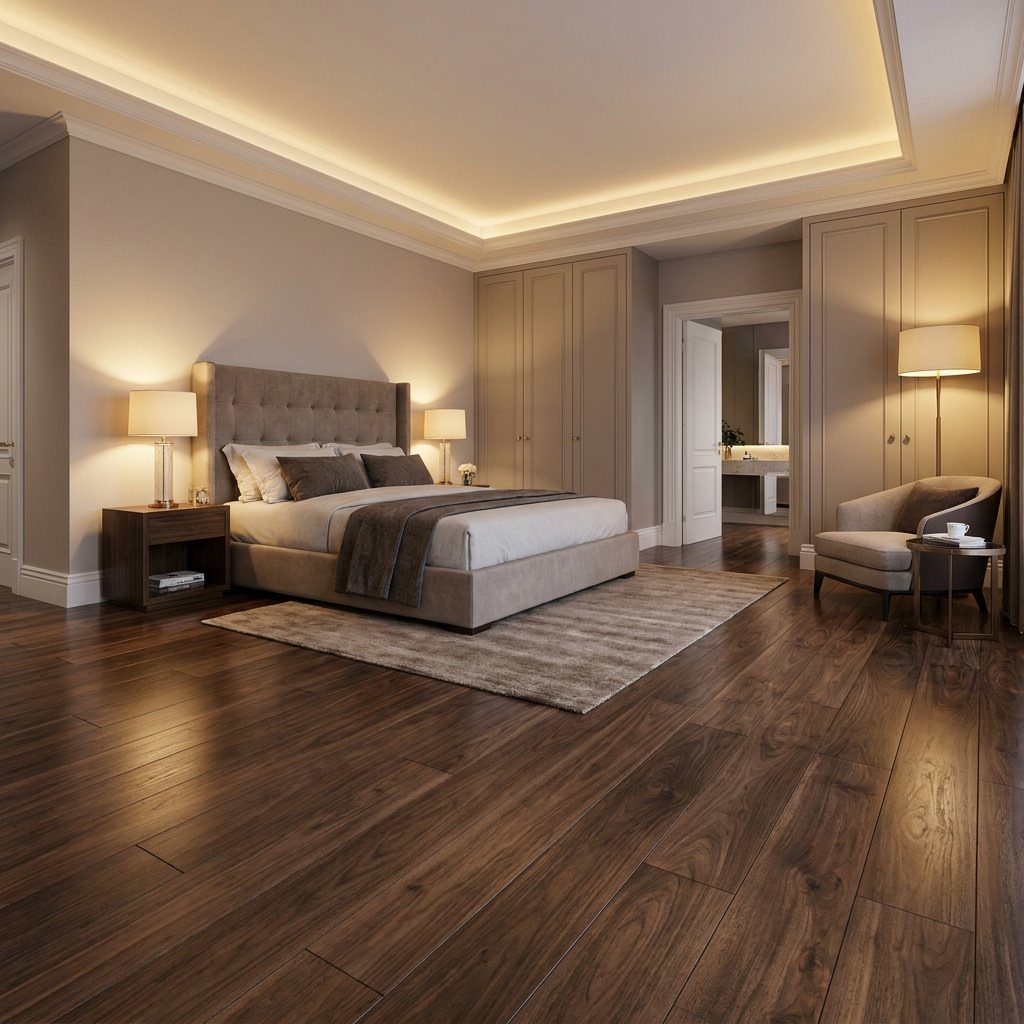
Dark wood-look laminate in a bedroom works because nobody is spilling bath water or dragging in road salt.
A rich tone reads as expensive until you look closer and notice the repeating grain pattern, which is the tell on cheaper planks.
Laminate needs a stable surface beneath it. Plush carpet has to come out completely; even low-pile carpet can leave the finished floor feeling springy and risking seam separation.
Water resistance varies by product, so a bedroom near a shared bathroom needs a higher rating than one down a long hallway. Thicker laminate sounds less hollow and tolerates minor subfloor flaws.
For a guest bedroom or a space you are refreshing on a tight budget, this is where I’d put my money. It will not last like hardwood, but it does not cost like hardwood either.

👥【DUAL SENSORS】--- There is one PIR motion sensor at each side of the light strip. It is very suitable for places which have two entrances or need for two-side switch, such as stairway, double bed, corridor, living room or garage, etc.

Motion-Activated Lighting: Lights turn on in sequence as you step onto the staircase and gradually turn off step by step when you leave, creating a smooth and elegant lighting effect.

Motion-Activated Lighting: Lights turn on in sequence as you step onto the staircase and gradually turn off step by step when you leave, creating a smooth and elegant lighting effect
5. Tile or Natural Stone
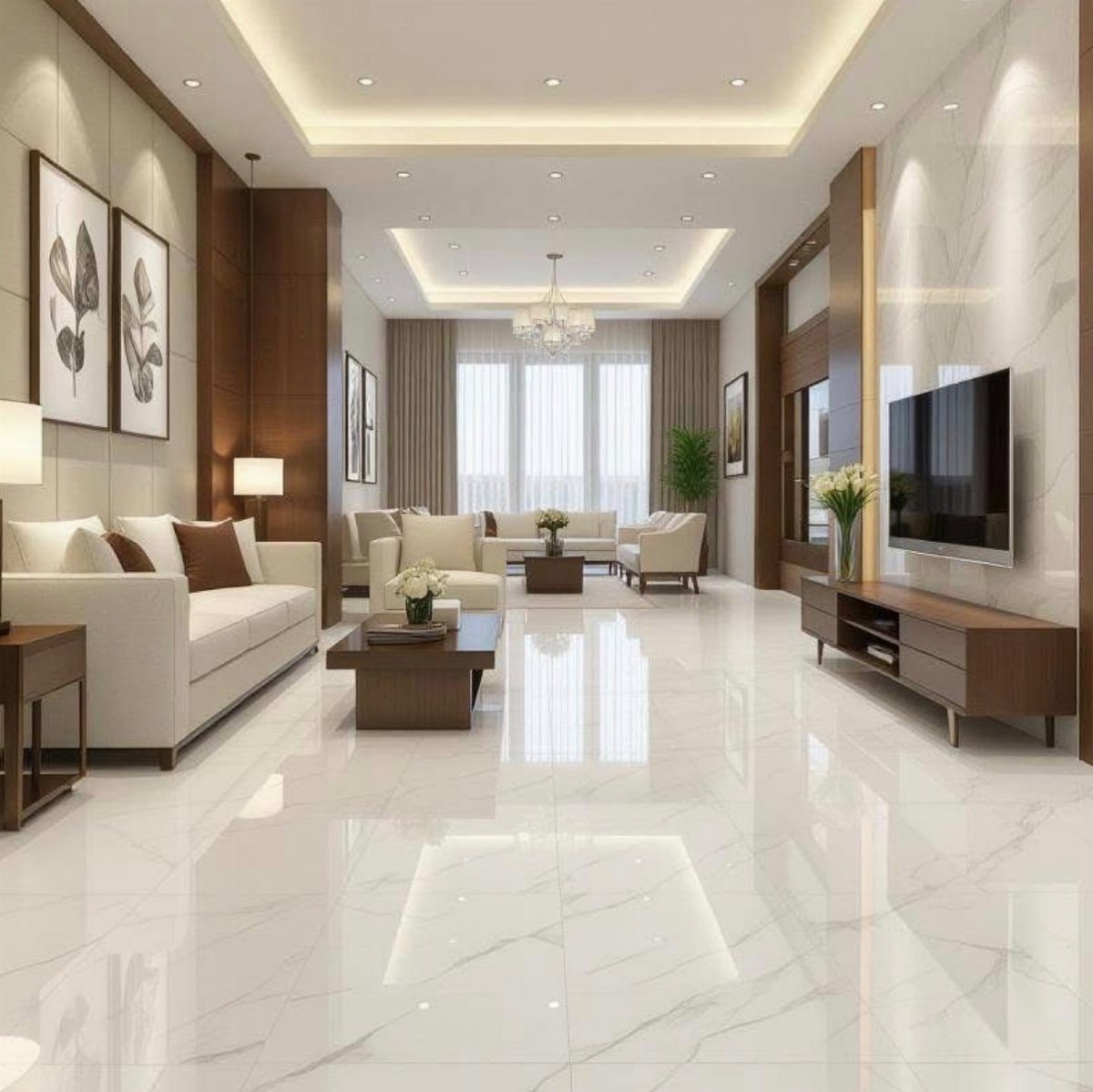
Polished marble-look tile belongs upstairs in bathrooms, not bedrooms. Large format tile with minimal grout gleams under recessed light.
That scale is what makes it feel luxurious rather than clinical.
Weight is the practical concern. Natural stone especially needs a subfloor that can handle the load, and older homes with some spring in the joists may need reinforcement.
For upstairs bathrooms, I’d look at porcelain with stone veining before actual marble; it carries the same visual weight without the sealing and etching headaches. The subfloor has to be flat, too.
Any dip telegraphs through large tile and risks cracking.
Stone or tile on stairs is possible but hard underfoot and loud; save it for the bathroom floor and shower surround, where water resistance actually matters.

SEAMLESS TRANSITIONS WITH MAXIROC - Effortlessly bridge the gap between different flooring types with our advanced adhesive technology. No more tripping hazards or unsightly gaps. Achieve a professional finish.

Premium PVC Material - Lightweight, durable, and water-resistant. Not wood, ensuring long-lasting quality and performance.

【Durable Material】The floor transition strip is made of high quality PVC material, durable and flexible. The size of laminate floor joining strip is approx. 39.4in long, 2in wide and 0.13in thick, which is not easy to trip over with its suitable size and proper height.
6. Herringbone Wood Pattern Transition
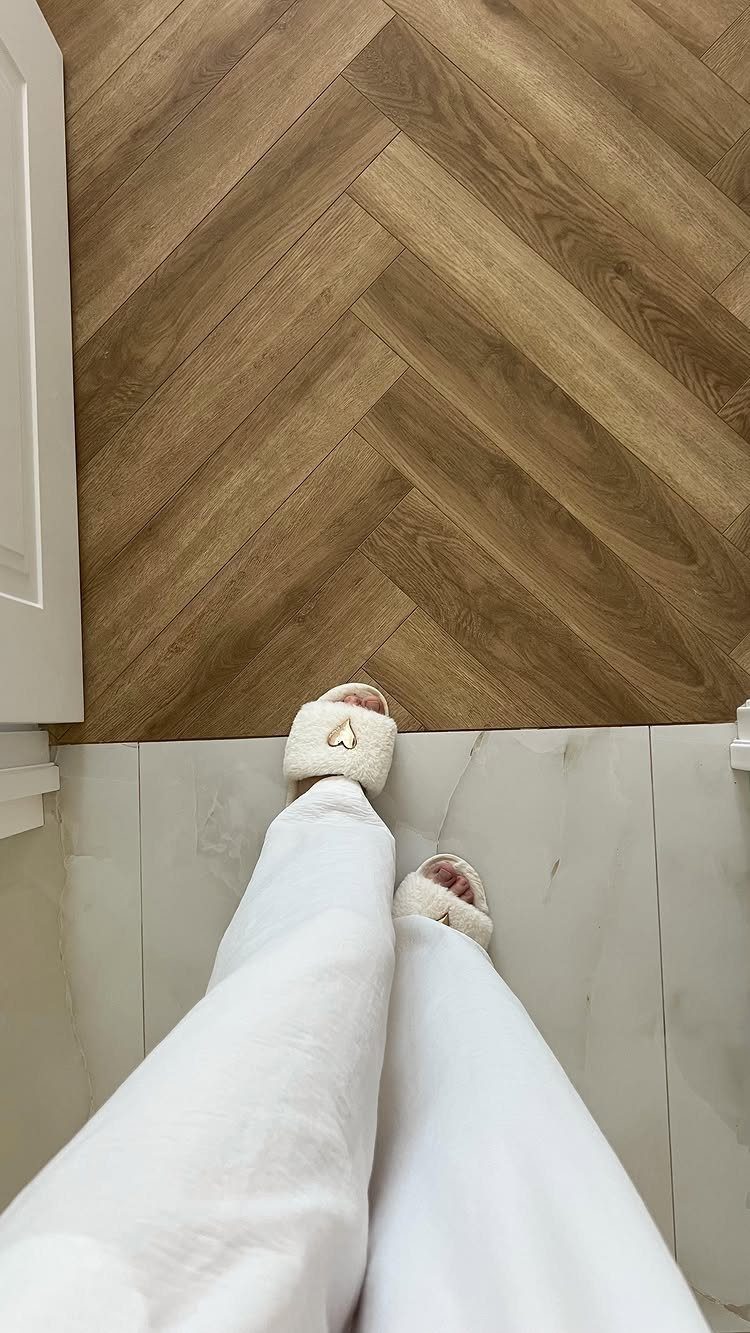
The threshold solves a common upstairs problem: how to handle the moment where a wet-area tile meets dry-area wood. Herringbone does the visual work here.
The pattern creates a deliberate border that reads as design, not compromise.
Installing this means planning the transition before either floor goes down. The herringbone needs space to run perpendicular to the room it leads into, or the geometry falls flat.
I’d keep the wood tone lighter than the tile when one is marble-look; dark herringbone against white marble turns heavy fast. The actual pieces are smaller than standard plank, so installation takes longer and costs more in labor.
For a landing at the top of stairs, or a bathroom doorway visible from the hallway, this detail rewards the extra effort. In a closed-off space nobody sees from the main room, simpler transitions make more sense.
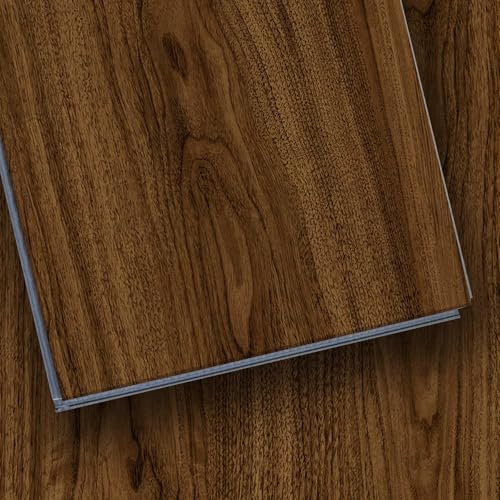
【Ultra-Durable & Pet-Friendly】With a 0.3mm wear layer tested over 15,000 abrasion cycles, this luxury vinyl plank flooring resists scratches, dents, and spills. Ideal for busy homes with pets and kids, it stays beautiful for years even in high-traffic areas.
7. Decorative Patterned Tile Risers
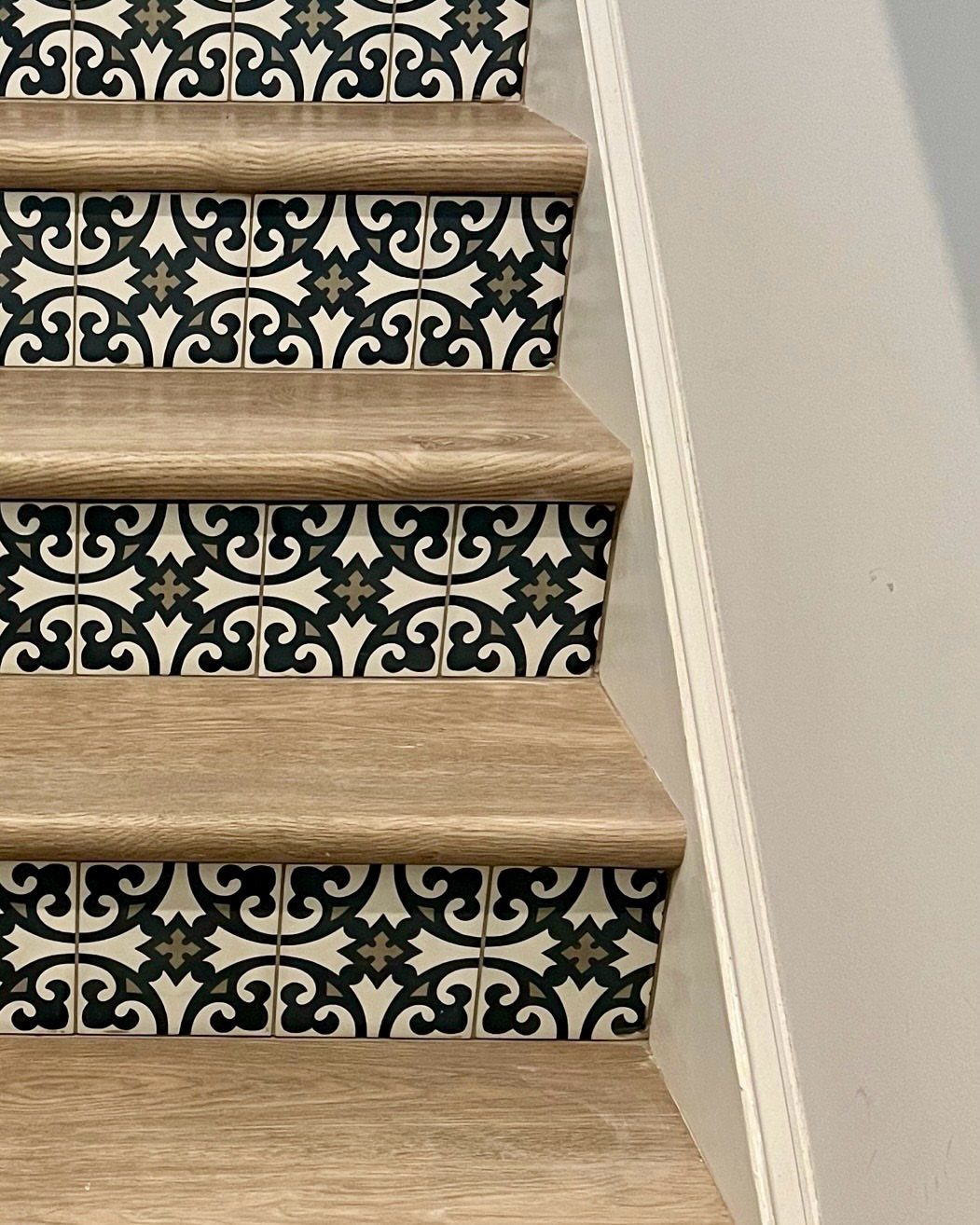
Tile on stair risers turns a plain staircase into something worth looking at twice.
The treads stay wood, which keeps the walking surface warm and familiar underfoot, while the vertical faces carry a pattern that reads as intentional without demanding a full renovation budget.
A standard field tile or a sheet of mosaic cuts cleanly to riser height. Thinset and a level are the only real tricks; the pattern does the heavy lifting.
Black and white schemes age well, but any two-tone graphic keeps the read simple from the bottom of the stairs.
I’d steer toward matte or satin glaze rather than high gloss, since scuffs from shoes show fast on shiny surfaces.
The install takes a weekend if the risers are already flat and painted; uneven old boards need a layer of plywood first.
Best for a staircase that sits visible from a main living area, where the finished look justifies the patience.

Compatible with Luxury Vinyl, Laminate & Engineered Wood – Supports floating, glue-down, and nail-down installations for LVP, LVT, SPC, WPC, rigid core, and multilayer floors (4mm+).
100 sq. ft. Coverage – Ideal for single-room installations and small renovation projects.
8. Stairs with Carpet Runners
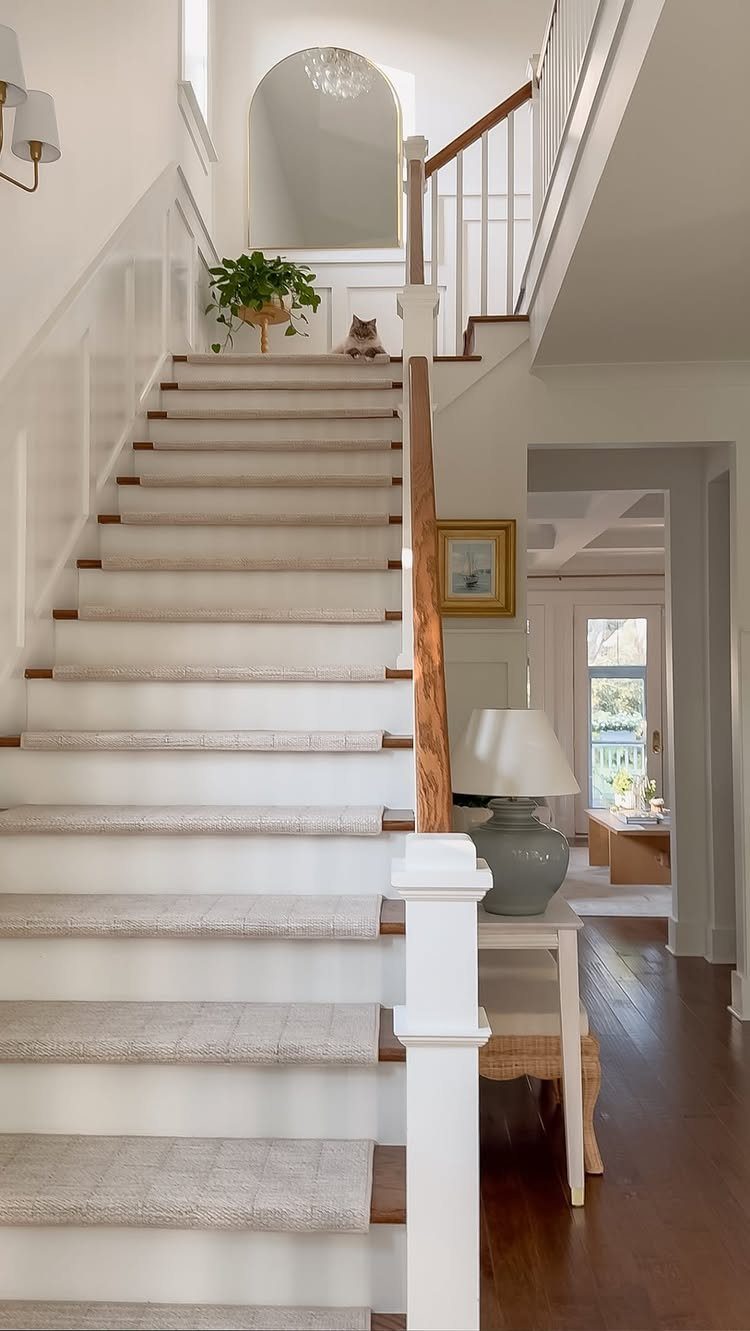
A runner down the middle of each tread leaves wood exposed at both edges, which softens the look of a straight hardwood staircase without hiding it completely.
Grey reads neutral enough to outlast a few trend cycles, though navy or a faded stripe would work the same way.
Width is the decision that matters. A runner that covers most of the tread suits most stairs; go too narrow and it looks like an afterthought, too wide and you lose the border effect that makes this choice distinctive.
The runner gets stapled underneath the nose of each tread and up against the riser below, so the fixings stay hidden.
I like this for households with pets or early walkers, since the center strip adds grip where feet land most often.
The wood edges still need periodic touch-up from scuffs, and the runner itself will compress and fade in the traffic lane.
Plan on replacement once the pile flattens or the edges fray in a busy house, sooner if the cat claims one step as a napping spot.

Eva Material for Safety: crafted from EVA foam material, these foam puzzle floor mat ensure a safe environment for everyone; Coverage area about 14.5 ft², not only ensures durability but also offers peace of mind play or rest areas

Nexus Carpet Tiles: Refresh your home for a low cost and no hassle with the Nexus Carpet Floor Tiles. Our tiles can be used in any room in your home including the dining room, bedrooms, foyers, and basements. Use one color all over or mix and match for a checkered look. No messy glue or adhesives needed. Includes 12 carpet tiles.

EVERYDAY DURABILITY: Designed to withstand everyday wear, the 100% polyester fiber offers advanced soil and stain protection, fade-resistant color clarity, plus all-weather resilience.
9. Staircase with Integrated LED Lighting
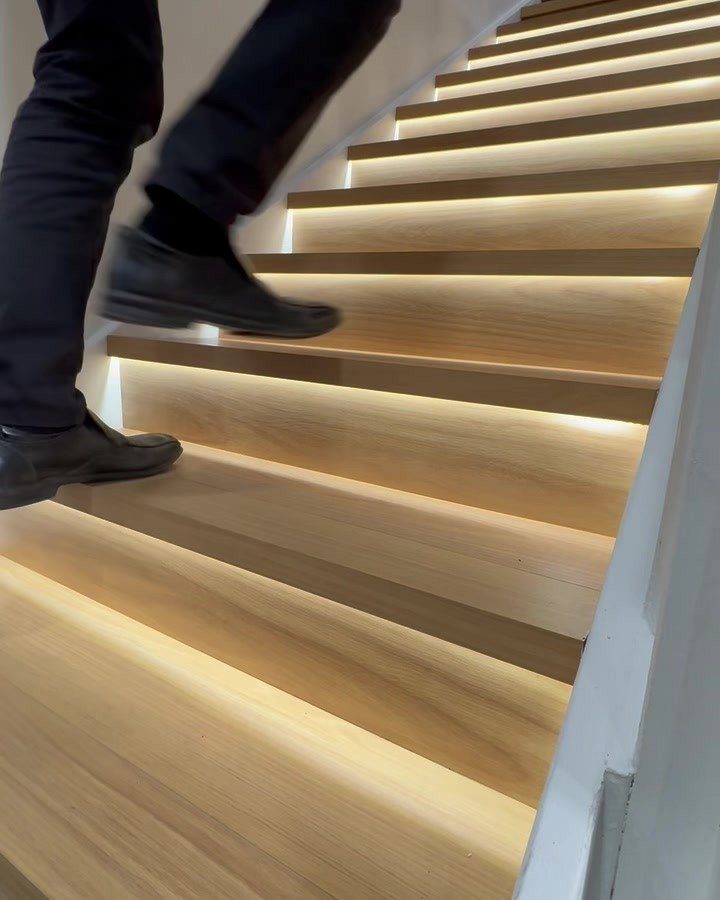
LED strips tucked under the tread lip cast light downward onto the riser below, which means you see the glow without staring into the source itself.
Warm white, around 2700K, keeps the effect residential rather than theatrical; anything cooler starts to feel like a parking garage.
The strips need a channel or at minimum a recessed groove to sit in, otherwise the adhesive backing gives up after a few seasons of foot vibration.
A motion sensor at top and bottom saves you from wiring a switch you will never use, and a driver rated for the full run length prevents the dim tail that cheap installations show at the far end.
This is voltage work, so a licensed electrician is worth the cost unless you are already comfortable with low-voltage landscape lighting.
The visual impact is highest on a staircase that sits against a wall, where the light pools and bounces back. Open railings on both sides scatter the effect and look thinner for it.

Brilliant Illumination – high CRI 90+ to reflect real colors and real beauty; 232 lm/ft high brightness (dimmable if equipped with a dimmer, recommend using B0FF963K4K); 91 LEDs/ft high density dot-less continuous lighting strip for indoor kitchen cabinet or display shelves.

Multi Mode: Motion sensor mode, daylight sensor mode, wall switch control, light stay on mode.

Motion-Activated Lighting: Lights turn on in sequence as you step onto the staircase and gradually turn off step by step when you leave, creating a smooth and elegant lighting effect.
Functionality by Level
The upstairs level of a house lives at a different speed than the main floor.
Basements handle moisture and storage traffic; main floors take the beating from entryways and kitchens. Upstairs, the questions shift to whether you are walking barefoot at 6 a.m. or carrying a laundry basket past a sleeping household.
Sound absorption matters more than scratch resistance in a hallway outside bedrooms. A bathroom on the upper level needs water resistance that a downstairs powder room might not.
Match the material to the actual hours spent there, not the room label on the floor plan.
Aesthetic Flow
The same plank can read two different colors depending on which story it sits. Natural light from a second-story window hits at a steeper angle than downstairs glass, so warm tones can turn orange by afternoon.
I’d look at samples flat on the floor where they will live, not propped against a wall.
High-traffic areas like hallways and stair landings gain visual width when the flooring matches or tones with what runs below. A threshold should look like a decision, not a leftover.
Floor trim in a width that relates to the baseboard keeps the eye moving instead of stopping at every doorway.
Where tile meets wood at a bathroom door, the herringbone pattern in the list turns that joint into architecture.
In a closed space with no sightline from the main room, a simple metal strip does the same work without the labor cost.
Light color on stairs reads as open; dark color pools shadow and needs brighter bulbs to feel safe.
Durability and Maintenance
Stairs and landings collect more footfalls per square foot than almost anywhere else in the house. Hardwood and LVT handle that compression better than materials that dent or crush.
Hardwood shows wear faster in traffic lanes, though refinishing costs less than full replacement.
LVP earns its place on upper levels because a spilled glass of water or tracked bathroom moisture wipes up without swelling seams.
Laminate in a low-traffic guest room makes sense; in a hallway that gets constant daily use, the savings shrink against earlier replacement.
Tile and natural stone need a flat subfloor. For stairs specifically, the material at the nose of each tread takes the hit from every descent.
I’d factor in one extra sanding or a sacrificial runner replacement cycle when I budget the job.
Safety Considerations
Stairs demand traction first. A polished surface that looks fine in a hallway becomes a hazard where feet land at an angle.
Textured wood or carpet runners add grip where it counts.
LED lighting under tread lips helps, but only if the strips sit in a channel. Adhesive backing alone loosens from vibration and seasonal humidity shifts.
Motion sensors at top and bottom beat a wall switch nobody remembers to flip.
For households with children or older adults, I’d prioritize matte or satin finishes over high gloss on any stair surface. Scuffs show faster on shiny tile, and the reflection can read as a step where none exists.
Proper installation matters more upstairs than down: a loose runner nose or a tile lip that lifts catches a bare foot faster than a shoe.
Frequently Asked Questions
What type of flooring is trending right now?
Luxury vinyl plank flooring is the choice showing up most often in current projects.
Vinyl plank keeps gaining ground because the prints look close enough to real wood that you have to kneel down to tell, and the surface shrugs off water, dropped food, and the scuff marks my dog leaves when he hears the mail truck.
The planks come in enough browns, grays, and widths that I could run one style through the hallway and bedrooms without it looking like I gave up halfway through.
Water resistance and durability matter more to busy households than having the real thing.
What type of flooring is best for people with asthma?
Hard floors win over carpet for anyone tracking allergens. Carpet traps dust, pollen, and pet dander in the fibers, while hardwood, engineered wood, LVP, or laminate let you sweep or mop the irritants away completely.
If you want softness underfoot in a bedroom, a low-pile rug that goes through the wash works better than wall-to-wall.
What type of flooring can be installed on an uneven floor?
Floating floors are built to handle some imperfection without glue or nails. Click-together vinyl or laminate planks float over whatever is already down, so a slightly wavy subfloor or old tile with chipped edges disappears underneath.
The locking edges take up the small highs and lows instead of telegraphing every bump through to the surface.
You still need the base to be low, firm, and stable; thick or plush carpet underneath creates movement that risks seam separation later.
What flooring choices do homeowners most regret?
Vinyl plank over unprepared carpet is a common one. The finished floor feels springy, the seams can pull apart, and the height change creates problems at doorways.
A thin wear layer on vinyl plank is where I see people cut corners and pay for it later.
In a hallway or kitchen, the traffic grinds through the pattern in two or three years, and once that realistic grain is gone, you are left with a gray plastic floor that looks exactly like what you were trying to avoid.
What types of flooring are best for stairs and landing?
Hardwood, engineered wood, laminate, luxury vinyl tile, and carpet are the materials that handle the traffic and visual demands.
Hardwood gives a classic look that ties the floors together, carpet adds softness and quiet underfoot, and LVP uses coordinating stair nose pieces for continuity. Traction and durability matter more on stairs than anywhere else in the house.
What are the best ideas for upstairs floors?
Carpet for bedrooms and the hallway outside them, hardwood or LVP for living areas, and tile or stone for bathrooms.
Each room upstairs has different needs: moisture resistance near tubs and showers, noise reduction where people sleep, and a surface that feels good under bare feet first thing in the morning.
Layering materials by function beats forcing one type through every door.
How to choose flooring for each level of your home?
Match the material to how that level is built and how you actually use it. Upstairs prioritizes comfort, quiet, and low maintenance because that is where bedrooms and private spaces sit.
Downstairs handles entry grit, kitchen spills, and the visual flow guests see first. The same floor everywhere is rarely the right answer; structure and usage should drive the choice.