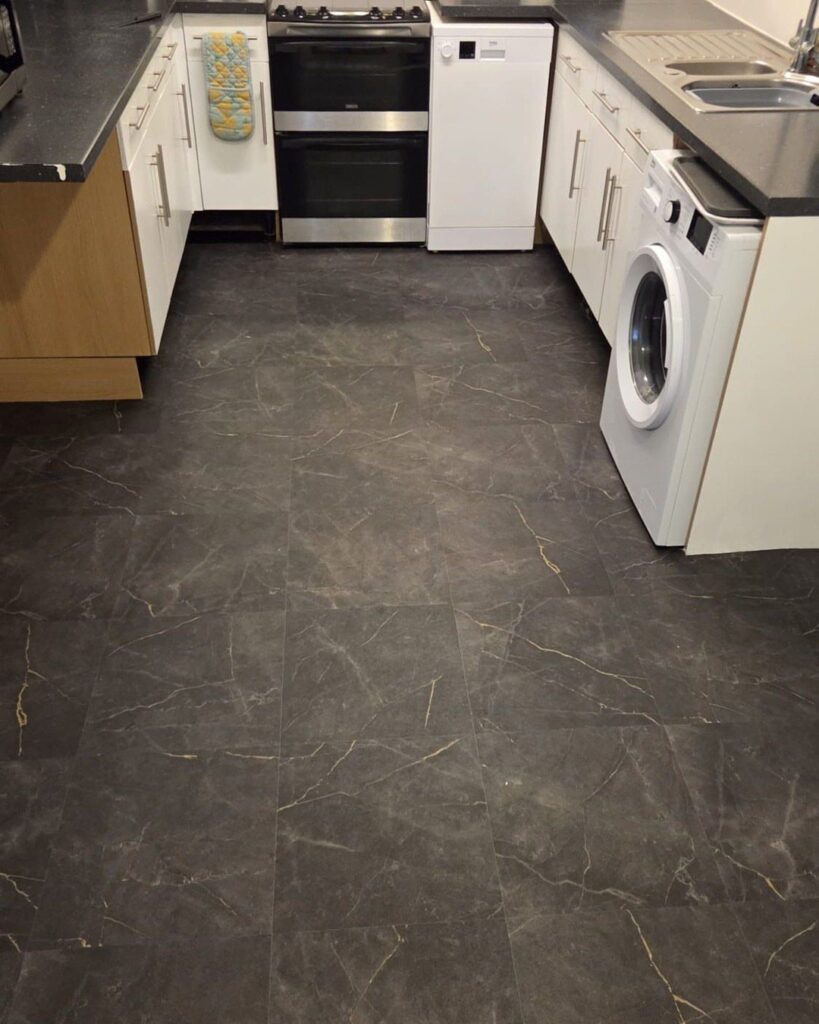
Vinyl kitchen floors run from peel-and-stick sheets you can lay in an afternoon to click-lock planks that need a full weekend and a miter box, and the ideas below cover most of the range.
The deciding factor is how much of the install you plan to handle yourself and how long you need it to last before the next change.
A reducer strip for door transitions, a 1,800 mm plank length, and a wear layer thick enough for pets and dropped pans all show up somewhere in the 7 ideas below.
1. Timeless Tile Patterns in Sheet Vinyl
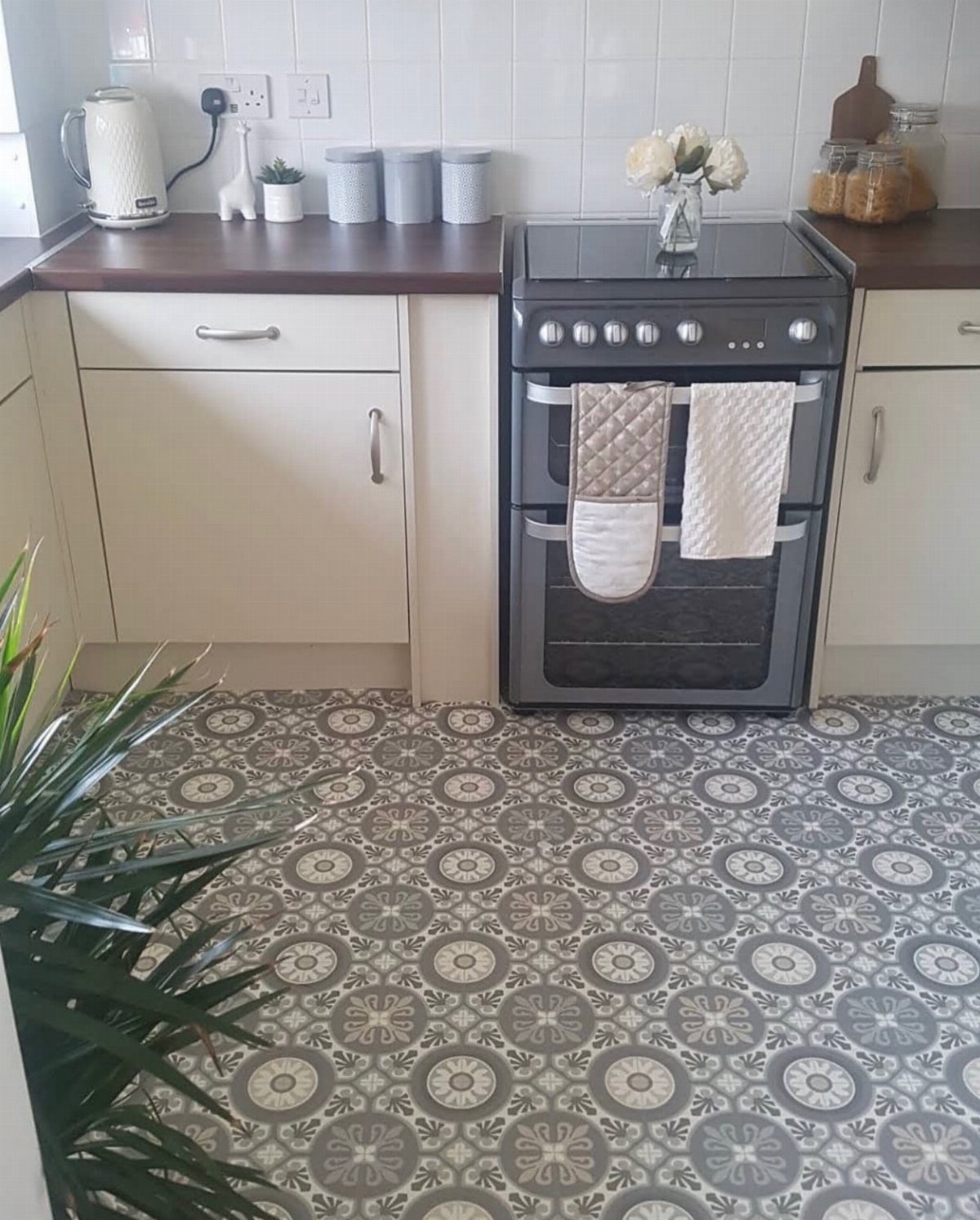
Sheet vinyl printed with encaustic-style circles gives you the patterned tile look without grout lines to scrub. The material comes in rolls, so installation runs faster and the repeating design hides seams better than you’d expect.
I like this for renters who need one weekend and minimal tools; a utility knife and straightedge get it down. Order extra for future patches, especially if your kitchen has an irregular shape that eats material.
Sheet vinyl sits lower than ceramic, so check door transitions to the next room. A reducer strip costs a few dollars and prevents the stubbed-toe moment later.

Double the Width: Our premium wood grain tiles are 11.8 inches wide, offering double the coverage of standard tiles, making installation and renovation a breeze. Ideal for peel and stick flooring solutions

【Large Size&Double Width】: The gray peel and stick floor tile is designed in a large, each vinyl flooring measures 11.8” x 590” with a thickness of 0.025”, covering approximately 48.4 Sq.Ft. Compared with traditional flooring planks, vinyl flooring roll minimizing the need for frequent seams, creating a smooth, continuous finish without any visual breaks, making it easy for you to renovate bedroom, living room, saving significant time and labor costs.
Double the Width: Our premium wood grain tiles are 11.8 inches wide, offering double the coverage of standard tiles, making installation and renovation a breeze. Ideal for peel and stick flooring solutions
2. Checkerboard Patterns
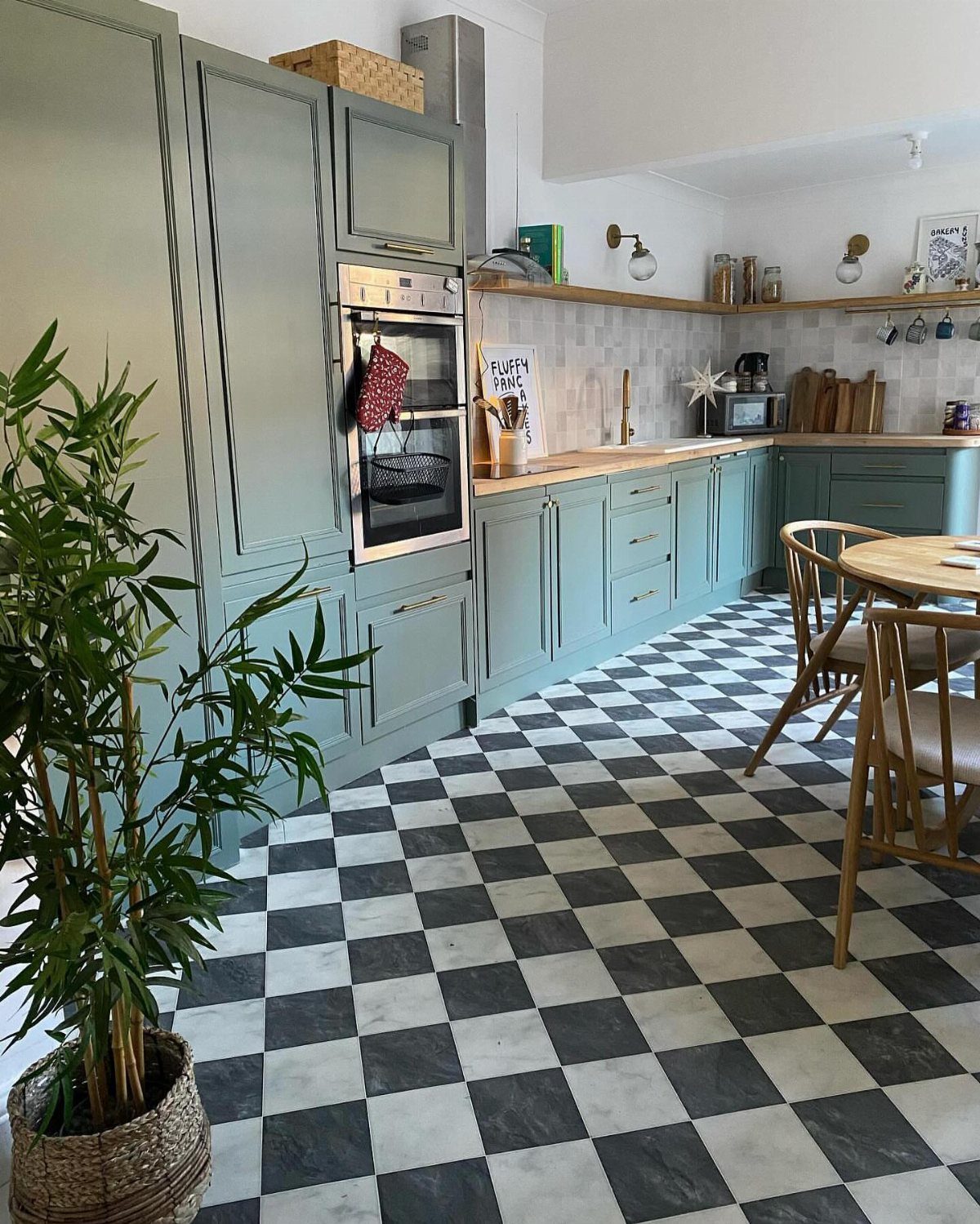
A checkerboard floor reads as graphic and intentional without demanding custom anything. Modern LVT comes in pre-colored squares you lock together, so the pattern builds itself as you lay it.
Sage-and-cream pairs well with cabinets that already carry color, softening the kitchen without going full neutral. The vinyl tiles handle underfloor heating and clean with a damp mop, which matters more than the pattern after month three.
This one asks for careful starting lines; snap a true center and work outward or the diagonals wander. Budget an extra hour for that first row.

Premium Quality - Art3d Peel and Stick Vinyl Flooring Tiles are crafted with the high quality vinyl, ensuring durability and longevity. Each pack contains 30 tiles, each measuring 12x12 inches, providing a total coverage of 30 square feet - ideal for revitalizing any space

Artistic Floral Checkerboard Design: These peel and stick vinyl floor tiles blend vintage black-and-white diamond grids with hand-painted wildflower motifs—great for boho, French country, or eclectic interiors.

Please note - there may be slight color variations between different batches, so please be sure to purchase the required quantity at once.
3. Bold Color Vinyl Flooring
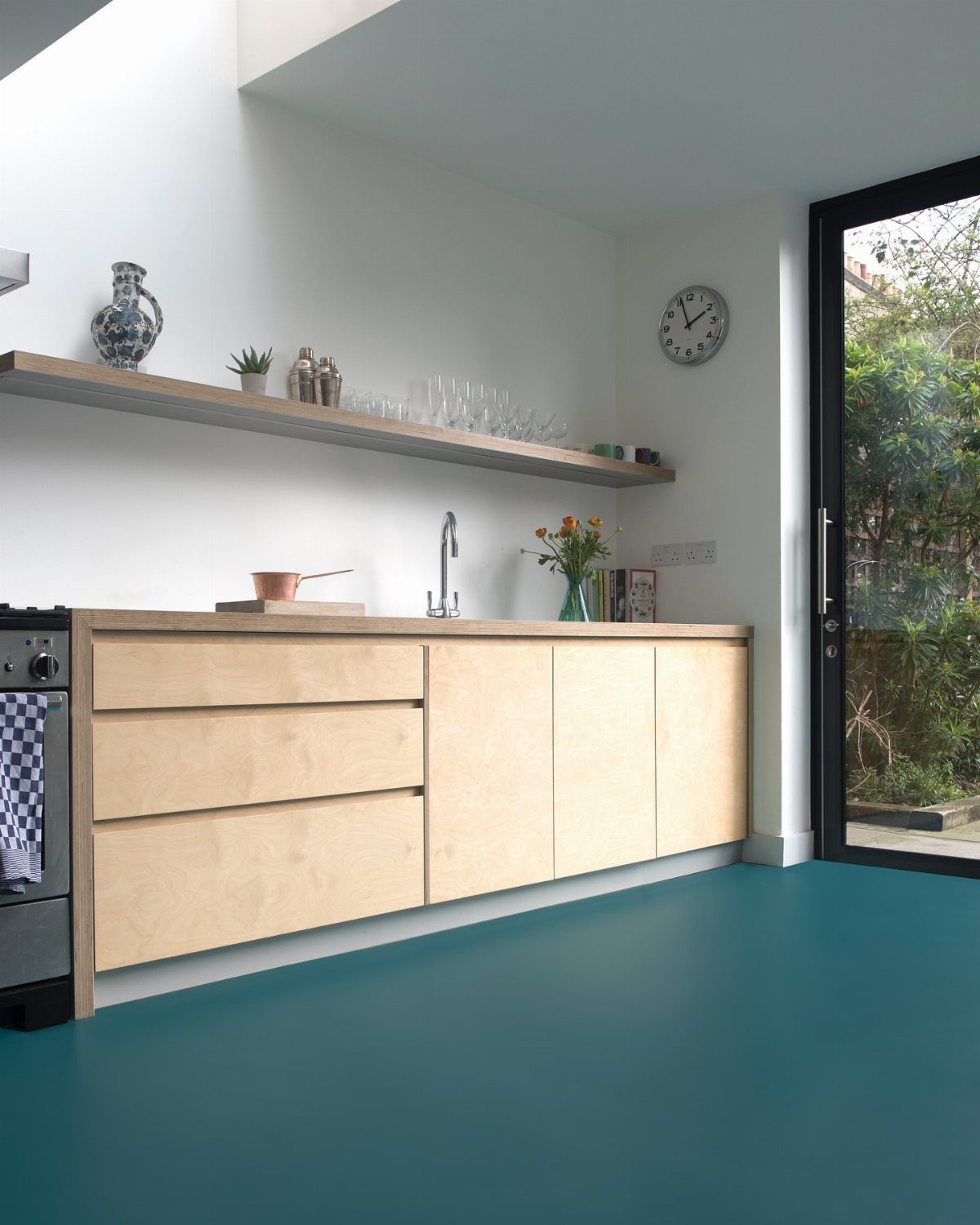
Solid teal across a kitchen floor is a commitment, and that’s the point. Vinyl handles the saturation in a way wood or stone never could, and the color stays consistent from box to box unlike natural material.
I’d pick this for a kitchen with pale cabinets and not much else competing; the floor becomes the personality. Check your light source before you order.
North-facing rooms cool the tone further, while afternoon sun warms it toward green.
Peel-and-stick exists in bold colors, but glue-down sheet wears better long-term. The install costs more upfront; the re-do costs less.

1. Instant Peel & Stick Tiles with Perfect Sizing Transform floors instantly! 30cmx30cmx10P (covers 9.7 sq ft) waterproof vinyl planks adhere securely to any surface. Removes residue-free – ideal for renters. No tools needed!

Teal geometric peel and stick floor tiles
4. Luxury Vinyl Planks That Mimic Wood
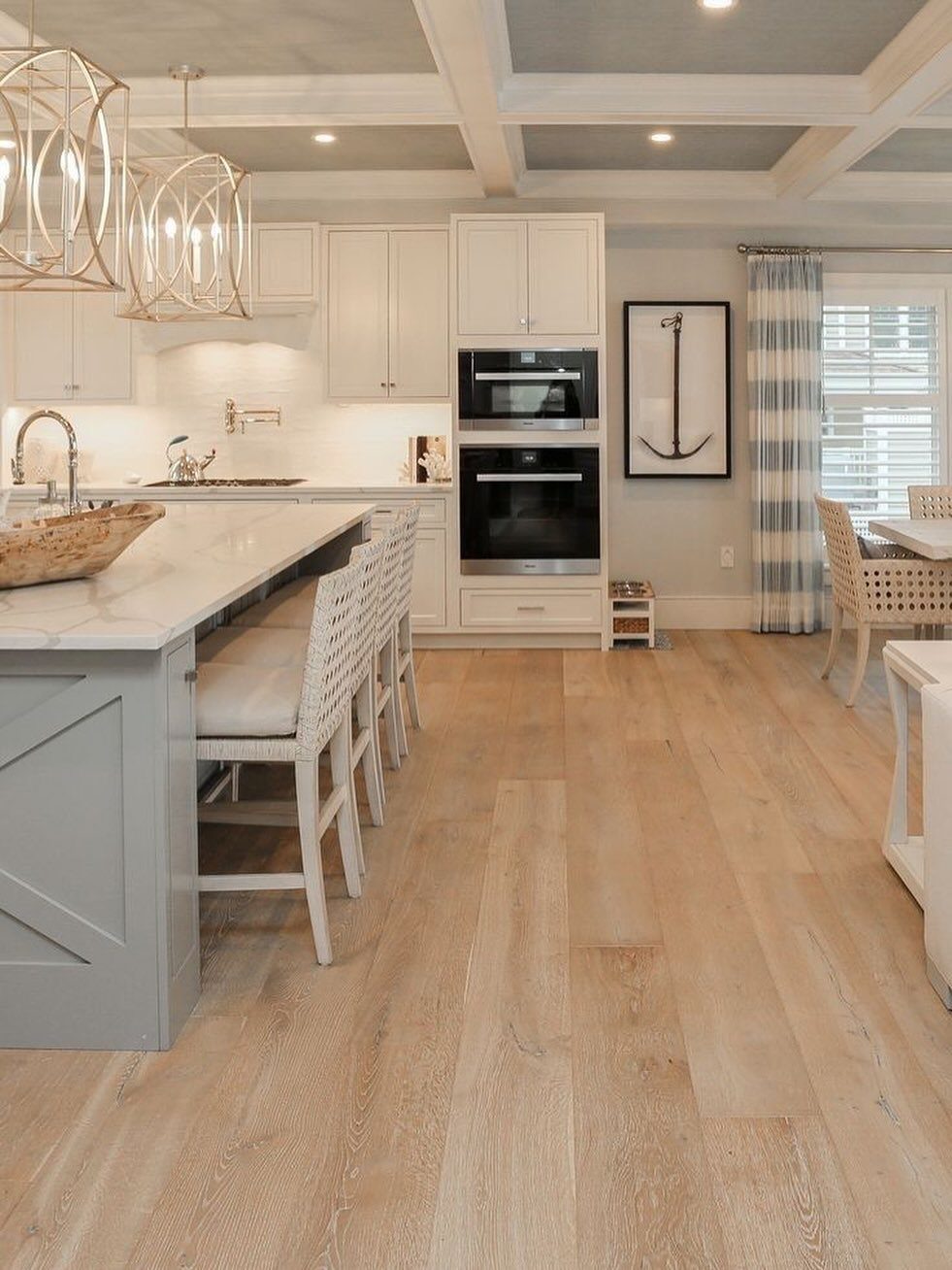
Wood-look planks in vinyl solve the kitchen’s eternal problem: the warmth of oak with the forgiveness of plastic. Long formats, some running 1,800 mm, stretch the sightline and cut the number of end seams that catch drips and grit.
Matte finish wins over glossy every time; gloss catches light and reads fake from the doorway. Mix plank widths if the manufacturer offers them, and lay them parallel to the longest wall to push the room outward.
Water resistance is built in, not surface-sealed, so a flooded dishwasher pan doesn’t mean replacement. That alone justifies the slightly higher price over laminate.
Vinyl kitchen flooring ideas are often overlooked as basic, cheap, and lacking in character. But vinyl flooring has come an incredibly long way since its inception and vinyl options are now wonderfully chic as well as practical.

Stylish - Authentic wood looking and grain texture, adding timeless features to your home

[Realistic Wood Grain with DIY Options]: With a super realistic wood grain appearance and various color options, these tiles meet personalized decorative needs. They are versatile enough for use in homes or commercial spaces, suitable for shop decoration, rental renovations, and RV flooring projects.

Stylish - Authentic wood looking and grain texture, adding timeless feature for your home
5. Herringbone or Chevron Patterns
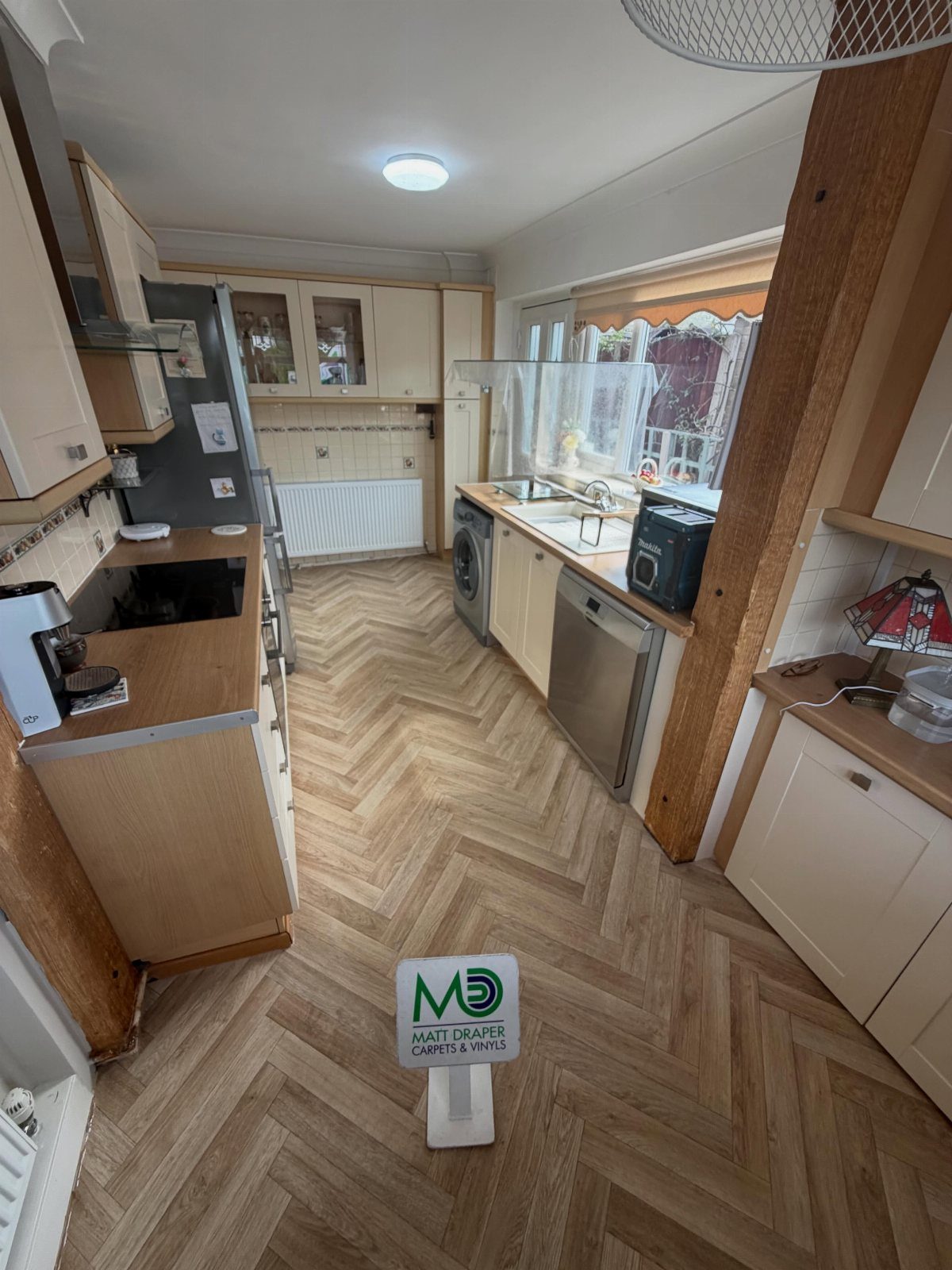
Herringbone in vinyl used to mean hiring a carpenter with a miter saw and patience. Pre-cut LVT tiles with click edges now let a homeowner lock the pattern together in an afternoon, though the layout still punishes sloppy measuring.
I ran this in a narrow galley last spring, angling the points toward the dining end to pull the eye through.
The effect is movement without busyness; the repeating V-shape does the work that a rug would in a larger room.
Start dry. Lay a full section without clicking it, stand back, check the sightline.
Adjust once, lock twice.
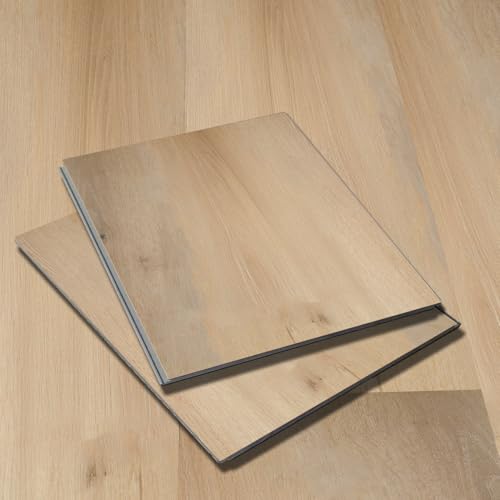
Premium Design-Led Aesthetic: Authentic wood visuals in extra-wide 9” planks and 72” lengths deliver a high-end, modern finish that elevates any space. Micro-beveled edges for a clean, seamless look.

Easy Renovate - Peel and stick floor tiles can be adhered to any flat, clean and dry surface and can be removed without leaving a trace, making them perfect for renters.

Premium Design-Led Aesthetic: Authentic wood visuals in 6” x 48” planks deliver a traditional finish that elevates any space. Micro beveled edges offer a clean, seamless look.
6. Marble-Look Vinyl Flooring
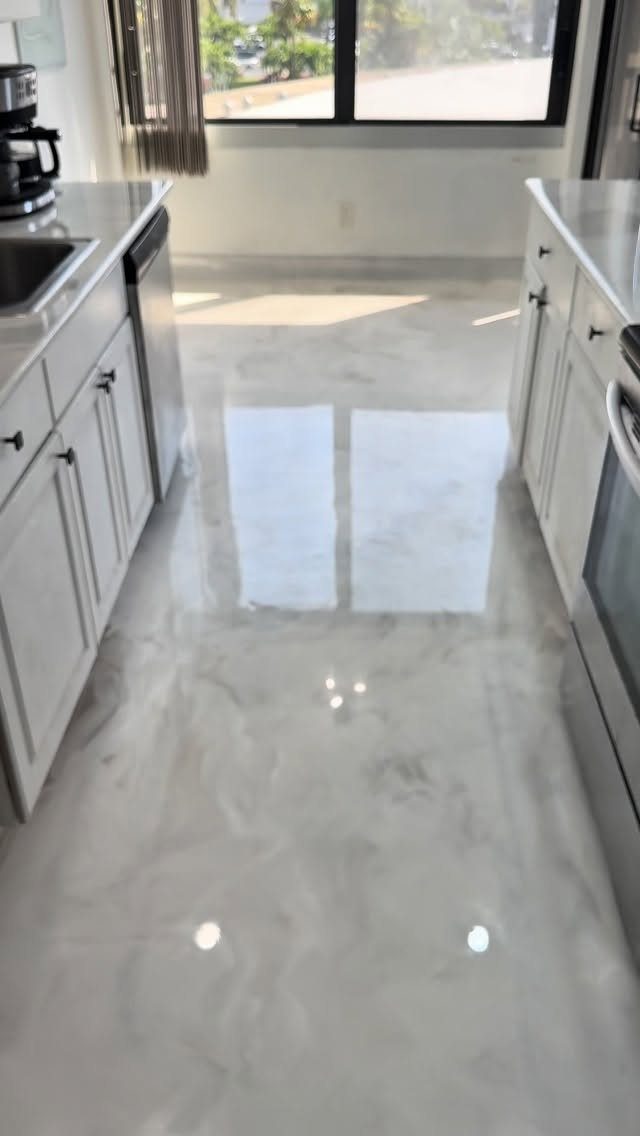
Marble-pattern vinyl in high-gloss finish does what real marble cannot: survives a dropped pot, shrugs off lemon juice, and installs without structural reinforcement.
The veining varies plank to plank, so shuffle boxes as you lay it to keep the pattern from pooling in one corner.
I’d reserve this for kitchens with good daylight; the gloss amplifies what exists and turns dim toward cold. Under cabinets and islands, the reflectivity bounces light back up into the workspace.
Peel-and-stick faux marble exists for tighter budgets, but the seam relief shows over time. Click-lock wears flatter and longer.

📸𝐖𝐨𝐨𝐝 𝐏𝐞𝐞𝐥 𝐚𝐧𝐝 𝐒𝐭𝐢𝐜𝐤 𝐅𝐥𝐨𝐨𝐫 𝐓𝐢𝐥𝐞: Wood peel and stick flooring includes 12 connected 12"x12" tiles. Thickness: 0.045 inch (1 mm). The entire vinyl plank flooring measures 12"Wx142"L (30x360 cm), covering 12 sq.ft.

Durable & Warp-Free: Built to last with no deformation, perfect for vinyl flooring roll

WIDE ROLL COVERAGE: Peel-and-stick vinyl lays one smooth, continuous surface in fewer pieces. Pick the 16 Sq.Ft (197") roll for a bathroom or the 52 Sq.Ft (630") roll for bigger rooms. Trim with scissors - no glue, no grout, no mess.
7. Beige Textured Vinyl Flooring
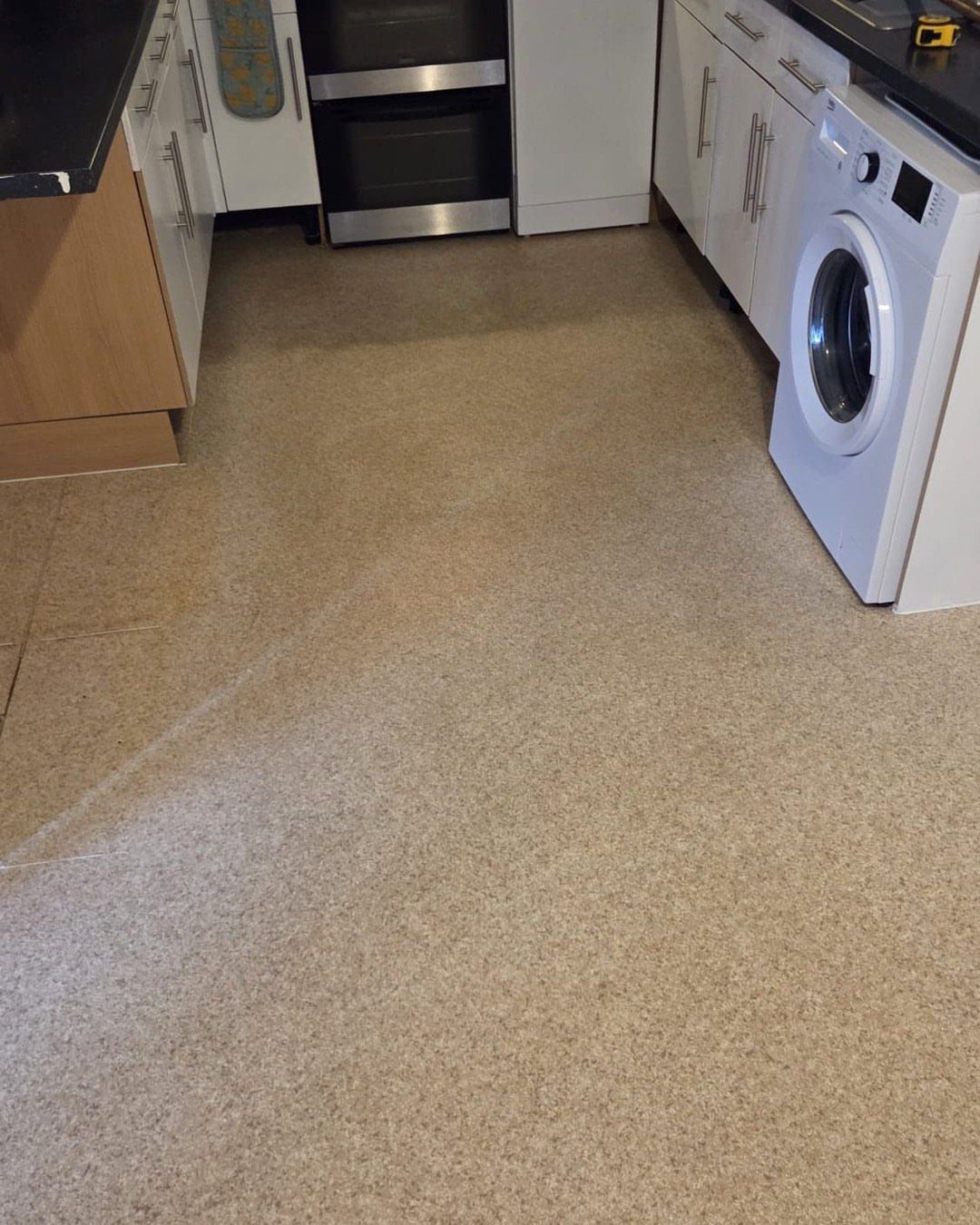
Soft beige vinyl with a subtle texture hides crumbs better than flat color and warms up a kitchen without demanding attention.
This finish pairs with light cabinets just as well as dark ones, so it works for a rental refresh or a first-home install.
A textured surface adds grip underfoot, which matters near sinks and stoves where water splashes.
Check the wear layer thickness before you buy. A thicker wear layer holds up to active kitchens and pets; anything too thin shows scratches before you’ve had it long.
If your kitchen opens to a living area, carry the same floor through both spaces. The continuous color makes both rooms feel larger.
This choice trades drama for longevity. It will not date itself, but it will not anchor a bold design either.
Pick it when you want the floor to support the room, not star in it.

Easy installation: Self-adhesive flooring can be installed quickly and easily, without the need for special tools or messy adhesives

Quick and Effortless Transformation: Easily upgrade your space with our hassle-free peel and stick design; no messy glue needed!

Peel and Stick Floor Tiles 12x12 for Instant Floor Transformation: No grout, glue, adhesive, or special tools required. Simply clean the surface, peel off the backing, and press each self adhesive stick on tile firmly into place for a fast and durable floor upgrade in under an hour.
Affordability
Sheet vinyl runs roughly a third of the cost per square foot of ceramic tile and half that of engineered wood, which matters when your kitchen refresh needs to stay under a thousand dollars.
The savings land in labor too; most patterns install in a single weekend with tools you probably already own.
A 10 to 20 year lifespan is realistic with basic care, so the upfront cost spreads across years of use.
That durability makes vinyl practical as a stopgap while you save toward a larger renovation, or as the permanent choice if the budget never expands.
Water and stain resistance come built in, not as add-on sealers. For households with young children or pets, that means fewer replacements and less money spent on repairs from normal kitchen chaos.

Easy Install: Peel and stick vinyl floor tile 12x12 inch design makes DIY installation quick for kitchen bathroom bedroom or living room floors perfect for home renovation and decorative upgrades.

Magnolia Elegance in Every Step: Featuring delicate white magnolias on a rich teal background, these vinyl peel and stick floor tiles bring tranquility and style to your kitchen or bath.
Visual Appeal
Modern printing presses layer color variation and surface texture into vinyl so the finished floor reads as wood grain or stone veining from a few feet away.
The effect holds up because the patterns are photographed from real material, not drawn from scratch.
LVT in particular carries this off; the multiple layers include a printed design film beneath the wear layer, so the image stays protected while the surface takes on the matte or gloss of the material it mimics.
Stone and wood LVT collections now run into dozens of colors each, enough to match existing cabinets without custom ordering.
The flexibility shows in style pairing. A farmhouse kitchen and a sleek contemporary one can both use vinyl; the difference is which pattern and color you choose, not whether the material belongs.
That range keeps the floor from limiting the rest of the design.

Luxurious Wood Look & Timeless Design: Featuring realistic wood grain texture and elegant finishes, these luxury vinyl planks bring natural warmth and sophisticated charm to any room, elevating your home decor with a timeless aesthetic.

Textured & Versatile: Available in popular wood look with a natural matte finish that replicates the authentic feel of natural materials. The luxury vinyl plank flooring seamlessly complements Nordic, modern minimalist, industrial and other trending decor styles, instantly elevating the overall aesthetic of any space. Ideal for living rooms, bedrooms, kitchens and more.
Compatibility with Underfloor Heating
Vinyl conducts heat well enough that underfloor warming systems run efficiently beneath it, and the surface itself stays warm to the touch where tile would stay cold.
That combination matters in kitchens where you stand for long stretches at counters or sinks.
LVT handles the thermal cycling better than sheet vinyl because its rigid core structure resists the slight expansion and contraction that heating seasons bring.
The protective wear layer adds durability against the extra foot traffic a warm kitchen tends to draw.
Installation over heating elements requires checking the manufacturer’s temperature limits, usually marked on the product sheet. Stay within those numbers and the warranty holds; exceed them and the material can soften or discolor.
Most residential systems run well below the threshold, but verify before you buy.

Glue-Free Instant Installation - Vinyl floor mat uses pre-applied adhesive tape . This enables tool-free, straightforward application, simplifying DIY projects and saving installation time.

Give Home a New Look - Peel and stick floor tiles can be adhered to any flat, clean and dry surface and can be removed without leaving a trace, making them perfect for renters.

Premium Design-Led Aesthetic: Authentic wood visuals in extra-wide 9” x 72” planks deliver a high-end, modern finish that elevates any space. Enhanced-Beveled edges highlight each plank for a premium look.
Frequently Asked Questions
Is vinyl flooring good for the kitchen?
Yes. Vinyl handles water, scratches, and heavy traffic better than most materials at this price, and a damp mop is all the cleaning most spills need.
Planks with water resistance built through the whole layer, not just sealed on top, handle dishwasher leaks without the panic that comes with surface-sealed options.
The only place it falls short is character: real wood with knots and grain that age over time, or textured stone, still carry a warmth that printed vinyl cannot match.
What is the new trend in kitchen floors?
Checkerboard patterns and bold solid colors are the directions I see most right now. Checkerboard in LVT builds itself as you lay the squares, graphic without needing custom cutting.
Solid teal or saturated tones turn the floor into the room’s personality, something wood or stone could never carry this loudly. Both trends lean on vinyl’s ability to print any color consistently from box to box.
What is the downside of vinyl flooring?
Sharp objects can puncture or gouge it, and a dropped knife may leave a scar that does not buff out. The material is also not biodegradable and hard to recycle, so old floors tend toward landfills rather than reuse.
Those tradeoffs matter less in a busy kitchen where the alternative is replacing water-damaged wood or cracked tile every few years, but they are worth knowing before you decide.