These wall unit ideas run from $300 weekend projects you can knock out with a drill and a level to full built-ins that need a dedicated circuit and a diamond blade rental.
The one that fits your wall depends on whether you own the place or can patch a few lag bolt holes later, and whether you want something you can take with you when you leave.
Warm white LED tape at 2700K shows up in half of them, and the cheap strips that flicker within a year are the first place not to save money.
1. Backlit Panels with Integrated LED Lighting
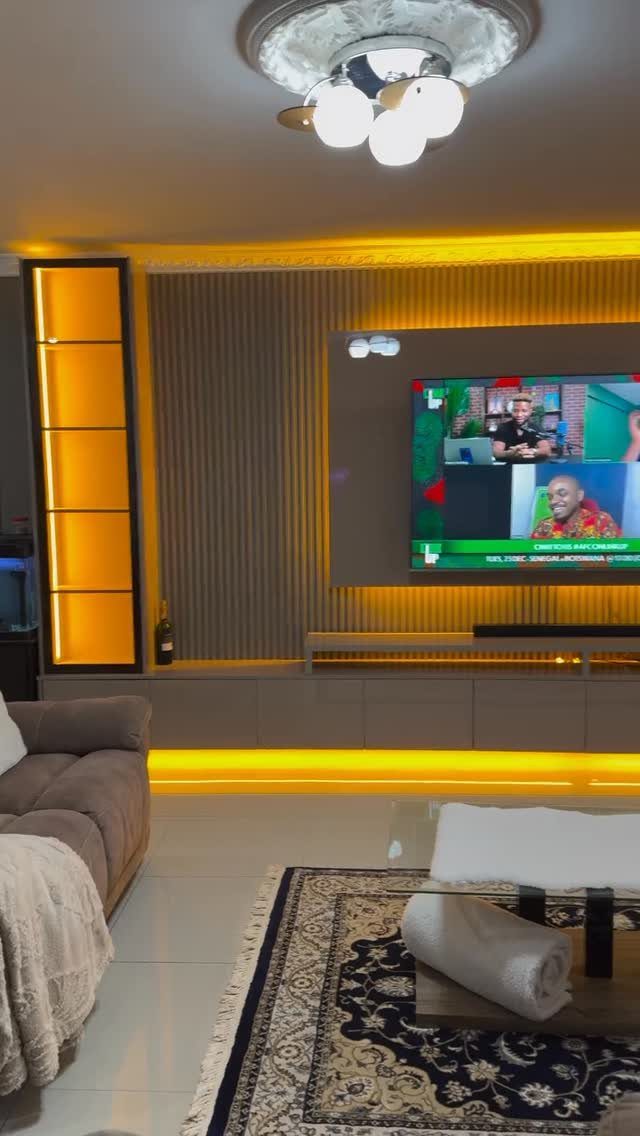
LED strips tucked behind ribbed paneling turn a flat wall into something that glows after dark. I like warm white for living rooms; the 2700K range reads cozy instead of clinical.
The strips go in before the panels go up, with a channel to hide the wiring. A dimmer switch is worth the extra money.
Budget for decent tape light plus aluminum channels; the cheap stuff flickers within a year. You will need an outlet behind the unit or a switched line run from a wall switch.

SUPER BRIGHT LED BACKLIGHT SHEET - Our LED backlight sheet features 24V 36W power with 6000K cool white light & CRI 95+, delivering 3600 lumens of high-brightness light, it precisely restores stone’s natural texture and translucency. Its 19.7X9.7 inche for each sheet fits easily under countertops and walls for creating a high-end ambiance in your living room, kitchens, bars, bathroom

Premium LED Lights for TV Enhancement: Elevate your viewing experience with this advanced TV LED Backlight, featuring vibrant 5V LED strips and a 3-button USB Bluetooth controller for seamless brightness, color, and mode adjustments.

An ideal way to mount your Monitor or LCD panel TV to the wall,to use your space efficiently and watch your favorite TV shows comfortably!
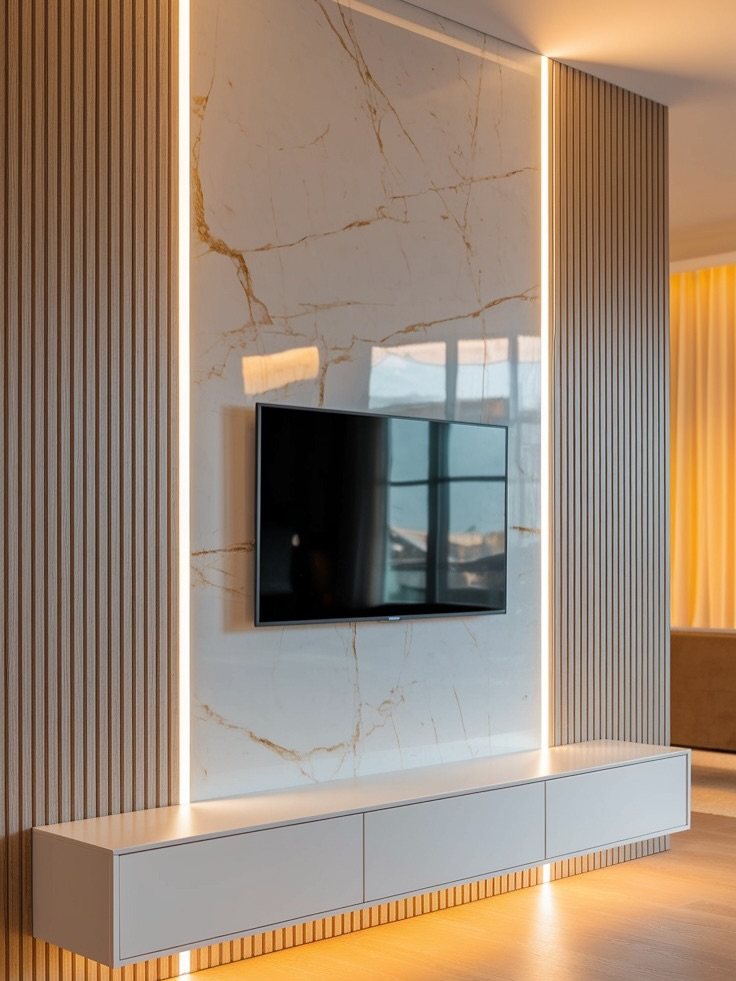
2. Marble-patterned Back Panel
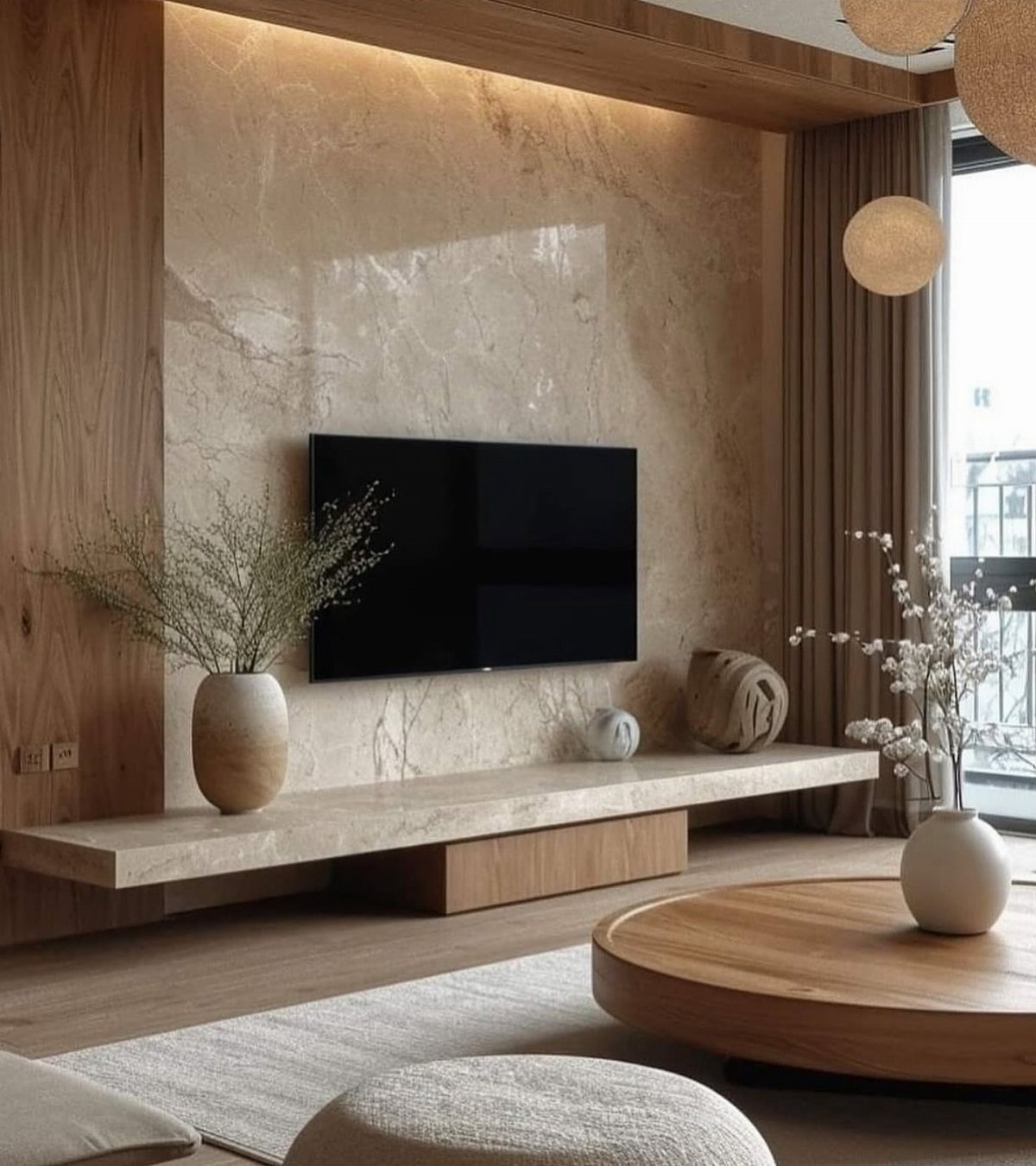
A marble-patterned panel behind the TV reads expensive without being it. The vinyl or laminate sheets vary by panel size, and a single large piece often covers the whole field.
I float a console below the panel’s bottom edge to keep the look clean.
The pattern works best when the veining runs vertical; horizontal veins fight the TV’s own landscape orientation. A matte finish hides fingerprints better than gloss.

【Ultra Bright and Uniform】DC24V 480LEDs/m 16.4FT Warm White 2700K. Flip Chip On Board LED strip(FCOB).Adopting high brightness LED as the light source to ensure the brightness while maintaining color consistency.Compared with traditional 5050SMD 3528SMD light strips, FCOB light strips dense light-emitting units create a brighter, softer, spotless and more uniform light.
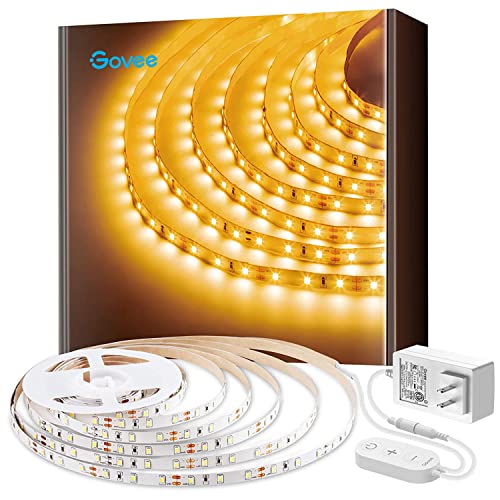
Warm White LED: With 300 LEDs and a 3000K color temperature, you'll enjoy an incredibly warm and bright illumination with improved color quality. Light up those dark rooms, cabinets and any corners with ease.

FOR CUSTOM INSTALLS (STRIP ONLY): Includes one 16.4ft (5-meter) reel of LED light strip, designed for professional and custom installations. This component-only option allows you to integrate the strip with your own preferred power supply, dimmers, and control systems. Note: A power source is required for operation and is sold separately. For a plug-and-play package, please select our "Kit" option
3. Vertical Wood Slats with Marble Panels
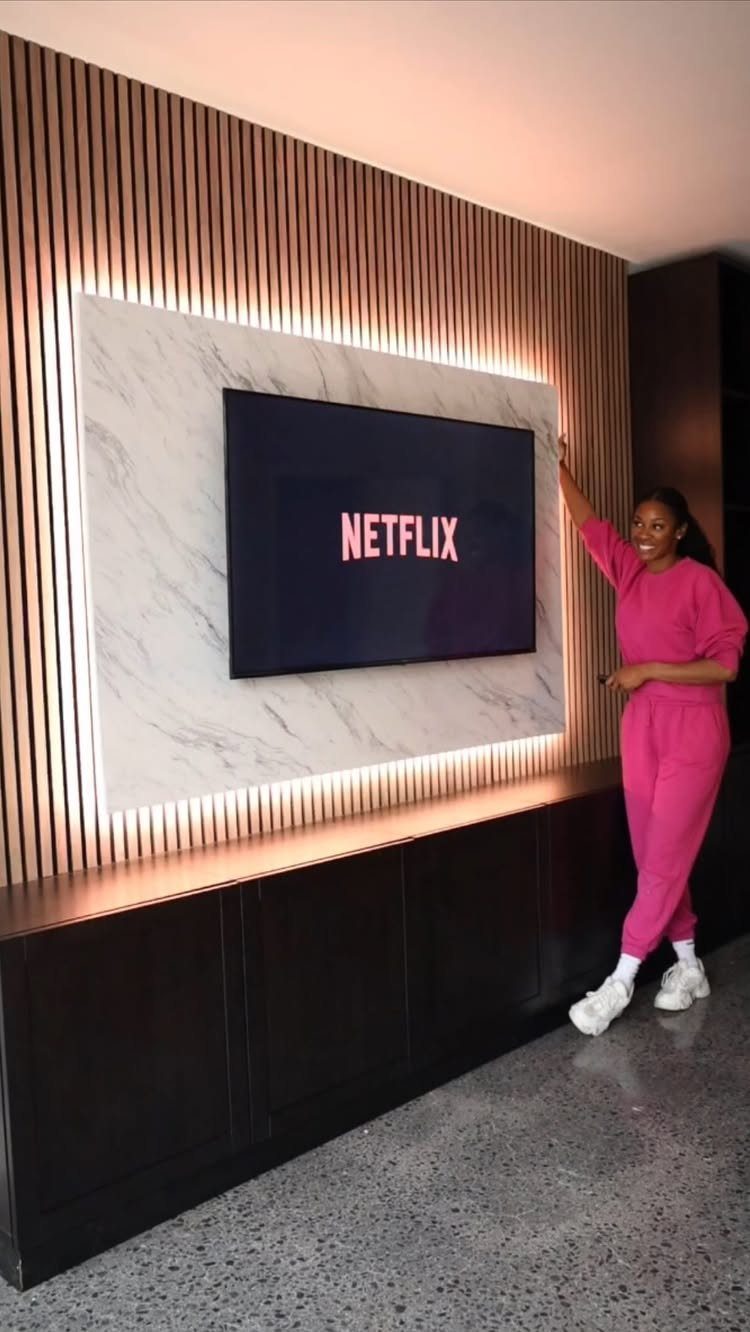
Vertical slats break up a flat wall and give the marble panel behind your TV something to compete with.
I space slats close enough to read as texture but not so tight they look busy; too wide and it seems like an afterthought.
Oak or ash takes stain evenly if you want to shift warmer than the photo’s light tone.
The slats go up on furring strips so the marble panel can sit recessed between them. Plan for a gap behind the slats for wiring and airflow.

Realistic Travertine 3D Wall Panels: Made of durable PVC with faux artificial grain, these peel and stick wall panels bring the natural look of travertine stone into your home. The marble texture and matte finish create a stylish, modern accent for living room, bedroom, or office décor.

23.6 x 118 in roll covers about 19.3 sq ft peel and stick white brown marble wallpaper foam wall panels for DIY renter friendly accent wall TV wall bedroom coffee shop decor
4. Floating Shelves
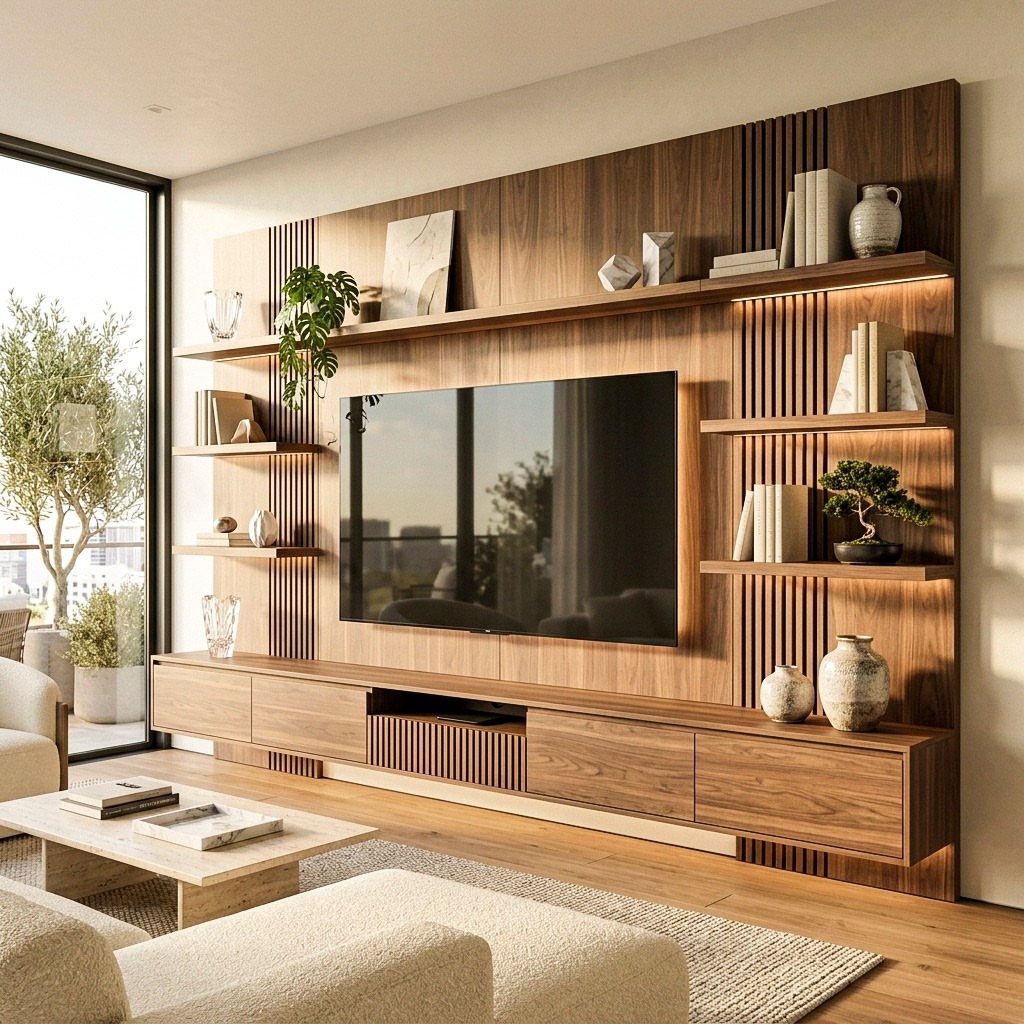
Floating shelves let you stage objects without the bulk of a full cabinet. I keep them shallow enough to avoid shadowing the TV but deep enough that books face forward.
A hidden bracket system beats visible hardware every time and costs less than you’d expect per shelf.
Two shelves asymmetrical to the TV’s left or right look more considered than a matched pair. Weight limit matters: check the bracket rating before loading ceramics.

Faux Wood Grain Texture: PGVALXOR 3D wall panels use raised textures and a thin PVC wood grain surface to create a slat-look finish without using real wood
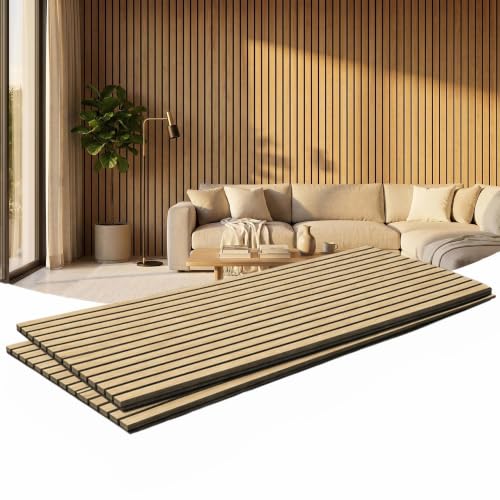
[Upgrade Your Space Style]Enhance your walls with modern wood slat acoustic panels that combine decorative elegance with effective sound absorption.Perfect for contemporary homes, offices, media rooms, studios, and commercial spaces.

Faux Wood Grain Texture: PGVALXOR 3D wall panels use raised textures and a thin PVC wood grain surface to create a slat-look finish without using real wood
5. Dark Cabinetry with Integrated Fireplace
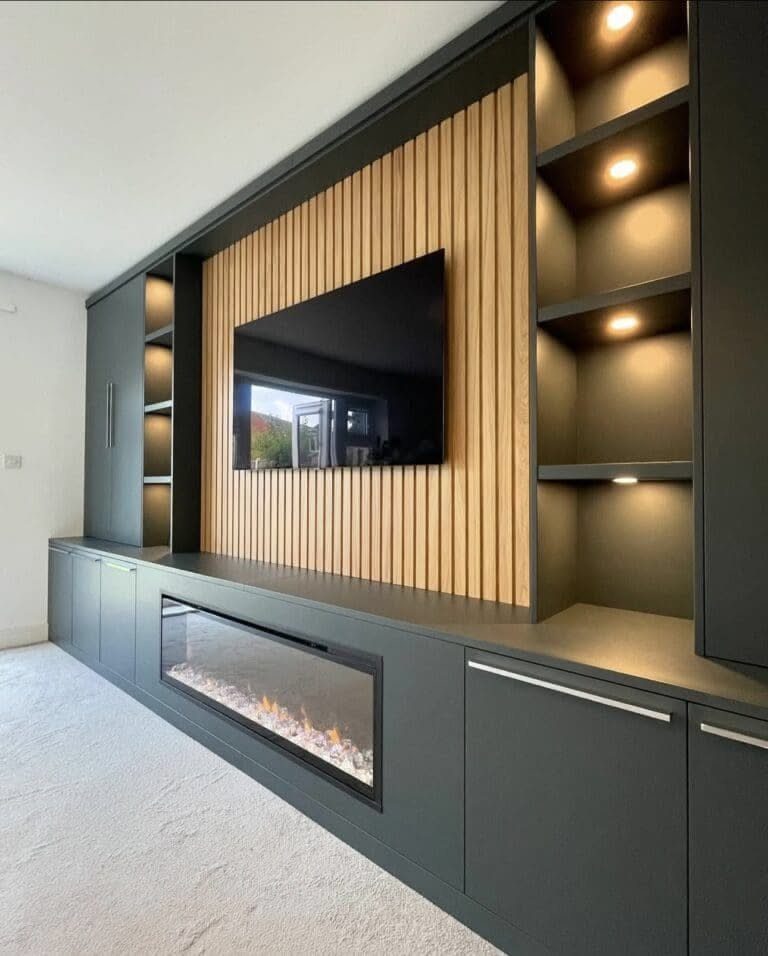
Dark grey cabinetry with a built-in electric fireplace anchors a room that otherwise floats too much pale furniture. The linear fireplace units need a dedicated circuit; plan that before you order cabinets.
The wood slat panel behind the TV needs to be real hardwood; painted MDF reads flat under the cabinet lighting. Warm LED strips inside the open shelving make the dark finish feel intentional, not heavy.

Superior Quality: Our floating shelf bracket is expertly crafted from premium steel, ensuring exceptional durability and an impressive weight capacity of 110lbs.

𝐌𝐨𝐝𝐞𝐫𝐧 𝐚𝐧𝐝 𝐕𝐞𝐫𝐬𝐚𝐭𝐢𝐥𝐞 𝐒𝐭𝐲𝐥𝐞: The hidden bracket design gives a clean, floating look that works beautifully as home decor wall shelves in modern, farmhouse, rustic, or industrial decor styles. Adds warmth and style without overwhelming your space for bedroom decorations, farmhouse living room decor, office wall decor, nursery, entryway, kitchen, and more
6. Custom Built-in Units
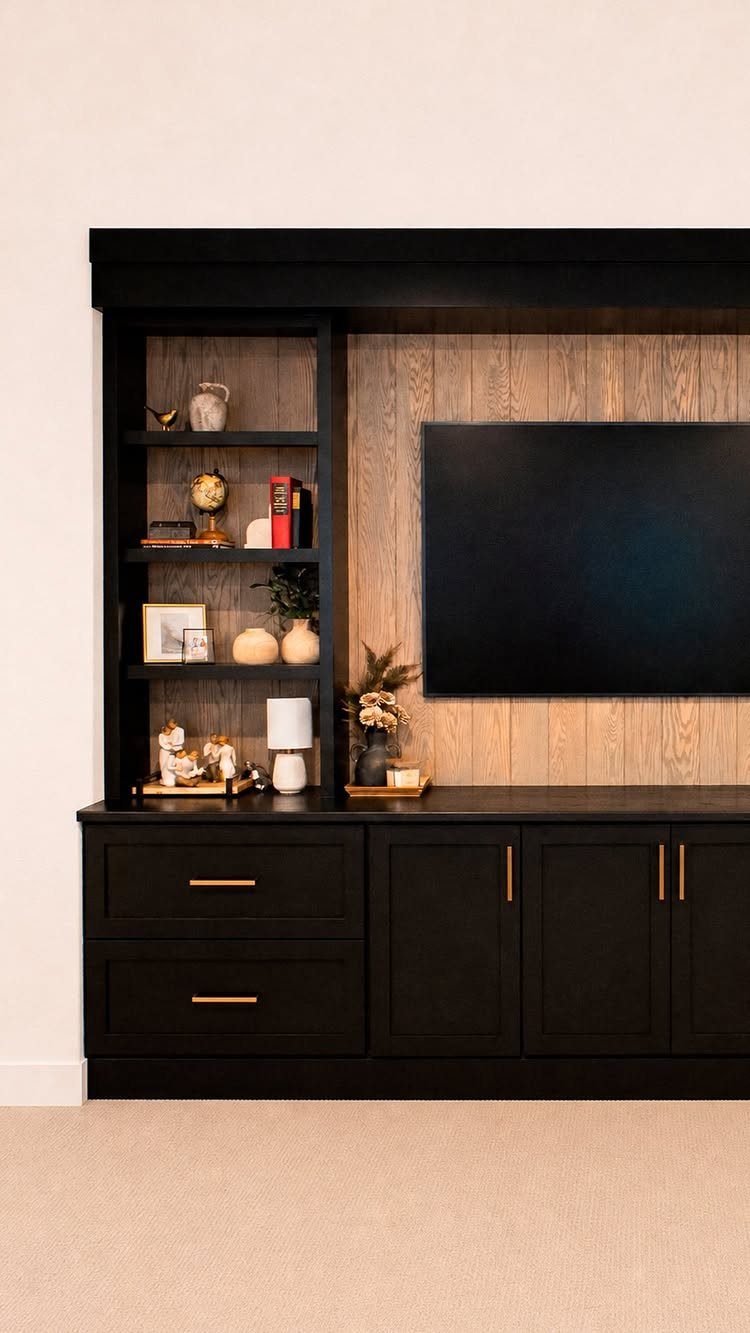
A built-in unit tailored to your wall eats every inch of awkward space: shallow corners, bulkheads, outlets in the wrong place.
I start with stock cabinet boxes and face them with custom panels to keep the job reasonable instead of paying fully custom prices.
Gold hardware pops against dark paint but costs more than brushed nickel. I order one extra knob; matching finishes later is nearly impossible.
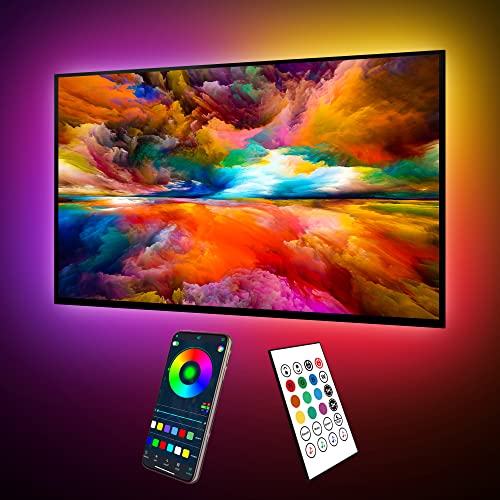
Upgraded ICRGB TV Backlight Effects: Maylit ICRGB TV lights can display multiple colors on a line at a time, compared with traditional RGB TV lights. More vibrant and dynamic to light up the TV, improve your TV watching experience.

【TV LED Backlight with Music Sync】KANTUTOE's TV LED Backlight features over 20 dynamic modes and 16 million color variations. Press the music button on the remote control or app to activate the TV LED light's built-in high-sensitivity microphone, which captures real-time music and ambient sound intensity. The light strip displays different colors and rhythms that are synchronized with the music.
7. Floating Wood Console Below Paneled Wall
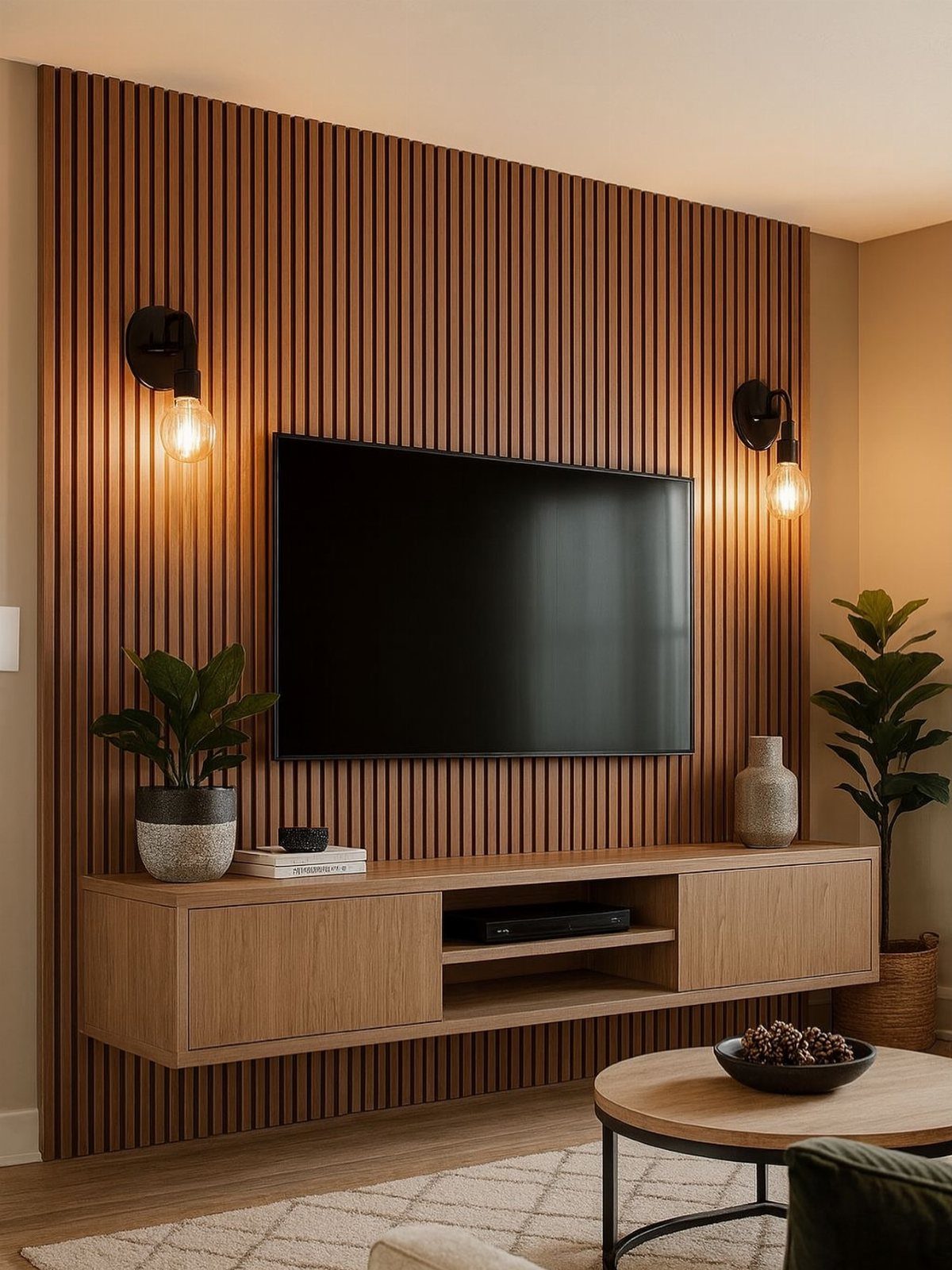
A floating console keeps the floor clear and the room feeling wider than it is.
That lighting strip is the part worth planning early. I ran mine on a switched outlet so it works independent of the TV, which turns out to be most of the time I actually want it on.
The console needs blocking between studs; lag bolts into a single stud will sag before long.
Best for renters who can patch a few holes later but want the look now. Skip the gold trim if your other metals are all black; mixed metals only work when it looks intentional, and here it rarely does.
8. Textured Stone Panels with Floating Consoles
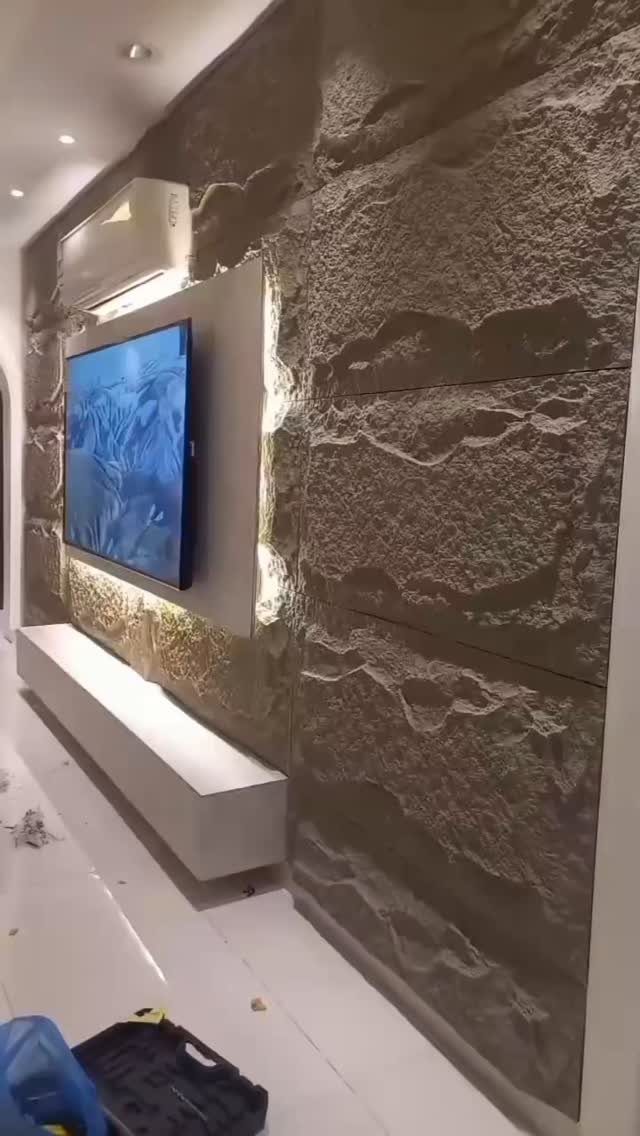
Rough stone panels add depth you cannot get with paint or flat tile. Textured vertical panels with a white floating console mounted against them get their tension from the contrast between organic and clean surfaces.
I would build the wall first, then mount the console, then add the TV last. Stone dust gets into every track and bracket if you do it backward.
The panels are priced by the square foot, and you need a diamond blade on your circular saw, which rents by the day from most hardware stores.
The warmth comes from the backlighting behind the TV, not from the stone itself, which reads cold without it. If your room already faces north or lacks windows, this trades away the brightness you probably need.
In that case, vertical wood slats with the same console shape keep the layout but lose the weight.
9. Asymmetrical Open Shelving with Backlight
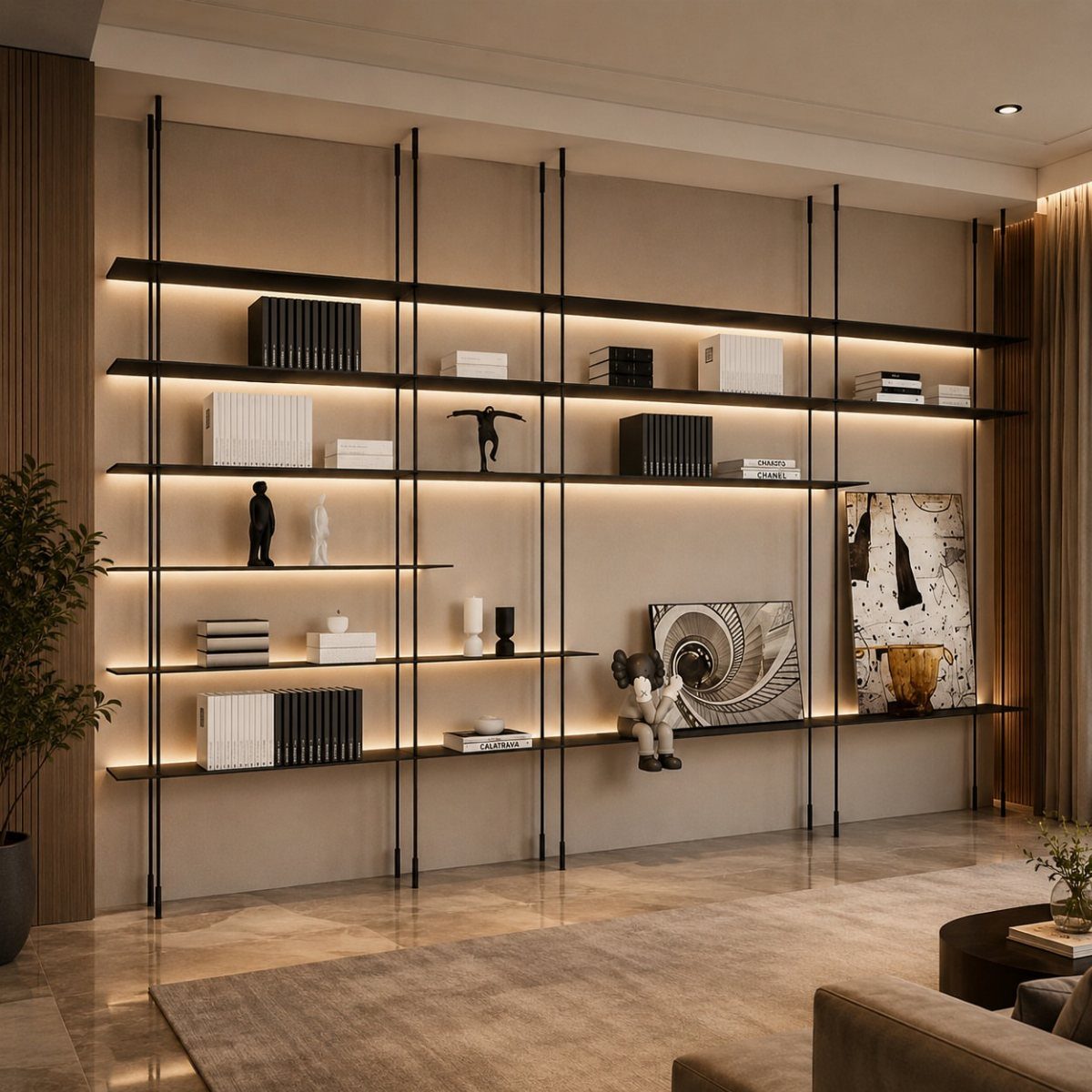
Asymmetrical shelving breaks the grid without looking messy, which is harder than it sounds. Black shelves running at staggered lengths with warm LED backlighting behind them keep the irregular shapes from feeling chaotic through that single warm tone.
Map your actual objects before you drill. Lay out books, framed pieces, and small objects on the floor in their real groupings, then photograph the arrangement and transfer it to the wall.
The backlighting strip hides in a routed channel behind each shelf; 1/2 inch depth is enough.
Tall vertical shelving draws the eye up, which helps rooms with 8-foot ceilings feel closer to 9. But it trades away closed storage completely.
If you own more than 2 remotes or any gaming controllers, add a single low cabinet beneath or this becomes a dusting problem you will resent by month three.

Stylish and Modern: The tendy slat design combined with various wood finishes update interior decor in a big way
Latest Trends in Wall Units
Integrated lighting has shifted from accent to expectation in wall units. Warm LED strips behind panels now appear in most of the installs I see on Pinterest, not as theater but as ordinary room glow.
Natural materials are having a longer moment than I expected. Real hardwood slats and textured stone panels are replacing the painted MDF that dominated builds a few years back.
The marble-patterned laminates have improved enough that I sometimes need a second look to distinguish them from the real thing.
Custom sizing is the trend renters and first-home owners can actually use.

Well-designed Floating Shelves: Our white floating shelves for wall are made of MDF Laminate. These wall shelves can organize daily sundries to tidy your space, display your art pieces on the wall to decorate your home, and make it full of aesthetic flare.
Functional Design Considerations
Cable management should be planned before any panel goes up, not after. A channel behind slats or panels hides both power and HDMI runs; retrofitting means visible conduit or starting over.
Storage needs differ from what people predict. Open shelving looks great in photos but demands curation; closed cabinets swallow remotes, controllers, and the cables that multiply invisibly.
Weight ratings matter on every bracket. Ceramic and books load shelves heavier than expected, and the hidden bracket systems that look cleanest have specific limits.
Airflow around electronics saves replacement costs later. A gap behind panels and slats prevents heat buildup around receivers and gaming equipment.
Color Schemes for Wall Units
Neutral tones still dominate because they outlast the trend you are tired of by month 18. Beige consoles against white or stone panels show up constantly for this reason; they shift with your furniture instead of fighting it.
Dark woods and dark paint read expensive but need warmth to avoid gloom. Without that warmth, the same unit feels like a cave.
Marble accents work best with vertical veining. Horizontal patterns fight the landscape orientation of every TV.
Mixed metals rarely look intentional in wall units. One finish throughout reads as choice; two without a plan reads as mistake.
DIY Vs. Professional Installation
Most of the designs in the list are weekend projects for someone with a drill and a level.
If you are not comfortable with basic electrical, this is where I would call someone. The rest is mounting and patience.
Doing it backward means cleaning or replacing hardware.
Fully custom built-ins with odd angles and bulkheads are the work I would not attempt myself. Stock boxes faced with custom panels split the difference and keep the budget reasonable instead of multiplying it.
Frequently Asked Questions
What is the latest trend for wall decor?
Integrated LED lighting is the clearest shift right now, especially warm white strips tucked behind panels or shelves so the wall itself glows after dark.
Corners with bulkheads or odd angles are where stock cabinets save the most money; face them with panels cut to fit and the wall looks built for the room.
Both trends serve real storage and lighting needs instead of just displaying objects.
What styles of wall units are there?
Backlit slatted wood, stone or marble-patterned surfaces, floating consoles, dark painted cabinets with electric fireplaces, and custom-fit built-ins each give a wall unit a different personality.
Each mixes materials differently, light versus dark, rough versus clean, so the style you pick depends on whether your room needs warmth, brightness, or the illusion of more space.
What are the best wall design styles?
The best choice depends on your room’s light and your budget. North-facing or window-poor rooms need the warmth of wood slats and warm 2700K backlighting, not cold stone.
Renters often do well with a floating console on blocking between studs, patchable later.